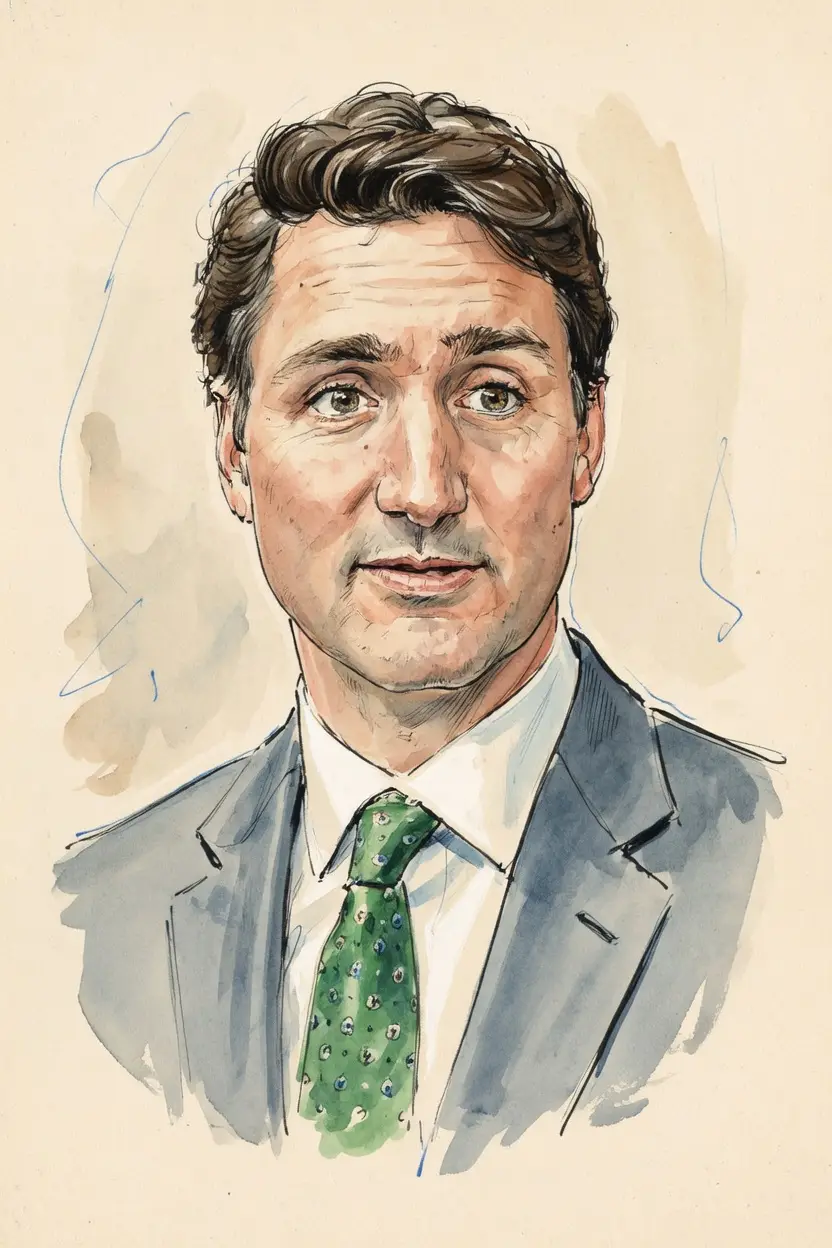
Justin Trudeau
54 years old·Liberal Party of Canada·Former Prime Minister of Canada
- Known for
- Prime Minister of Canada, Leader of the Liberal Party
- Born in
- Ottawa, Canada
- Education
- Bachelor of Education, École Polytechnique de Montréal
Justin Trudeau, the 23rd Prime Minister of Canada (2015–2025), leveraged his celebrity status and name recognition to lead the Liberal Party back to power after a period in third place. His tenure was defined by progressive social policy, significant climate action, and a focus on multilateralism, often marked by high-profile domestic and international tensions.
Signature Positions
Trudeau's time in office implemented several landmark progressive policies:
- Climate Change: Introduced a federal carbon tax as the main tool to meet emission reduction targets.
- Social Policy: Oversaw the legalization of recreational cannabis and established the Canada Child Benefit.
- Indigenous Relations: Accepted the finding of genocide by the National Inquiry into Missing and Murdered Indigenous Women (MMIWG).
- Healthcare: Worked with the NDP to introduce the Canadian Dental Care Plan and a framework for national pharmacare.
- Gun Control: Implemented a ban on "assault-style" weapons following the 2020 Nova Scotia attacks.
Notable Tensions
His leadership was frequently challenged by ethical questions and shifting international dynamics:
- Ethics Violations: Found in violation of conflict of interest law three times, notably in the Aga Khan affair and the SNC-Lavalin affair.
- Immigration/Housing: Increased immigration targets significantly, but faced criticism over housing affordability as a result, prompting later cuts.
- Foreign Relations: Experienced severe deterioration in relations with both the United States (leading to a trade war under Trump) and China (following the Meng Wanzhou arrest).
- Emergencies Act: Invoked the Emergencies Act during the Freedom Convoy protests; a Federal Court later ruled the invocation unjustified.
How Views Have Evolved
Trudeau's governing approach evolved significantly based on political necessity and external pressures:
- Initially focused on multilateralism and strong alliances, his government later had to adopt retaliatory tariffs against the U.S. during a trade war.
- Immigration policy shifted from aggressive expansion to later cuts to immigration targets as housing crisis and cost-of-living issues grew prominent in 2024.
- His initial positive relationship with China softened, shifting from dialogue to sanctions and foreign interference inquiries.