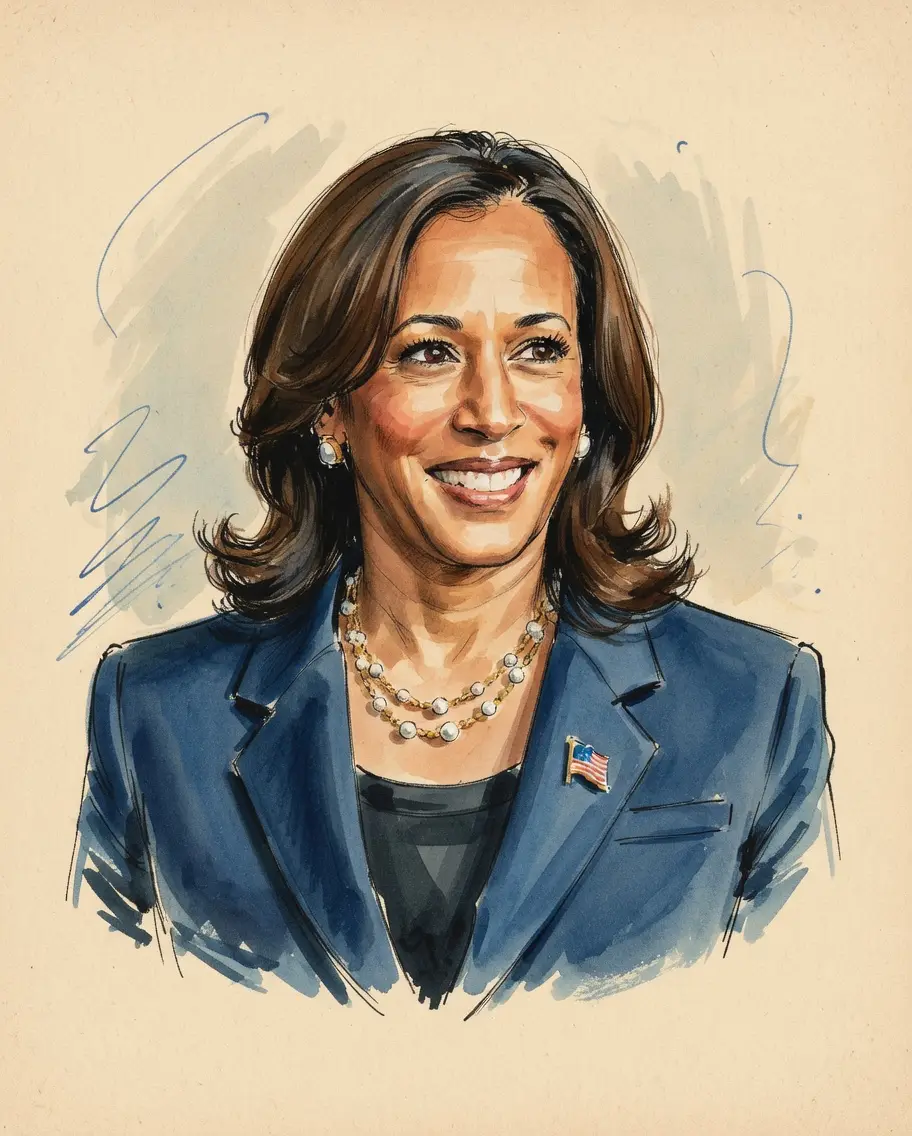
Kamala Harris on China
TL;DR
Kamala Harris views China as the leading national security threat and advocates for competing across all fronts while maintaining open communication.
Key Points
She stated the U.S. will continue to support Taiwan's self-defense, consistent with the longstanding policy of strategic ambiguity.
Harris has championed human rights issues, including co-sponsoring legislation to sanction Hong Kong officials and the Uyghur Human Rights Policy Act.
In 2022, she urged Chinese President Xi Jinping to “maintain open lines of communication to responsibly manage the competition between our countries.”
Summary
Kamala Harris, largely echoing the Biden administration's approach, positions China as the nation’s leading national security threat and a key economic rival that distorts global markets through unfair subsidies and intellectual property theft. Her stated goal is to ensure “America, not China, wins the competition for the twenty-first century” by employing a strategy of “de-risking” rather than full economic decoupling. This approach involves retaining existing tariffs while introducing new restrictions on the export of high-tech products critical to national security, such as advanced semiconductors, and pressing allies to adopt similar measures.
Her engagement has focused on strengthening ties with regional allies in the Indo-Pacific, including through trilateral summits, and upholding the international rules-based order against China’s aggressive maritime claims in the South China Sea. On Taiwan, she reaffirms the long-standing “One China” policy while maintaining support for the island's self-defense capabilities, opposing any unilateral change to the status quo. She has also stressed the importance of keeping open lines of communication with Beijing to responsibly manage the inherent competition between the two nations.
Frequently Asked Questions
Kamala Harris views the relationship as a competition where the United States must prevail in the twenty-first century. Her administration's strategy centers on 'de-risking' the economy rather than decoupling, while simultaneously confronting China over issues like intellectual property theft and unfair trade practices.
The Vice President has reaffirmed the U.S. commitment to its “One China” policy and opposes any unilateral change to the status quo across the Taiwan Strait. She also supports Taiwan's ability to defend itself through continued security assistance.
Yes, the Biden-Harris administration has largely kept the $360 billion in tariffs implemented by the former president in place on Chinese imports. Harris argued that the prior trade war resulted in lost manufacturing jobs for America.
Sources5
Kamala Harris's Foreign Policy Positions - CFR.org
Kamala Harris and China: Competition and antagonism, continued
Trump and Harris' views on China, according to their records and what they've said
What Kamala Harris Has Said About China
How would the Trump or Harris administration approach Taiwan?
* This is not an exhaustive list of sources.