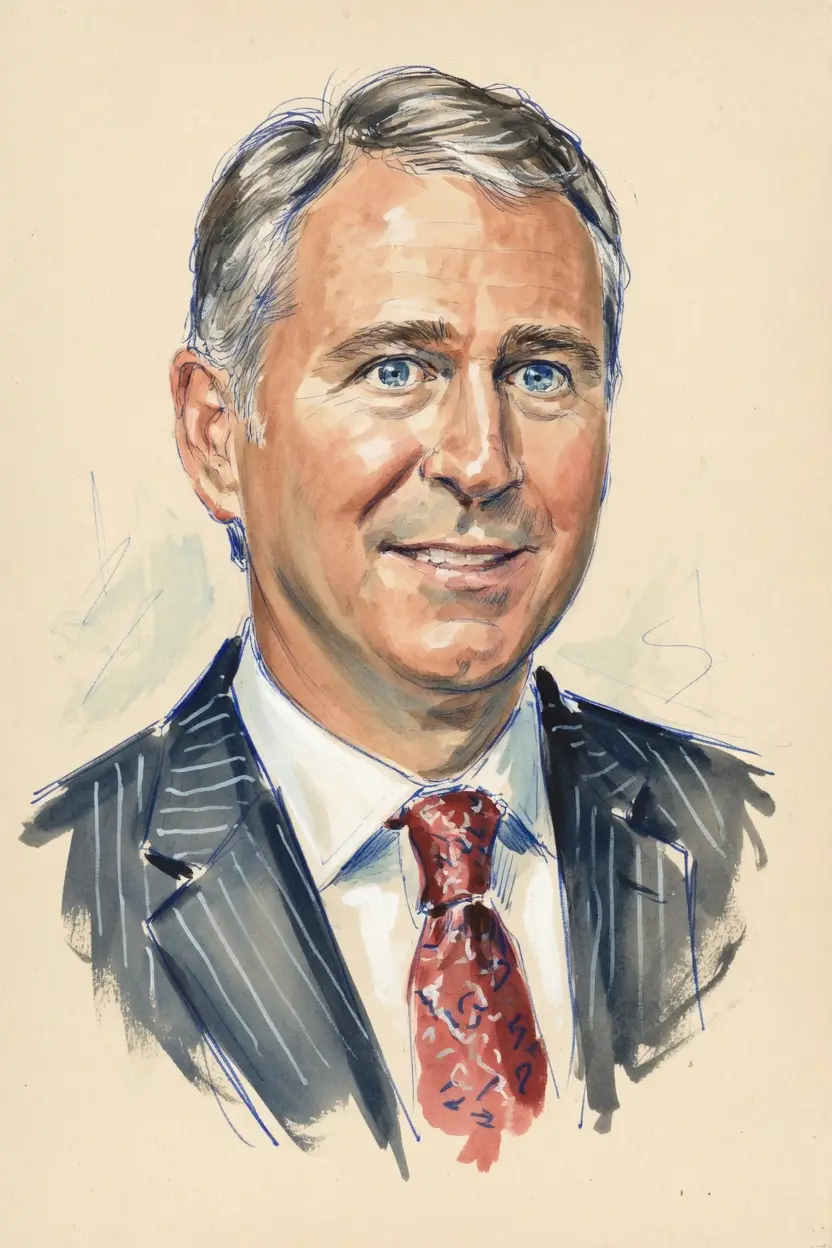
Ken Griffin on Political Ideology
TL;DR
Ken Griffin generally aligns with free-market principles, often supporting candidates and causes that favor limited government intervention in business.
Key Points
The Citadel CEO has expressed distaste for when the U.S. government engages in corporate America in a way that suggests favoritism (2026).
He was identified as a significant donor to Republican gubernatorial candidate Bruce Rauner in Illinois, contributing more than $4.7 million, mostly in 2014.
His financial backing has supported political figures, including at the state level, who align with his free-market ideology.
Summary
Ken Griffin's political ideology strongly leans toward free-market capitalism and limited government intervention, evidenced by his significant financial support for candidates who adhere to these principles, particularly within the Republican party. He has been noted as a major donor to state-level campaigns, directing substantial funds to support candidates whose platforms align with business-friendly policies and lower regulation. Furthermore, he has publicly expressed distaste for government engagement in corporate America that suggests favoritism, indicating a preference for market autonomy over state control in the economic sphere.
This ideological orientation also shapes his commentary on broader political issues, such as expressing concern over government equity stakes in private companies, which he views as tasting of favoritism and potentially distorting markets. His financial backing is often aimed at political figures and organizations that champion lower taxes and reduced regulatory burdens, viewing these as crucial for economic flourishing. While his contributions span various races, the overall pattern reflects a conservative viewpoint centered on fiscal responsibility and the sanctity of the open market system.
Frequently Asked Questions
Ken Griffin's political ideology is strongly rooted in free-market capitalism and conservative principles. He favors limited government intervention in the economy and supports policies that promote deregulation and low taxation.
The provided sources indicate a consistent pattern of strong financial support for candidates and causes aligning with free-market principles. There is no direct evidence of a significant, documented evolution in his core ideological stance.
He stated that when the U.S. government involves itself in corporate America in a manner that implies favoritism, most CEOs he knows find it distasteful. This reflects his position against government interference in the operations of private enterprise.
Sources4
A Conversation with Citadel CEO Ken Griffin
Trump administration equity stakes pose risks to U.S. ...
Mega-Donors Give Big in State Elections
Op-Ed: Abolish UofC's Crime Lab
* This is not an exhaustive list of sources.