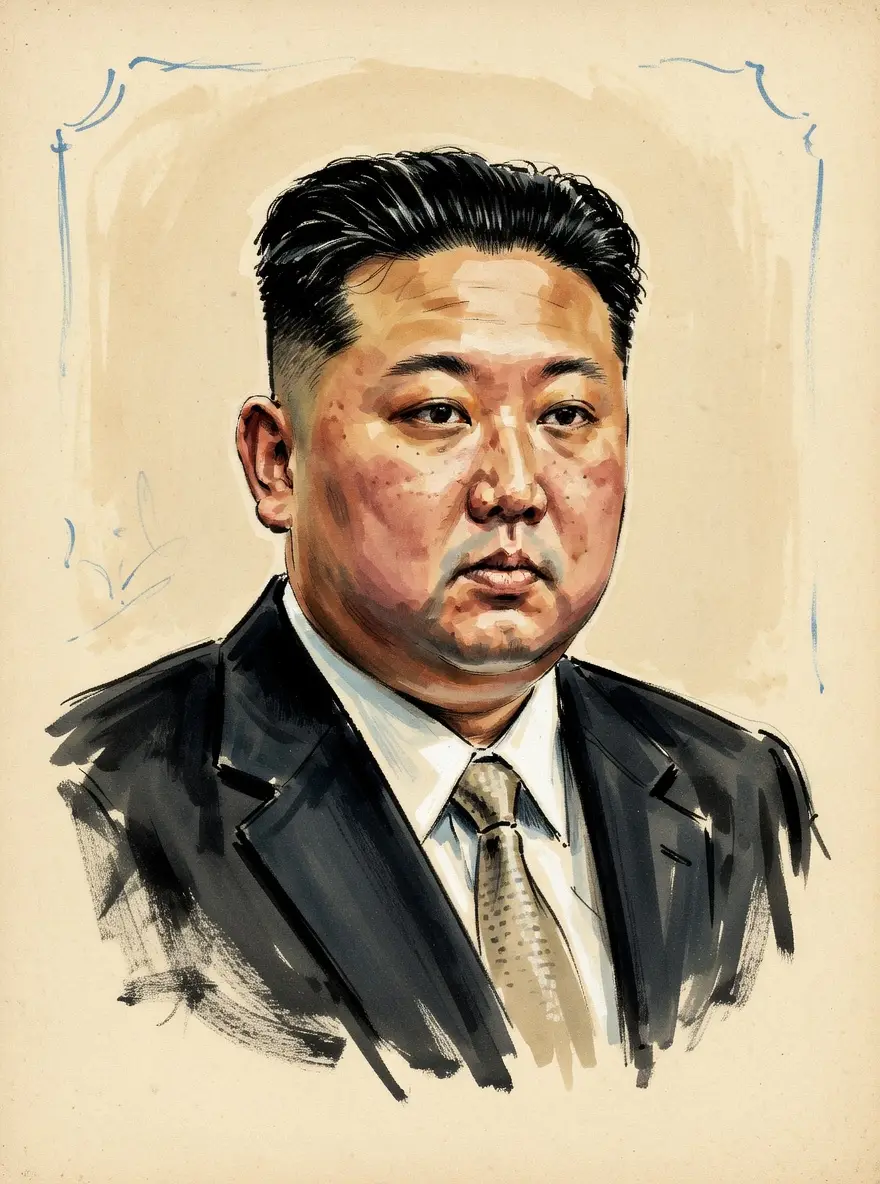
Kim Jong Un
- Known for
- North Korean dictator, Supreme leader
- Born in
- North Korea
- Education
- Army officer degree, Kim Il Sung Military University
Kim Jong Un is the third Supreme Leader of North Korea, inheriting a hereditary dictatorship from his father and grandfather. He commands absolute authority as General Secretary of the WPK and President of the State Affairs Commission. His tenure has been defined by relentless nuclear weapons development and a distinctive blend of totalitarian control and selective economic modernization.
Signature Positions
Kim Jong Un's leadership centers on consolidating internal power while aggressively pursuing military advancement:
- Nuclear Weapons Development: Revived the byungjin policy, focusing on parallel economic and nuclear development, overseeing extensive missile and nuclear tests.
- Foreign Relations (South Korea): Shifted from dialogue to outright hostility, recently declaring reunification efforts formally abandoned and labeling the ROK as the 'enemy'.
- Domestic Governance: Consolidated WPK control over the military, replacing the military-first Songun policy with a 'people-first' ideology, despite widespread human rights violations.
- Foreign Relations (Russia): Forged a crucial security partnership in 2024, supplying materiel for the war in Ukraine and seeking closer alignment with Putin.
How Views Have Evolved
Kim's ideology has marked a clear break from his father's Songun (military-first) policy. He introduced a 'people-first policy' and revived his grandfather's byungjin doctrine.
His stance toward South Korea has drastically soured; initial engagement, including summits with Donald Trump and Moon Jae-in, ended with him symbolically demolishing the Arch of Reunification in 2023.
Notable Tensions
Despite claims of internal success and modernization, Kim’s rule is marked by severe contradictions:
- Human Rights Violations: Accused of crimes against humanity, with consistent international condemnation over abuses and the alleged assassination of his half-brother, Kim Jong-nam.
- Purges: Maintained power through dramatic internal purges, most notably the execution of his uncle, Jang Song-thaek, to secure control.
- Cult of Personality: Cultivated a public image that appears more accessible than his father's, yet maintains the deep personality cult of his predecessors.