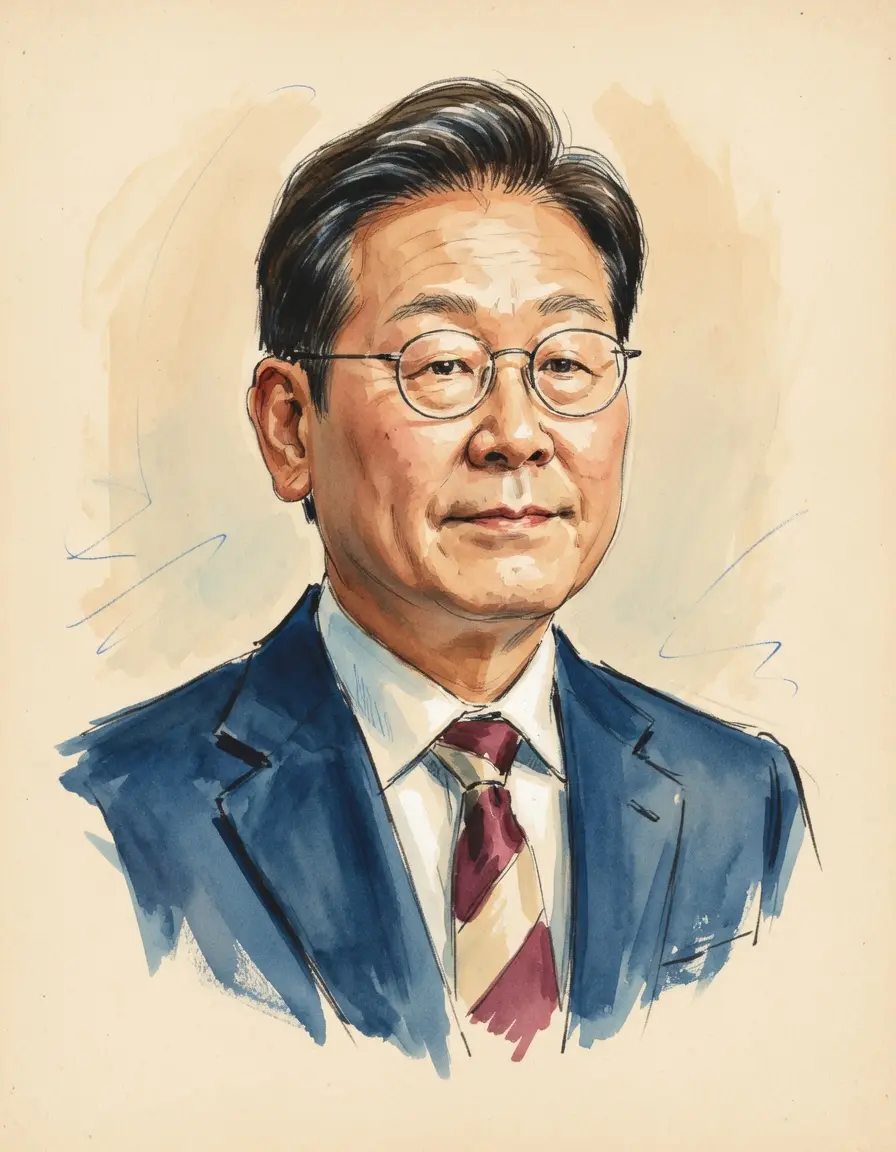
Lee Jae Myung
- Known for
- politician and lawyer, Governor of Gyeonggi, Mayor of Seongnam
- Born in
- Andong, South Korea
- Education
- Master of Public Administration, Kyungwon University
Lee Jae Myung, the 14th President of South Korea, rose from a childhood of poverty as a factory worker to become a leading figure in the Democratic Party of Korea (DPK). His political philosophy is famously summarized as "suppressing the strong, helping the weak" (Eokgang Buyak), driving policies aimed at curbing privilege and supporting the disadvantaged.
Signature Positions
Lee’s platform blends social liberalism with pragmatic, state-led economic intervention, exemplified by his signature policies:
- Universal Basic Income (UBI): Pledged to introduce the world’s first national UBI scheme, funded by carbon tax and land value tax.
- Economic Policy: Advocates for "Transformative and Fair Growth" through industrial policy and regulating large monopolies, while also favoring free trade.
- North Korea: Favors reconciliation, halting propaganda broadcasts and seeking a permanent peace regime, though his efforts have been met with rejection from Pyongyang.
- China/US Relations: Seeks a diplomatic balance, treating the US as the sole ally while viewing China as a strategic partner.
- Feminism/LGBT Rights: Maintains a complex stance, opposing the abolition of the Ministry of Gender Equality and Family while moving cautiously on unilateral LGBT rights legislation.
Notable Tensions
Lee’s political career has been marked by notable contradictions and legal battles:
- Historical Figures: Uniquely, he speaks favorably of conservative icon Park Chung Hee’s infrastructure policies, contrasting with the liberal mainstream.
- Legal Scrutiny: He has faced numerous indictments and investigations during his career, including charges related to bribery and breach of trust during his time as Mayor of Seongnam.
- Political Style: His move to challenge the martial law declaration by climbing the National Assembly fence showcased a highly confrontational approach to political crises.
Lee's political trajectory is defined by his perseverance through setbacks, including losing the 2022 presidential election and surviving an assassination attempt in 2024. His successful 2025 bid followed his instrumental role in the impeachment of his predecessor, establishing him as a powerful, if polarizing, force in South Korean politics.