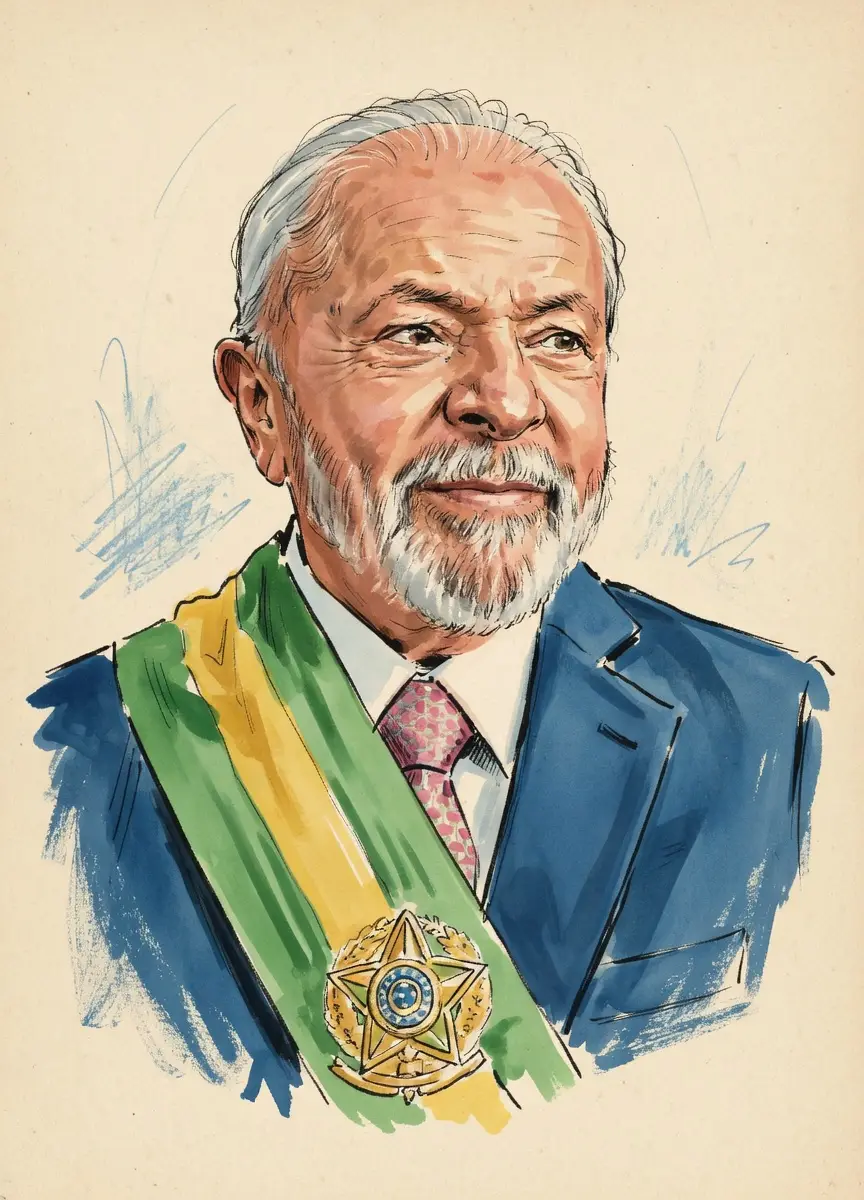
Lula da Silva
- Known for
- President of Brazil, Workers' Party leader, Trade unionist
- Born in
- Caetés, Brazil
- Founded
- Workers' Party, Central Única dos Trabalhadores
Lula da Silva is a towering figure in Brazilian politics, rising from a metalworker and union leader to serve as the country's 39th President. His political philosophy, often described as left-wing or social liberalism, is defined by a deep commitment to social welfare and a pragmatic approach to international relations. Lula’s career has been marked by massive popular support, significant poverty reduction, and deep controversy, including imprisonment and subsequent exoneration on corruption charges.
Signature Positions
Lula’s long political career centers on social inclusion and a complex engagement with global powers:
- Bolsa Família: Reinforced the foundational social program aimed at eradicating hunger and reducing poverty, a hallmark of his first terms.
- Amazon Rainforest: Pledged a return to aggressive anti-deforestation policies, aiming for zero illegal deforestation by 2030, while navigating complex relationships with international partners like the US and France.
- Venezuela/Maduro: Maintains strong diplomatic ties with Nicolás Maduro, dismissing human rights criticisms as a 'constructed narrative' and defending Cuba against the US embargo.
- Russia/Ukraine: Condemned the Russian invasion but also repeatedly criticized NATO and the US for encouraging war, notably suggesting Ukraine should cede territory for peace.
- Israel/Gaza: Adopted a highly controversial stance, calling the conflict a 'genocide' and drawing historical comparisons to the Holocaust, leading to severe diplomatic fallout with Israel.
How Views Have Evolved
Lula’s economic approach has significantly moderated since his early union days. Initially advocating for a default on foreign debt, he shifted to a market-oriented economic policy during his first presidency, working with orthodox economists and paying off the IMF loan ahead of schedule. While he champions economic redistribution in his third term, his administration has also overseen significant infrastructure investment programs.
Notable Tensions
Lula’s political approach often creates significant friction with international norms and domestic critics:
- Operation Car Wash & Corruption: Despite his own corruption convictions being nullified, his administrations faced numerous major corruption scandals, leading to ongoing scrutiny over his political alliances with right-of-centre political barons.
- Freedom of the Press: Faced sharp international criticism for actions against the New York Times reporter Larry Rohter and proposals for a National Journalists' Council, which critics viewed as authoritarian overreach.
- Geopolitical Balancing: His simultaneous embrace of China and condemnation of US foreign policy is seen by some critics as prioritizing global multipolarity over human rights concerns in nations like Iran and Nicaragua.