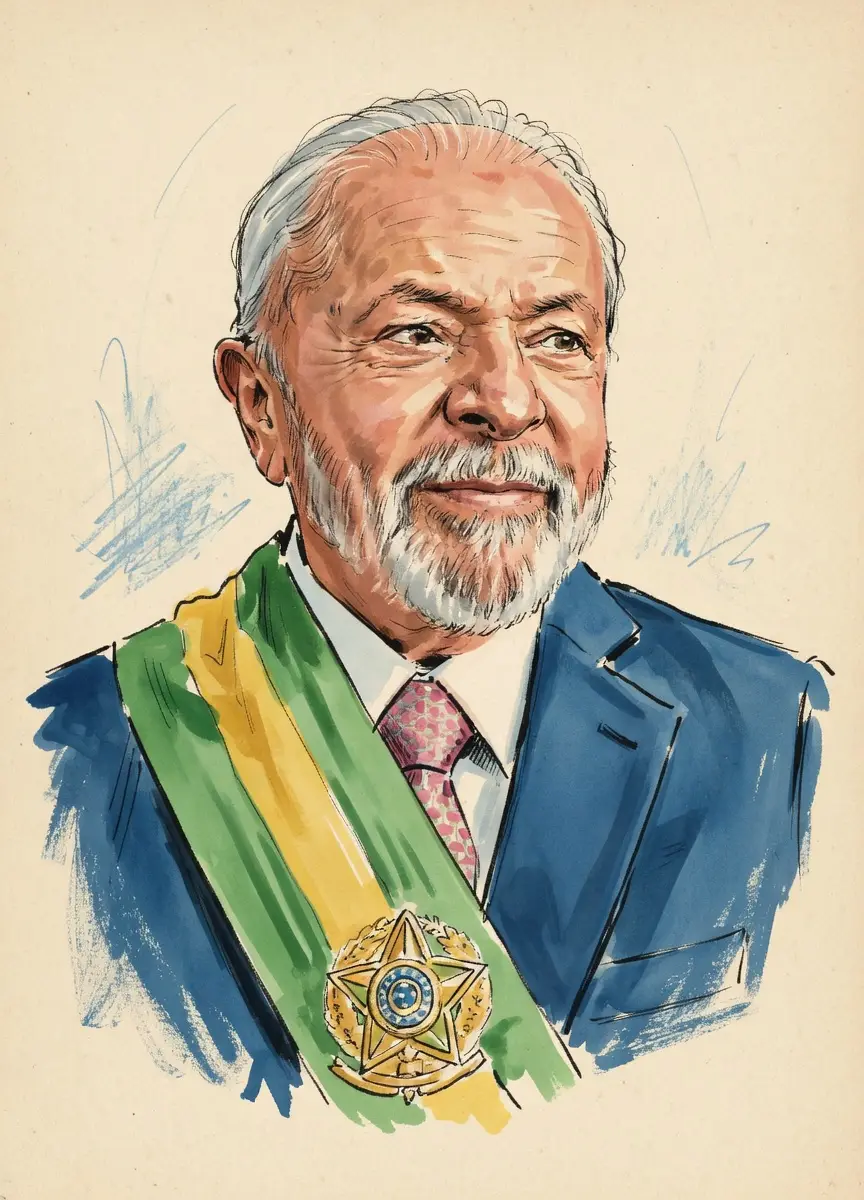
Lula da Silva on Donald Trump
TL;DR
Lula da Silva maintains a complex, pragmatic relationship with Donald Trump, balancing policy disagreements with diplomatic necessity.
Key Points
Lula da Silva previously characterized Donald Trump's political rhetoric using strong comparisons, citing Hitler's style in 2018.
The two leaders held a direct phone call in January 2026 and agreed upon a future visit by Lula to Washington.
The Brazilian president stated in February 2026 that his country does not want a new Cold War, implying a non-aligned foreign policy that avoids antagonism with the US under any administration.
Summary
Lula da Silva, the Brazilian president, has expressed significant ideological opposition to Donald Trump, frequently criticizing his rhetoric and approach to international institutions. The former president previously described the American leader's style as mirroring that of Hitler, highlighting a deep-seated ideological chasm between the two leaders' worldviews. Despite this strong historical and philosophical critique, the current relationship has shifted toward pragmatic engagement, acknowledging the need for dialogue between their respective nations given their economic importance and global standing.
The evolution of their positions suggests a diplomatic imperative overriding personal or ideological friction. Following the start of his current term, Lula da Silva engaged in direct communication with Trump, agreeing to a visit to Washington after the American leader's potential re-election. This indicates a willingness to set aside past animosity for the sake of bilateral relations, as Brazil seeks to navigate an increasingly polarized world and maintain influence, suggesting a shift from vocal criticism to conditional cooperation.
Key Quotes
“I want to tell the US President Donald Trump that we don't want a new Cold War. We don't want interference in any other country; we want all countries to be treated equally,”
Frequently Asked Questions
Lula da Silva has expressed strong ideological opposition to Donald Trump, criticizing his populist rhetoric and unilateral approach to global affairs. However, the Brazilian president has also shown a willingness to engage diplomatically due to the strategic importance of the bilateral relationship.
Yes, Lula da Silva's position has demonstrably evolved from harsh public criticism, including past historical comparisons, to a more pragmatic stance. This shift has allowed for direct high-level communication and planning for future presidential meetings.
Following the U.S. election, Lula da Silva engaged with Donald Trump, and the two leaders confirmed a call took place in January 2026. They agreed that the Brazilian president would visit Washington at a mutually convenient time.
Sources6
Lula’s rhetoric on Trump is back in Brazil debate
Brazil does not want a new Cold War, says Lula
Trump's shift from hostility to courting Brazil's leftist leader
Brazil's Lula holds call with Trump, agrees to visit Washington
Brazilian President Luiz Inacio Lula da Silva criticizes the United Nations
How Donald Trump influenced Latin America’s political landscape
* This is not an exhaustive list of sources.