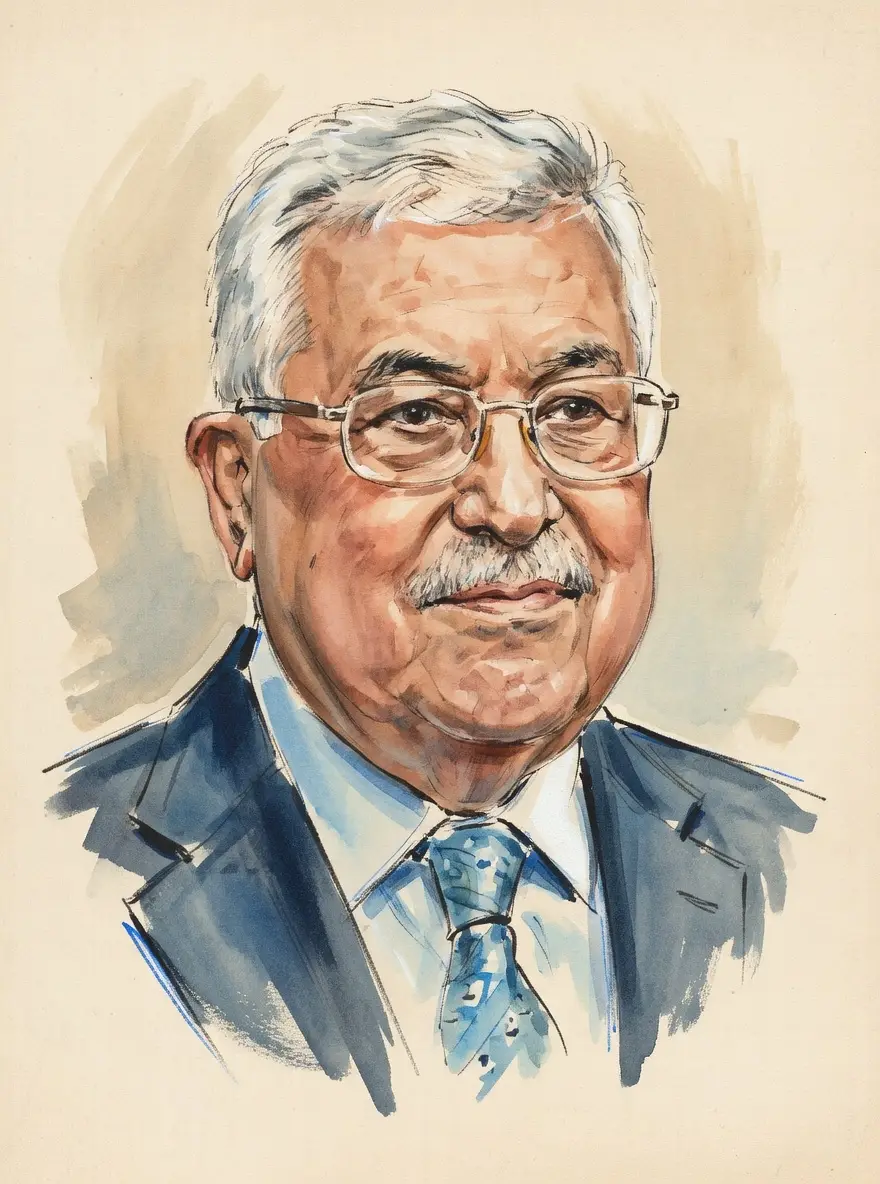
Mahmoud Abbas on Yasser Arafat
TL;DR
Mahmoud Abbas publicly honors Yasser Arafat as a leader but privately exhibited deep friction and rivalry with him.
Key Points
Mahmoud Abbas stated in 2016 that he knew the identity of Yasser Arafat’s killer, but his testimony alone was insufficient for action.
In 2003, as Prime Minister, Abbas reportedly threatened to resign due to a power struggle and feeling undermined by Arafat, who ridiculed him publicly.
Abbas dedicated his 2005 presidential election victory to the soul of Yasser Arafat, despite historical internal conflict between the two men.
Summary
Mahmoud Abbas, the successor to Yasser Arafat as Palestinian leader, maintains a public stance that honors the legacy of his predecessor while simultaneously revealing past internal conflicts. Abbas has publicly commemorated Arafat, including inaugurating the Yasser Arafat Museum in Ramallah and dedicating his 2005 election victory to Arafat's soul. This narrative frames him as a loyal inheritor of the national cause, following a man seen by many Palestinians as the embodiment of Palestinian nationhood.
However, leaked testimonies from a commission investigating Arafat’s death revealed significant animosity between the two men when both were alive. Officials testified that Arafat despised Abbas, even reportedly calling him a “son of a bitch” and likening him to a US puppet. Abbas, for his part, was accused by former officials of seeking to undermine Arafat by hinting to diplomats that Arafat was obstructing peace efforts. This suggests that while Abbas adheres to the political necessity of honoring Arafat publicly, their personal and political relationship was marked by deep rupture and mutual distrust.
Key Quotes
“We cannot continue to be an authority without any authority, or to allow this occupation to continue without cost.”
Frequently Asked Questions
Mahmoud Abbas's position is publicly reverent, framing himself as Arafat's successor and honoring his legacy, as seen with the opening of Arafat's museum. However, this public posture contrasts with private recollections suggesting deep political friction and mutual animosity during their time serving together. He thus maintains a complex stance balancing historical reverence with personal history.
Yes, his stance has shown an evolution between the historical context and the present. While he has not retracted public honors for Arafat, leaked testimonies indicate that during his tenure as prime minister, the two were locked in a power struggle. This suggests a change from perceived unity to the revelation of past internal conflict.
Mahmoud Abbas has repeatedly asserted that he knows who was responsible for Yasser Arafat's death, suggesting foul play was involved. He indicated that the real identity of the killer would be surprising to the public. Abbas stated that a commission of inquiry was investigating the matter and that the findings would be released at the earliest opportunity.
Sources7
Yasser Arafat thought Mahmoud Abbas was plotting to get rid of him - leaks
State of Failure: Yasser Arafat, Mahmoud Abbas, and the Unmaking of the Palestinian State | Jewish Book Council
Killing Arafat: 'Does Abbas have any evidence?' | Occupied West Bank | Al Jazeera
Ridiculed and betrayed: why Abbas blames Arafat | Palestine | The Guardian
Abbas says he knows who killed Arafat | The Times of Israel
The Disastrous Legacy of Mahmoud Abbas
Arafat and Abbas: Portraits of Leadership in a State Postponed | Johns Hopkins SAIS
* This is not an exhaustive list of sources.