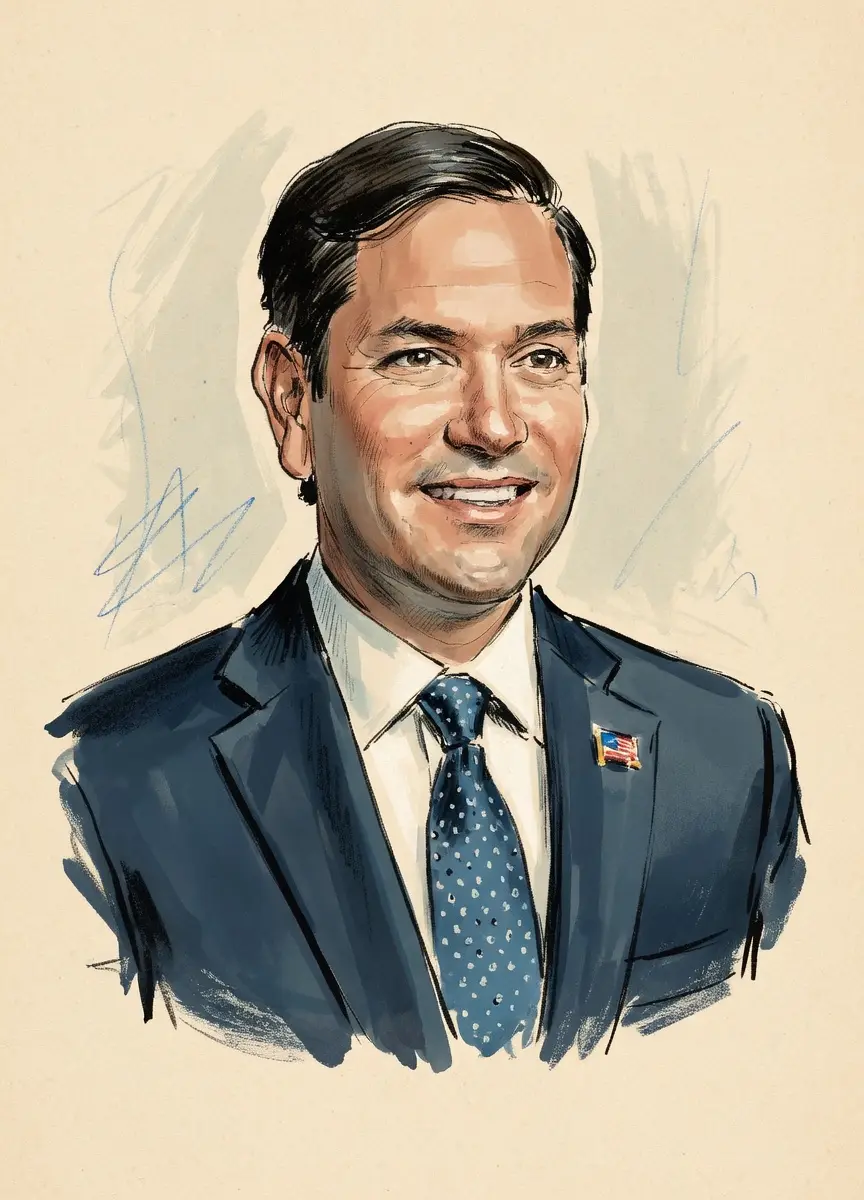
Marco Rubio on Climate Change
TL;DR
Marco Rubio is skeptical of federal policies to combat climate change, favoring adaptation and private sector innovation over emission cuts.
Key Points
He opposed the Paris climate agreement, viewing it as a measure that would only hurt economic growth.
Marco Rubio voted against moving forward with legislation that would have extended the Production Tax Credit for wind energy.
In 2020, he joined a bipartisan caucus focused on climate solutions, indicating some engagement on the issue's adaptation aspects.
Summary
Marco Rubio has expressed skepticism regarding the efficacy and economic impact of federal policies designed to combat climate change. While he has acknowledged that scientists study the Earth's changing climate and the contributions of human activities, he has historically questioned the settled science and the feasibility of legislative action to alter weather patterns. His approach often prioritizes adaptation to climate variability and empowering the private sector through innovation to achieve emission reductions, rather than mandating carbon cuts. This stance has been characterized by critics as greenwashing, focusing on superficial actions while avoiding measures that directly address the root cause of emissions.
In contexts where he engages with the topic, such as when discussing Florida's vulnerabilities, he supports robust efforts for adaptation, including building defenses against rising sea levels. However, his past record shows opposition to major federal initiatives like the Clean Power Plan and the Paris climate agreement, which he described as harmful to economic growth. More recently, in a high-profile diplomatic setting, he criticized European energy policies, arguing they were imposed to appease a "climate cult" and were impoverishing the populace while competitors utilized fossil fuels for economic advantage.
Frequently Asked Questions
Marco Rubio has expressed opposition to broad federal mandates aimed at fighting climate change, such as the Clean Power Plan, viewing them as economically damaging. He has stated that Washington cannot pass a law to fundamentally change the weather. Instead, he favors empowering the private sector through innovation to reduce emissions.
Marco Rubio's position appears to have evolved from openly questioning the science during his presidential run to acknowledging climate change and supporting adaptation efforts more recently. This shift aligns with growing public concern in his home state of Florida, though his opposition to emission-cutting mandates remains consistent.
During his remarks at the Munich Security Conference, Secretary of State Marco Rubio criticized European energy policies, alleging they were imposed to appease a "climate cult" and were financially hurting their citizens. He positioned the need for energy independence against overly restrictive climate measures.
Sources6
Secretary of State Marco Rubio at the Munich Security Conference
Rubio slams European policies on climate, migration as he calls for unity
Rubio eliminates climate office
Marco Rubio's Anti-Environmental Agenda Makes Him Wrong for Florida
Sen. Marco Rubio's “hotel towel” strategy for climate change
Fla. Sen. Marco Rubio joins bipartisan climate solutions caucus
* This is not an exhaustive list of sources.