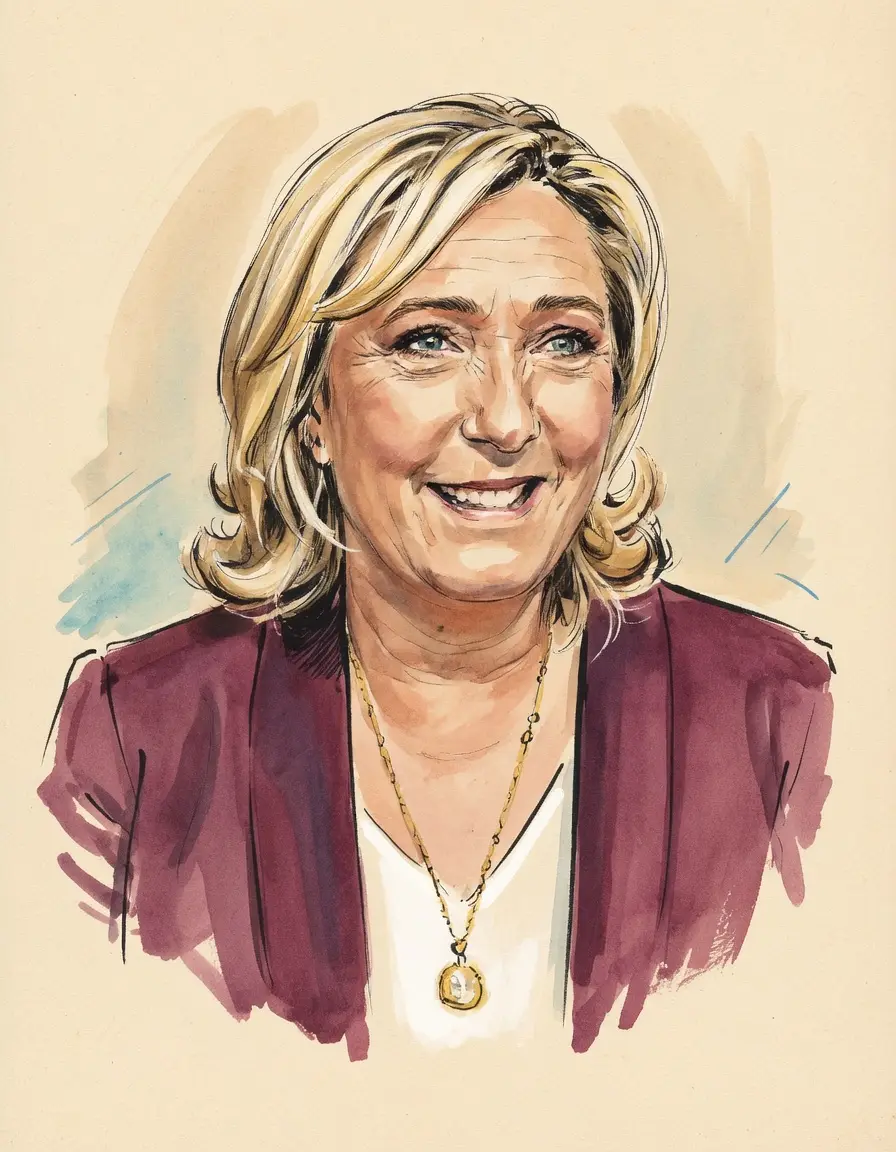
Marine Le Pen on Climate Change
TL;DR
Marine Le Pen rejects the current ecological transition as a punitive ideology that harms French quality of life and independence.
Key Points
The Rassemblement National manifesto pledges to develop a "common-sense ecology" based on scientific realities to protect French living standards.
She has vilified the "ecological transition" as the "playground of climate hypocrites" and an ideological push for degrowth.
Her party has pledged to dismantle the European Green Deal, viewing it as a tool of punitive ecology that weakens national competitiveness.
Summary
Marine Le Pen's position on Climate Change centers on a strong opposition to what she terms "punitive ecology" and the broader "ecological transition" favored by her political rivals. She frames the current environmental agenda, often associated with the European Green Deal, as an ideological movement aiming for degrowth that sacrifices the living standards of ordinary French people, particularly through new taxes and restrictions. She has been cited as embodying a threat to climate action by activist groups, who link her politics to climate relativism.
Her approach advocates for a "common-sense ecology" that prioritizes national independence and the protection of the French standard of living, explicitly rejecting measures that penalize households and businesses. This stance has evolved; while her party previously held a more moderate position, she has since adopted rhetoric highly critical of transition policies. She suggests that technical progress, rather than sweeping regulatory change, should be the primary means of addressing environmental challenges.
Frequently Asked Questions
Marine Le Pen's main criticism is directed at what she labels "punitive ecology." She contends that current climate policies, especially those from the EU, impose excessive standards and taxes that harm French purchasing power and industrial activity. She frames the current transition as an ideological imposition rather than a necessity for the general welfare.
Yes, her position appears to have evolved from a more ambiguous strategy of avoiding the issue in past campaigns. More recently, she has adopted a clearly hostile stance toward many aspects of the ecological transition. This repositioning aligns her party more closely with climate-relativist rhetoric, emphasizing lifestyle protection over immediate decarbonization.
Instead of the current strategy, she advocates for a "common-sense ecology" rooted in national interests and scientific realities that do not penalize citizens. She suggests that technical progress, rather than sweeping restrictions, should ultimately address the climate challenge. Her focus in campaigns has often been on lowering energy costs and blocking renewable infrastructure like wind turbines.
Sources4
France election 2024: What the manifestos say on energy and climate
When The Ecological Divide Becomes Impossible to Ignore. Why transition policies will increasingly shape European political systems
Marine Le Pen's Climate Policy Has a Whiff of Ecofascism
'10 years of climate sabotage': activists denounce Macron, Trump to mark Paris Agreement anniversary
* This is not an exhaustive list of sources.