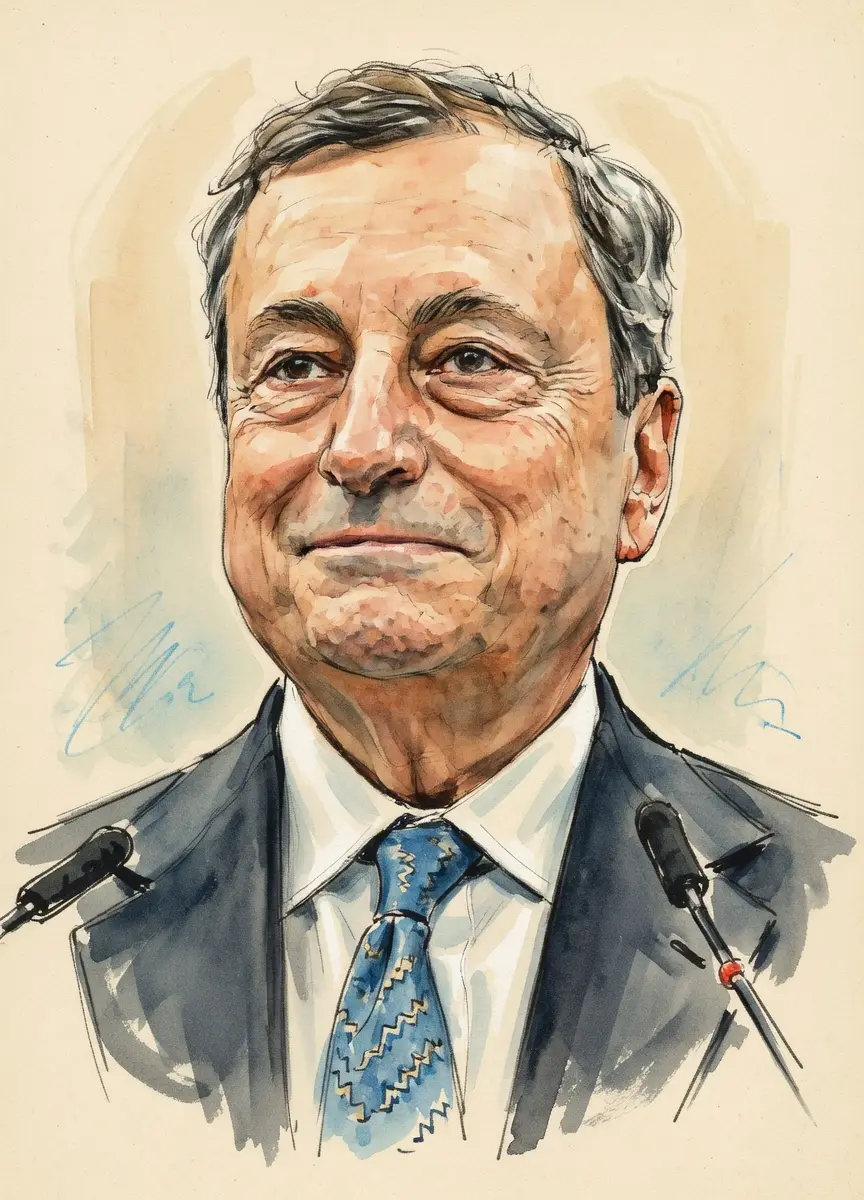
Mario Draghi on Greece
TL;DR
Mario Draghi viewed Greece as a success story by 2019, attributing its recovery to national efforts and sacrifices.
Key Points
As of October 2019, the outgoing ECB President considered Greece a success story, citing its ability to sell bonds at a negative yield.
He stated in October 2015 that the decision to lift capital controls rested solely with the Greek government, contingent on restored confidence.
Mario Draghi maintained the ECB was a rule-based institution that could not breach the prohibition on monetary financing (Article 123 of the Treaty).
Summary
Mario Draghi, during his final press conference as European Central Bank (ECB) President in October 2019, explicitly referred to Greece as a success story. He acknowledged that Greece had navigated away from the brink of collapse, evidenced by its ability to sell bonds at a negative yield, a significant improvement from its previous position. He credited this turnaround to the hard sacrifices of the Greek people and the efforts of its governments in implementing necessary policies.
He consistently maintained that the ECB acted according to its mandate, without political favouritism or discrimination towards Greece, even while admitting that the ECB's actions were heavily influenced by agreements made with other Eurogroup members. Draghi stressed that the future benefits for Greece depended on the continued, determined implementation of agreed-upon reforms, while also noting the dangers of undoing these policies. His underlying message was one of hope, contingent on maintaining the stability painstakingly rebuilt.
Frequently Asked Questions
Mario Draghi ultimately described Greece as a success story by the end of his tenure as ECB President in 2019. He pointed to the country’s recovery from being on the brink of collapse, showing success in implementing policies through the hard sacrifices of its people.
When asked with the benefit of hindsight, Mario Draghi stated that he could only speak for the ECB, and confidently asserted that the ECB always acted within its mandate and outside of politics. He noted that in any crisis, one works under intense pressure to find a solution.
Draghi emphasized that Greece needed to build on the political and economic stability it had recently regained. He warned against undoing the policies and reforms that contributed to the country's exit from the crisis, stating that determined implementation was crucial.
Sources6
Greece is a success story: Mario Draghi
Mario Draghi: Interview in Kathimerini
Introductory statement to the press conference (with Q&A)
Mario Draghi - Wikipedia
The Greek Crisis: Why Super Mario Draghi Can't Save Europe | PBS ...
Mario Draghi and the Holy Grail
* This is not an exhaustive list of sources.