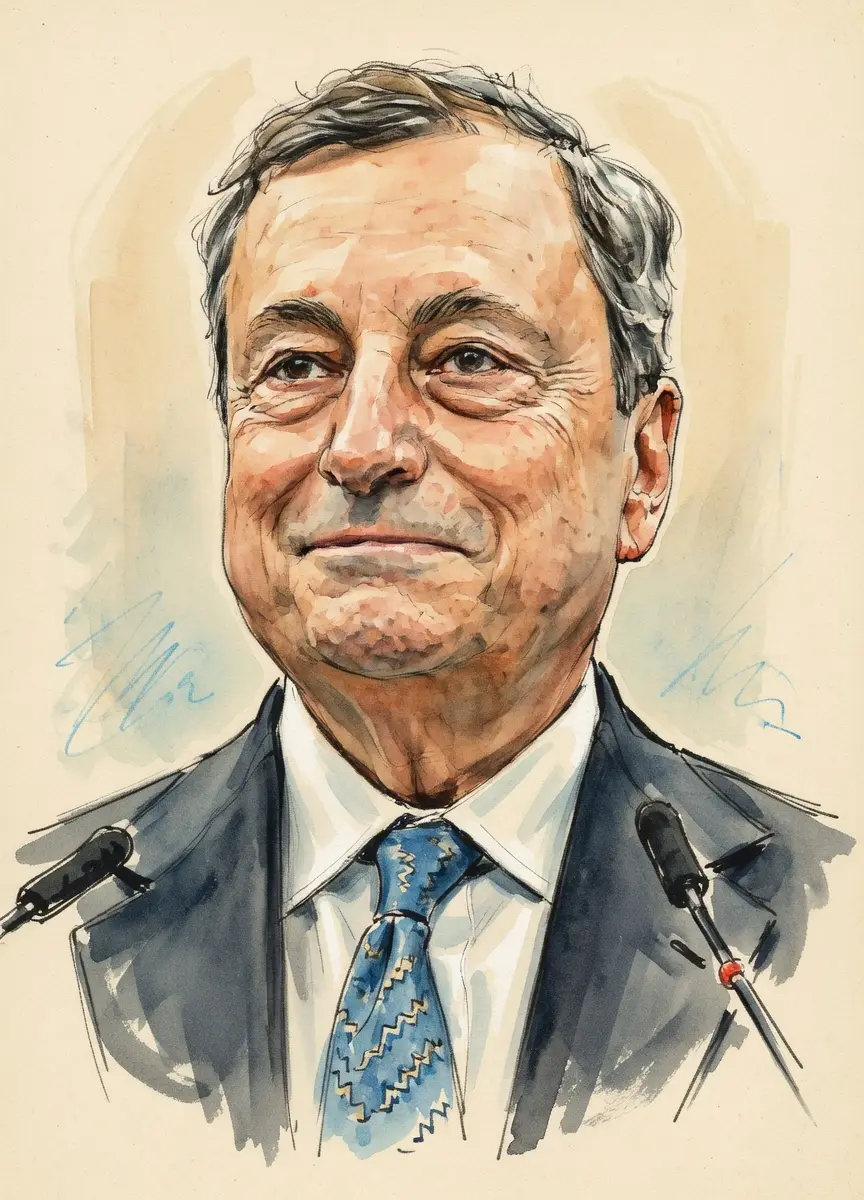
Mario Draghi on Political Ideology
TL;DR
Mario Draghi generally advocates for technocratic, pragmatic governance focused on economic stability over rigid ideological adherence.
Key Points
He favored a mixed technical and political government for Italy during his premiership, prioritizing competence.
His political stance is frequently characterized as centrist and strongly supportive of European Union integration.
Draghi's career trajectory suggests a preference for policy effectiveness over adherence to doctrinaire ideology.
Summary
Mario Draghi's political approach is widely characterized as technocratic, emphasizing evidence-based policy solutions and economic management over traditional ideological alignments. His tenure as Prime Minister of Italy involved leading a broad coalition government, which inherently required balancing disparate political factions rather than imposing a singular party ideology. This focus on stability and competence is rooted in his extensive background in central banking and international finance, where policy effectiveness often supersedes partisan dogma. Evidence of this is seen in his work to secure European Union recovery funds, a task demanding broad political consensus.
His willingness to accept leadership roles across different political environments suggests a flexible pragmatism, contrasting with leaders strictly defined by a singular political doctrine. While his policies often align with centrist or pro-European Union economic principles, the structure of his governance prioritizes achieving concrete economic and institutional reforms. The nature of his political insertion—often called upon during times of crisis—reinforces the perception that his ideology is one of necessary, non-partisan action.
Frequently Asked Questions
Mario Draghi's position is best described as technocratic pragmatism, prioritizing effective governance and economic stability. He generally operates outside rigid ideological frameworks, focusing instead on evidence-based solutions to complex national problems.
Mario Draghi is typically positioned as a centrist technocrat rather than strictly aligning with the traditional left or right wings of the political spectrum. His actions in government often sought to build consensus across various ideological parties in Italy.
The association stems from his background as a central banker and his appointment to lead a government composed of experts alongside politicians. This demonstrated a belief that complex issues require technical expertise and non-partisan management over partisan ideology.
Sources10
How a right-wing party of neo-fascist roots became poised to lead Italy
Weekly Political Compass: 4/26/21
Why ideology is dangerous
Mario Draghi suggested a mixed technical and political government for Italy. What's your opinion on that?
The Far-Right Continues to Build Its International
Italy election: The rise of Giorgia Meloni and her party's post-fascist roots
What did Mario Draghi say about ideology?
Explainer: How a party of neo-fascist roots won big in Italy
Political Ideology of current party leader in Italy?
Economic Policy and the European Union: A Tale of Two Crises
* This is not an exhaustive list of sources.