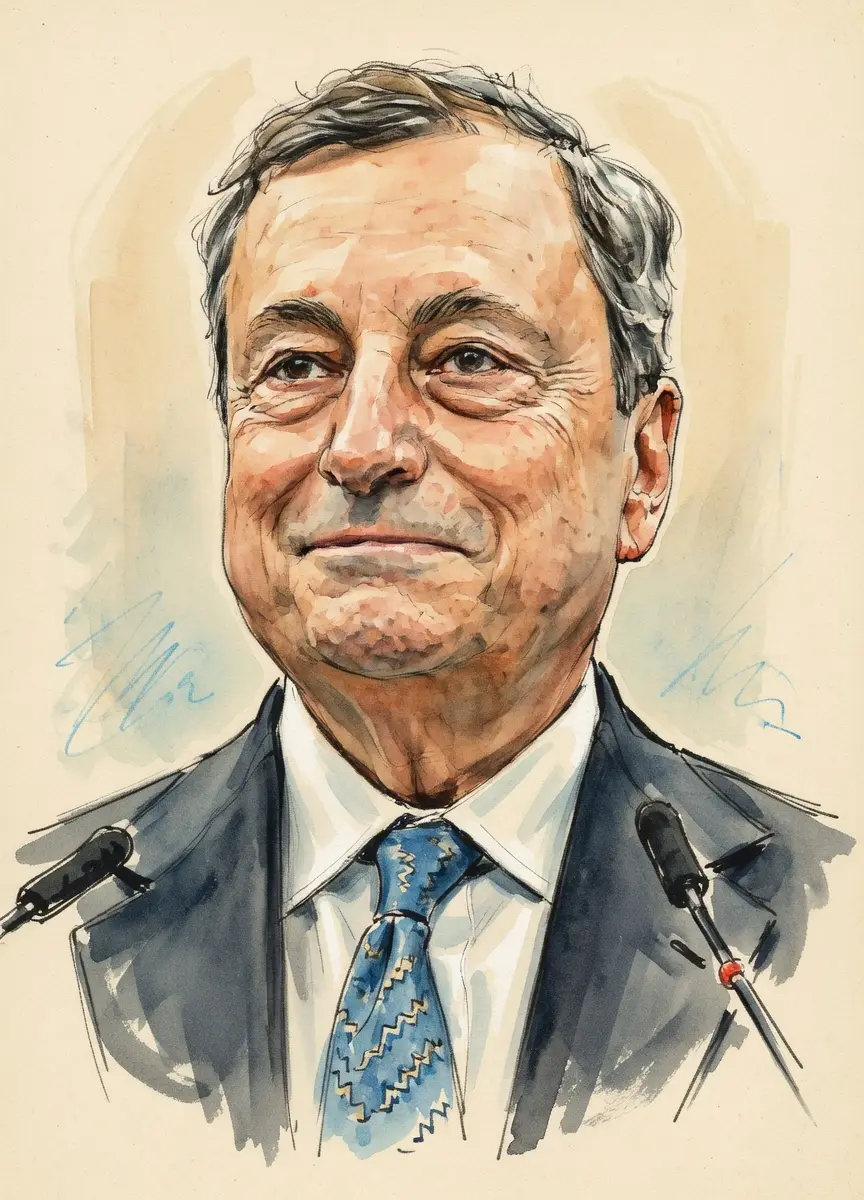
Mario Draghi on Quantitative Easing
TL;DR
Mario Draghi strongly advocated for and implemented Quantitative Easing as a necessary tool to preserve the euro and combat deflationary risks.
Key Points
He initiated the ECB's expanded asset purchase programme, known as quantitative easing, in March 2015.
Draghi stated that the ECB was ready to do whatever it takes to preserve the euro, which supported the foundation for subsequent QE measures.
He emphasized that the success of QE required complementary structural and fiscal policy reforms from European governments.
Summary
Mario Draghi's core position on Quantitative Easing, or QE, was that it was an essential, last-resort measure to safeguard the euro during the sovereign-debt crisis and combat deflationary pressures. He signaled this willingness to use powerful, unconventional tools with his famous "whatever it takes" statement in 2012, which preceded the concrete development of bond-buying plans like the Outright Monetary Transactions programme and the subsequent Public Sector Purchase Programme (PSPP). The ECB under his leadership launched the QE program in 2015, aiming to buy €60 billion in state bonds monthly until at least September 2016, driven by the mandate to keep inflation near, but under, 2%, as actual inflation was falling into negative territory.
While the ECB's measures were seen as bold and necessary to stabilize markets, they were also understood to be shouldering a burden due to the lack of a central fiscal capacity within the Eurozone architecture. His approach acknowledged that monetary policy could not be the sole lever for macroeconomic stability, necessitating complementary structural and fiscal reforms by national governments. The implementation of QE was complicated by internal skepticism, particularly from Germany, regarding the purchase of sovereign bonds from various countries, which led to constraints on the program's design and hints of a potential for later adjustments or extensions based on economic performance.
Frequently Asked Questions
Mario Draghi's primary motivation for supporting Quantitative Easing was to fulfill the European Central Bank's mandate of price stability by countering deflationary risks in the Eurozone. The policy was enacted when consumer prices were falling, and interest rates were near zero, making conventional tools ineffective. He viewed it as an essential, large-scale measure to stabilize the currency and economy.
Yes, the implementation of QE was constrained by skepticism from within the ECB governing council and political resistance, notably from Germany. This opposition centered on concerns about purchasing sovereign bonds from other euro-zone countries. Consequently, Draghi had to dilute certain details of the QE plan to maintain consensus.
The European Central Bank embarked on its expanded asset purchase programme, the Public Sector Purchase Programme (PSPP), on March 9, 2015. This followed earlier actions like the Outright Monetary Transactions (OMT) program announced in 2012. The PSPP aimed to purchase €60 billion in state bonds monthly for an initial period.
Sources6
'Whatever it takes', ten years on - Social Europe
Draghi's Dilemma | Brookings
Greece should resume policy dialogue and agree on reforms, Draghi tells MEPs | News | European Parliament
Quantitative Easing by the European Central Bank - Columbia
Quantitative easing: conjurer’s trick or long-term solution to Europe’s woes? | World Finance
Draghi's Dilemma: Expansion of Quantitative Easing in the EU
* This is not an exhaustive list of sources.