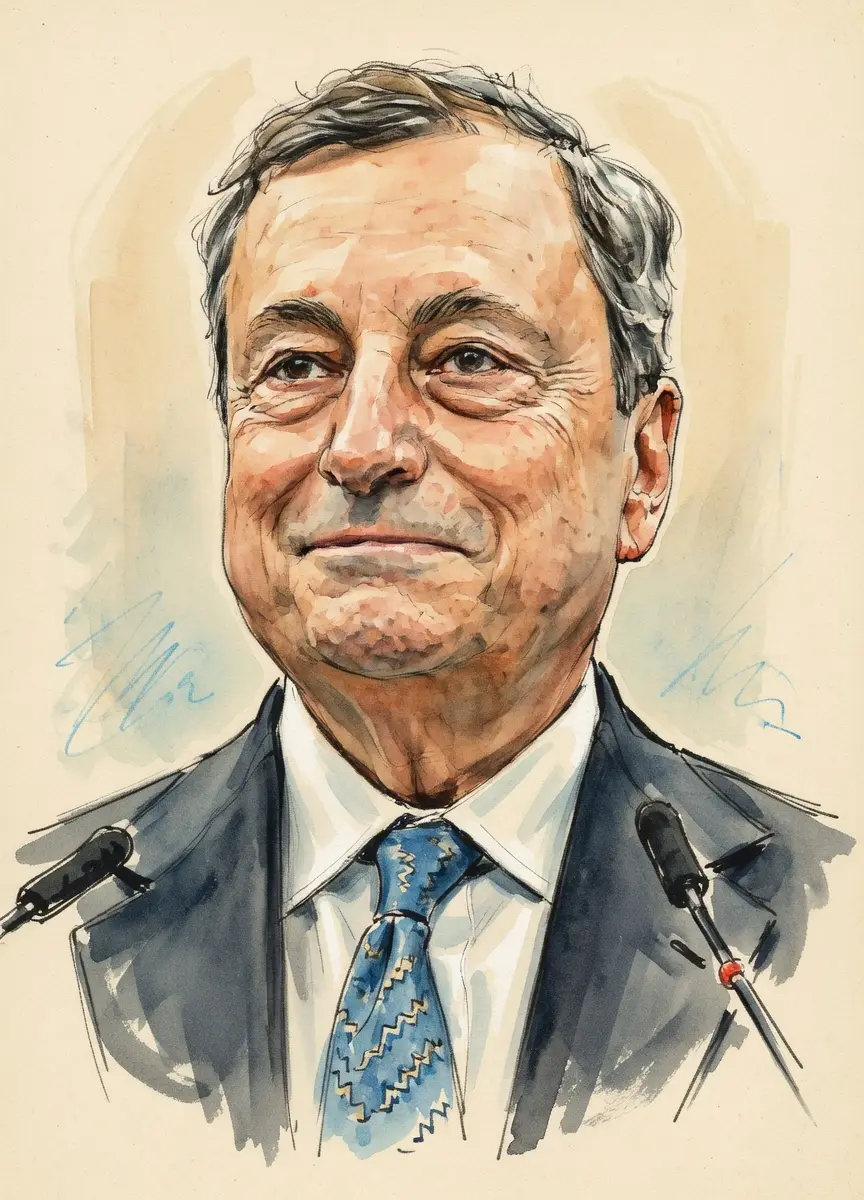
Mario Draghi on Tariffs
TL;DR
Mario Draghi strongly criticizes external tariffs while arguing internal European barriers are a more damaging self-imposed obstacle to growth.
Key Points
He views US tariffs as part of a geopolitical shift forcing Europe to choose between becoming a genuine power or risking subordination.
He highlighted that internal EU barriers can be equivalent to a 45 per cent tariff for manufacturing, contradicting claims based on certain estimates.
Draghi proposes temporary tariffs focused on emerging strategic sectors to promote necessary innovation and industrial capacity, distinguishing them from mercantilist aims.
Summary
Mario Draghi has strongly criticized the imposition of external tariffs, particularly those enacted by the United States, viewing them as a symptom of the breakdown of the post-World War II global order and a threat to European interests and stability. He notes that while Europe is caught between the transactional posture of the US and China's weaponization of supply chains, the EU must recognize that economic weight alone is insufficient for geopolitical power. He argues that reliance on past free-trade models is outdated in a world dominated by geo-economics and security concerns.
Conversely, Draghi focuses intensely on what he views as Europe's greater, self-inflicted damage: internal trade barriers and excessive regulation within the Single Market. He asserts that these internal obstacles are far more damaging to European growth than any external tariffs imposed by partners like the US. He cites estimates suggesting internal EU barriers are equivalent to substantial tariffs, slowing productivity and causing European companies to source inputs from outside the Union despite the high internal costs.
Key Quotes
Draghi conceives of wealth as the productive capacity of an economy. He proposes temporary tariffs focused on emerging strategic sectors, with the aim of promoting industries that can innovate and lead the sustainable transition.
Frequently Asked Questions
Mario Draghi's main criticism is directed inward, stating that the European Union's own internal trade barriers and regulatory hurdles inflict more economic damage than external tariffs from the United States or other global players. He believes this self-imposed protectionism stunts growth and productivity across the bloc.
Yes, Mario Draghi has suggested that targeted, temporary tariffs may be necessary in certain emerging strategic sectors. This proposal is framed not as a mercantilist tool but as a means to foster European industrial capacity and innovation in areas critical for future sovereignty.
He contrasts the external threat of US tariffs and Chinese supply chain leverage with the internal problem of high intra-European trade friction. While external tariffs are a geopolitical problem, the internal barriers, in his view, are a self-inflicted wound that actively reduces European competitiveness and growth.
Sources5
Mario Draghi—yet again—has issued a wake-up call to Europe
Forget the US — Europe has successfully put tariffs on itself: High internal barriers and regulatory hurdles are far more damaging for growth than anything America might impose (Mario Draghi)
Europe's Internal Tariffs: Why the IMF's 44% Estimate Doesn't Hold Up
Global | Tariffs, a trade instrument or a covert financial strategy?
Mario Draghi: How Do We Change Our Continent's Trajectory?
* This is not an exhaustive list of sources.