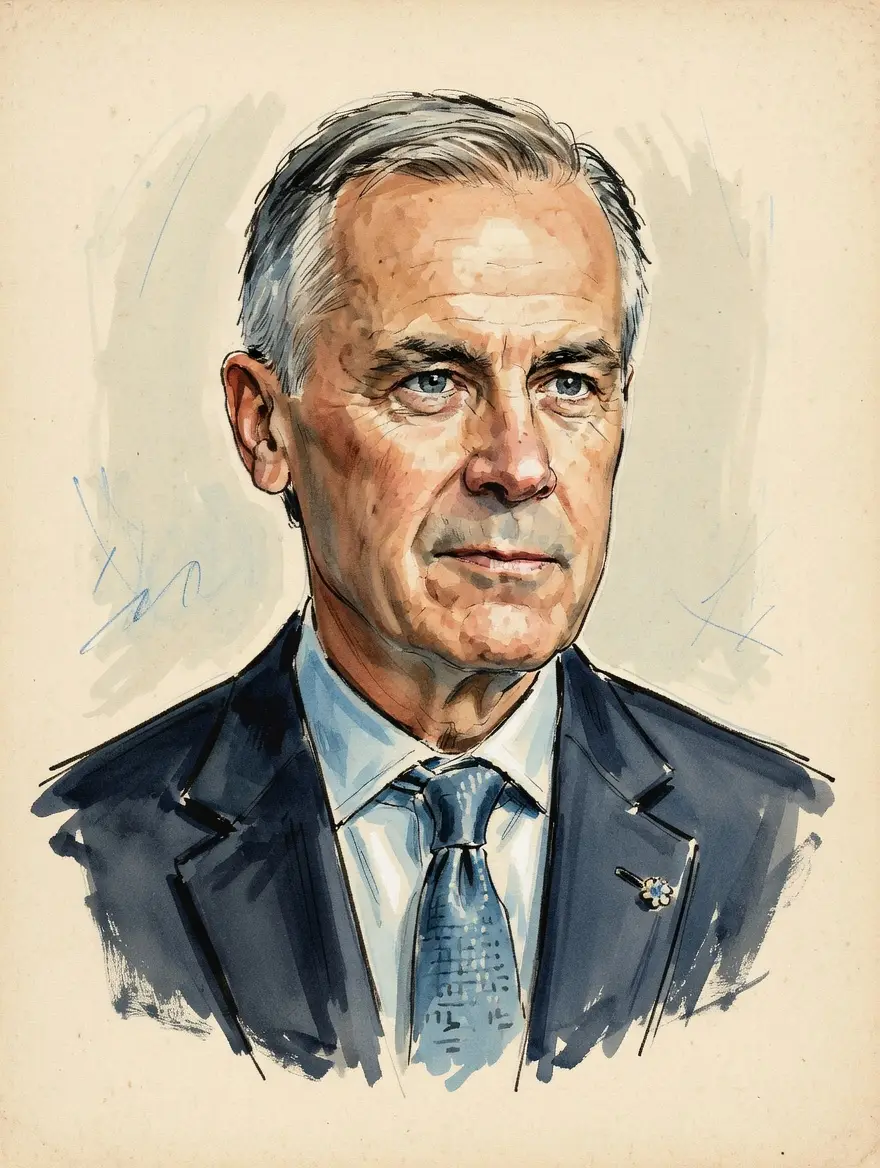
Mark Carney on Fossil Fuels
TL;DR
Mark Carney supports building fossil fuel infrastructure under the guise of national interest while maintaining clean energy goals.
Key Points
He announced the elimination of the federal consumer carbon tax effective April 1, 2025, shifting the burden to corporate polluters.
His government designated an LNG expansion project, Ksi Lisims LNG, as a 'Project of National Interest' to expedite its approval in November 2025.
Prior to becoming Prime Minister, he endorsed a report concluding that 65% of all oil and gas reserves must be left in the ground by 2030.
Summary
Mark Carney, as Prime Minister of Canada, has demonstrated a complex and shifting position on fossil fuels, contrasting with his past advocacy for climate action. While he has long recognized the scientific imperative to leave the majority of oil, gas, and coal reserves unburned, his current administration has prioritized bolstering the Canadian economy through fossil fuel projects, often under the label of 'national interest.' He has pushed for building pipelines to displace foreign oil and has supported the expansion of Liquefied Natural Gas (LNG) projects, while simultaneously championing clean energy sources like nuclear, hydro, and wind to position Canada as an 'energy superpower.'
This pivot in emphasis has led to policy reversals, such as eliminating the federal consumer carbon tax and pausing the electric vehicle mandate, moves critics argue jeopardize Canada's climate targets. He has suggested a focus on 'decarbonized oil' and has promoted Carbon Capture and Storage (CCS) hubs, actions critics contend are greenwashing and support continued unsustainable extraction rather than genuine transition. His approach is framed as a necessary balancing act to manage economic pressures, particularly trade tensions, and to secure political support from fossil fuel-producing regions, marking a significant departure from his earlier climate advocacy.
Key Quotes
“It is governments who must choose whether, and how, to pursue that two-degree world,”
“We're pursuing variable geometry, in other words,”
Frequently Asked Questions
Mark Carney's current stance is complex, involving support for domestic fossil fuel infrastructure development under the banner of national interest and economic competitiveness. He is also championing an energy superpower strategy that includes significant investment in nuclear, hydro, and wind power to displace emissions.
Yes, his position has appeared to shift significantly since he became Prime Minister of Canada. While previously known for strong warnings about unburnable fossil fuel reserves, his administration has taken steps that critics argue support fossil fuel expansion while rolling back consumer climate policies.
As Prime Minister, Mark Carney has supported prioritizing certain fossil fuel projects, such as an LNG expansion, by designating them as 'Projects of National Interest' under Bill C-5 to bypass regulatory hurdles. He has also spoken about the need for oil pipelines to displace foreign imports.
Sources8
The Climate and Energy Implication Hidden in Mark Carney’s Davos Speech
Carney doubles down on fossil fuels under the guise of 'national interest'
Mark Carney’s Shift From Climate-Change Warrior to Fossil-Fuel Cheerleader
How Mark Carney is complicating Canada’s climate progress
Mark Carney’s climate balancing act: clean energy promises & fossil fuel realities
Mark Carney As Climate Radical?
Canadian PM Mark Carney's Shift From Climate-Change Warrior to Fossil-Fuel Cheerleader : r/climate
A Letter to Mark Carney, Prime Minister of Canada
* This is not an exhaustive list of sources.