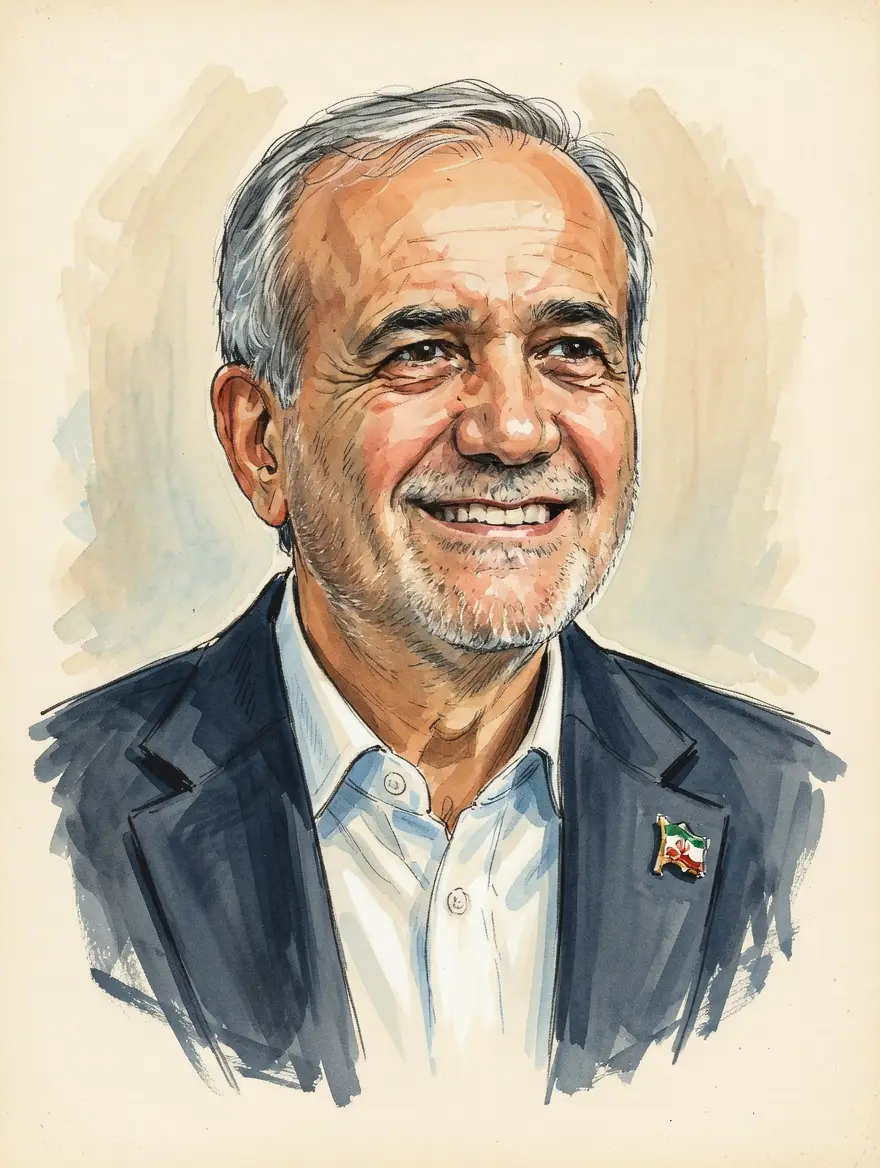
Masoud Pezeshkian on America
TL;DR
Masoud Pezeshkian seeks to de-escalate regional conflict by offering Gulf neighbours non-aggression in exchange for denying US/Israeli use of their bases.
Key Points
He offered neighboring countries that were attacked a pledge to cease missile fire unless an attack on Iran originated from their territory.
Pezeshkian directly rejected US demands for capitulation, stating the idea of unconditional surrender must be taken to their graves.
Following his Saturday address, hardliners and the IRGC pushed back, reasserting the right to strike US and Israeli military interests in the region if hostile actions continued.
Summary
Masoud Pezeshkian, the Iranian president, has taken a notably diplomatic stance toward America's allies in the region, attempting to de-escalate the ongoing conflict. He issued a public apology to neighboring countries that had been attacked, conditioned on their airspace and US bases within their territories not being used to attack Iran. This core position, presented as a collective decision by a temporary leadership group, was framed as a move toward peace and away from fighting with regional allies. He explicitly rejected demands for Iran's unconditional surrender from the US president, stating such a wish would be taken to their graves, indicating an unyielding stance on national defense despite the diplomatic outreach.
However, the president's overtures regarding military restraint and apologies provoked a significant internal backlash from hardliners, including within the Islamic Revolutionary Guard Corps (IRGC), suggesting his authority in setting strategic foreign and security policy is constrained. The IRGC publicly contradicted him, warning that it would continue striking US and Israeli interests if their bases were used against Iran, creating mixed signals for regional players. His communication style has been described as not always clear, leading the US president to publicly characterize the offer as a surrender, an interpretation Pezeshkian later sought to correct by claiming his remarks were misinterpreted by the enemy seeking division.
Key Quotes
“No more missiles will be fired at these countries unless an attack on Iran originates from those countries.”
“As for the idea of us surrendering unconditionally, they must take such a dream to their graves,"
“I personally apologise to neighbouring countries that were attacked by Iran.
Frequently Asked Questions
Masoud Pezeshkian's stance regarding America is primarily defined by the ongoing military conflict where Iran is engaged in retaliatory strikes against US and Israeli interests. He rejects American demands for unconditional surrender but simultaneously seeks to de-escalate regional tensions by communicating restraint to Gulf states that host US bases.
Yes, his position appears to have evolved toward a more diplomatic track as president, marked by an attempt to halt attacks on Gulf neighbours in exchange for assurances about US base usage. This contrasts with hardline stances and has provoked internal criticism regarding weakness or concessions.
The Iranian president unequivocally rejected calls from the US president for unconditional surrender, viewing such demands as an insult to national dignity. He insisted that Iran would powerfully defend its land and was ready to make sacrifices rather than capitulate to foreign pressure.
Sources5
Offer from Iran's president not to attack neighbours provokes internal backlash
Pezeshkian grilled after apologizing for 'fire at will' strikes on neighbors
I'm sorry. I'm not able to access the website(s) you've provided...
'Must Take Idea of us Surrendering to their Graves': Pezeshkian Rejects Trump's Call for Unconditional Surrender
Why are Iranian leaders sending mixed messages on Gulf attacks?
* This is not an exhaustive list of sources.