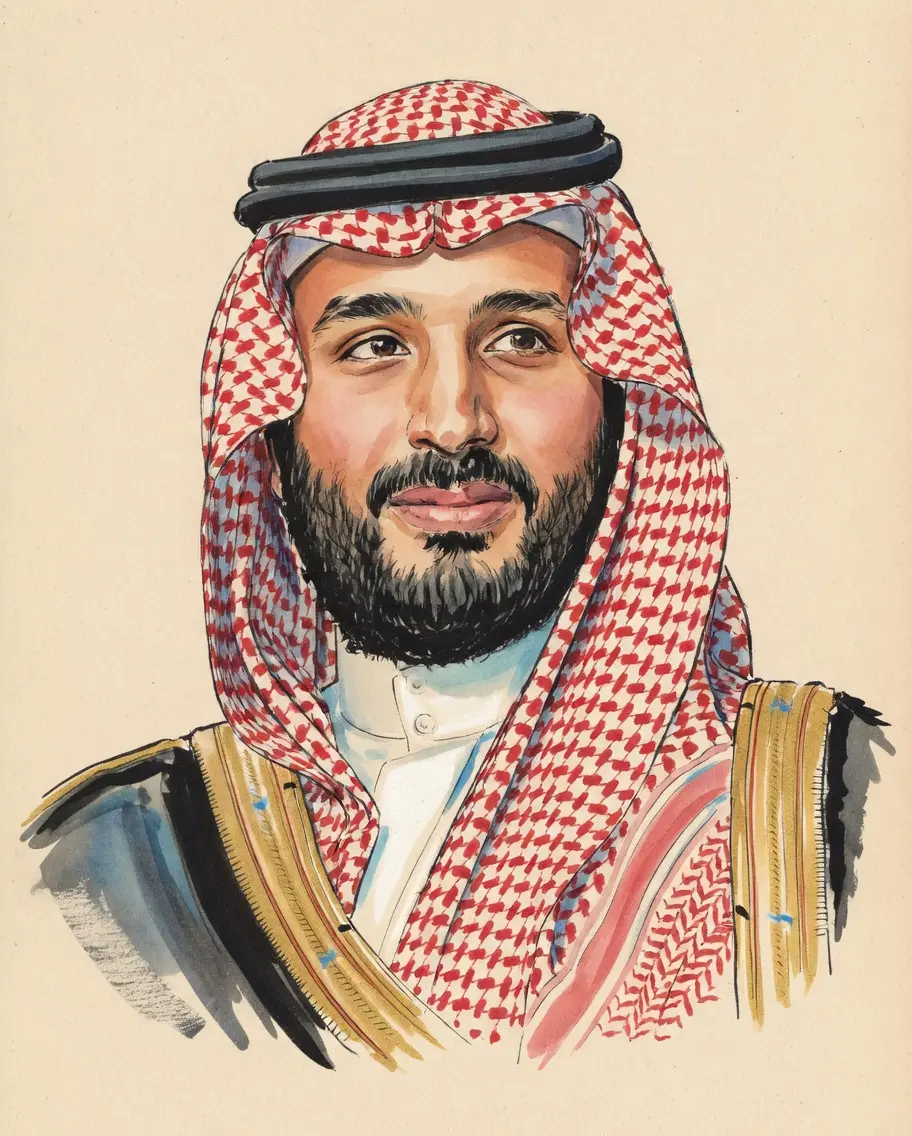
Mohammed bin Salman on Women
TL;DR
Mohammed bin Salman champions women's advancement within Vision 2030 by focusing on workforce participation and dress code flexibility.
Key Points
He stated in March 2018 that the decision on women's respectful attire is entirely left to the woman, not specifying a black abaya.
He committed to working on an initiative to introduce regulations ensuring equal pay for men and women.
He indicated that pre-1979 Saudi Arabia did not have societal guardianship laws, which he suggested are not directly from the Prophet Muhammad's time.
Summary
Mohammed bin Salman positions himself as a proponent of advancing women's rights and participation as a core component of his Vision 2030 for Saudi Arabia. He has asserted that women are half of society and must be a productive half, advocating for their inclusion in all professional sectors, including business, politics, and as lawyers. He also stated that in Islam, there is no difference between men and women regarding fundamental equality, noting that Saudi women in government are already paid equally to men. He has publicly stated that the religious laws do not specifically mandate a black abaya or head cover, leaving the decision for decent and respectful attire entirely up to the woman.
His approach to reform is characterized as taking gradual, top-down steps, such as reversing the ban on female driving, while suggesting that some customs, like aspects of the guardianship system, require time to adjust without harming culture or families. Critics note that while these visible changes occur, fundamental structural issues, such as the Personal Status Law that maintains male guardianship for key decisions like marriage or travel, remain in place or are only loosely reformed. Furthermore, independent activists advocating for more fundamental rights have faced detention, suggesting a limit to the officially sanctioned pace and scope of change under his leadership.
Frequently Asked Questions
Mohammed bin Salman stated that Sharia law requires women to wear decent and respectful clothing, similar to men, but clarified this does not specifically require a black abaya or head cover. He asserted that the decision on the specific type of decent attire is left entirely up to the woman. This statement was made during a 2018 interview.
Yes, his position is framed as an evolution from past societal norms as part of Vision 2030, citing historical images of women in the 1960s and 70s as the 'real Saudi Arabia.' While he champions reforms like driving, critics point out that long-standing legal structures like male guardianship remain restrictive.
He emphasized that women are half of Saudi society and must be a productive half, supporting their inclusion in all sectors like business and law. He also mentioned that in the Saudi government, women are already paid exactly the same as men and that regulations were being introduced for the private sector.
Sources8
MBS Puts Women at the Forefront of Vision 2030
Saudi Arabia: the laws on what women can – and can’t – do in 2025
Fact-Check: No, Saudi Arabian Prince Mohammed Bin Salman Did Not Say Women Can Choose What To Wear Without Male Permission
Saudi Arabia's Crown Prince Says Women Are 'Absolutely' Equal
Saudi Arabia's Violence Against Women Isn't Culture — It's Policy
Saudi Arabia: Prince says women should decide whether to wear robes, face veils
Saudi Arabia: No Country for Bold Women
Freedom on Paper: Reforms to Women's Rights in Saudi Arabia Will Not Be Effective Until Male Guardianship is Abolished
* This is not an exhaustive list of sources.