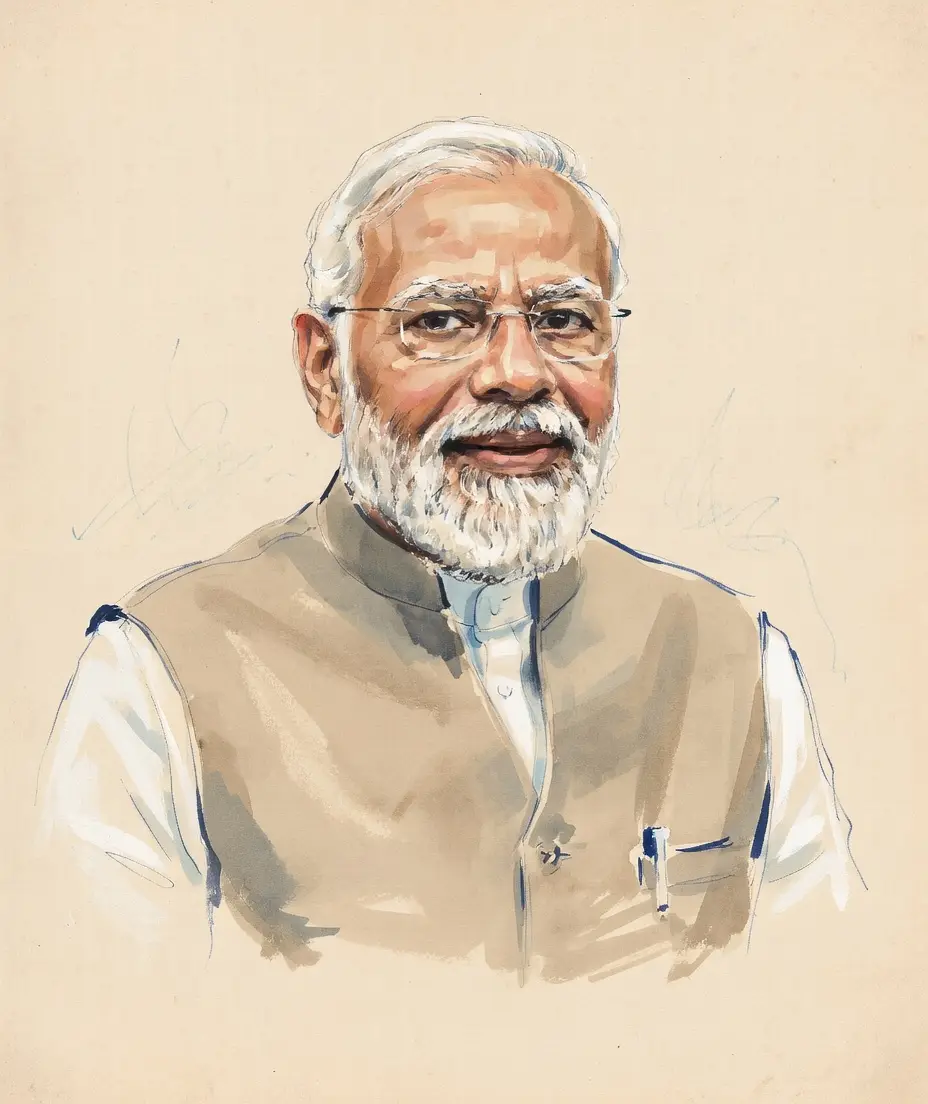
Narendra Modi
- Known for
- Prime Minister of India, Chief Minister of Gujarat, Hindutva politics
- Born in
- Vadnagar, India
- Education
- MA Political Science, Gujarat University
Narendra Modi, the longest-serving Prime Minister outside the Indian National Congress, defines Indian politics through a blend of Hindu nationalism and market liberalization. Rising from his roots in the RSS, he built a reputation as a strong, decisive leader centered on his personal brand.
Signature Positions
Modi’s tenure is marked by significant policy shifts and ideological drives:
- Hindutva: Pushed a majoritarian agenda, exemplified by the Citizenship Amendment Act and the revoking of Article 370 for Jammu and Kashmir.
- Economy: Advocates neoliberal reforms, prioritizing privatization, foreign investment, and industrial growth initiatives like Make in India.
- Sanitation: Launched the high-profile Swachh Bharat Mission, significantly improving sanitation coverage across the country.
- Defense: Adopted a hardline stance against Pakistan, authorizing surgical strikes and presiding over the 2025 India–Pakistan conflict.
- COVID-19 Response: Oversaw massive vaccination efforts but faced scrutiny over pandemic death estimates and the initial severe total lockdown.
Notable Tensions
Modi’s governance is characterized by several major domestic and international tensions:
- Gujarat Violence (2002): Despite consistent criticism and investigations into his complicity in the anti-Muslim violence, the Supreme Court has found no evidence to prosecute him.
- Economic Development vs. Social Indices: While Gujarat's GDP growth was high under his tenure as CM, the state performed poorly in metrics like poverty relief and education.
- Democratic Backsliding: Critics point to the weakening of democratic institutions and suppression of dissent, leading to comparisons with Indira Gandhi's era.
- Foreign Relations: Improved ties with the United States following past visa denials, while navigating complex China–India relations amid border skirmishes.
Modi has engineered a significant political realignment towards the right wing, winning successive majorities since 2014. His highly centralized style of governance—replacing the Planning Commission with NITI Aayog—and reliance on personal charisma have reshaped the political landscape. He remains a figure of consistently high approval ratings despite controversy.