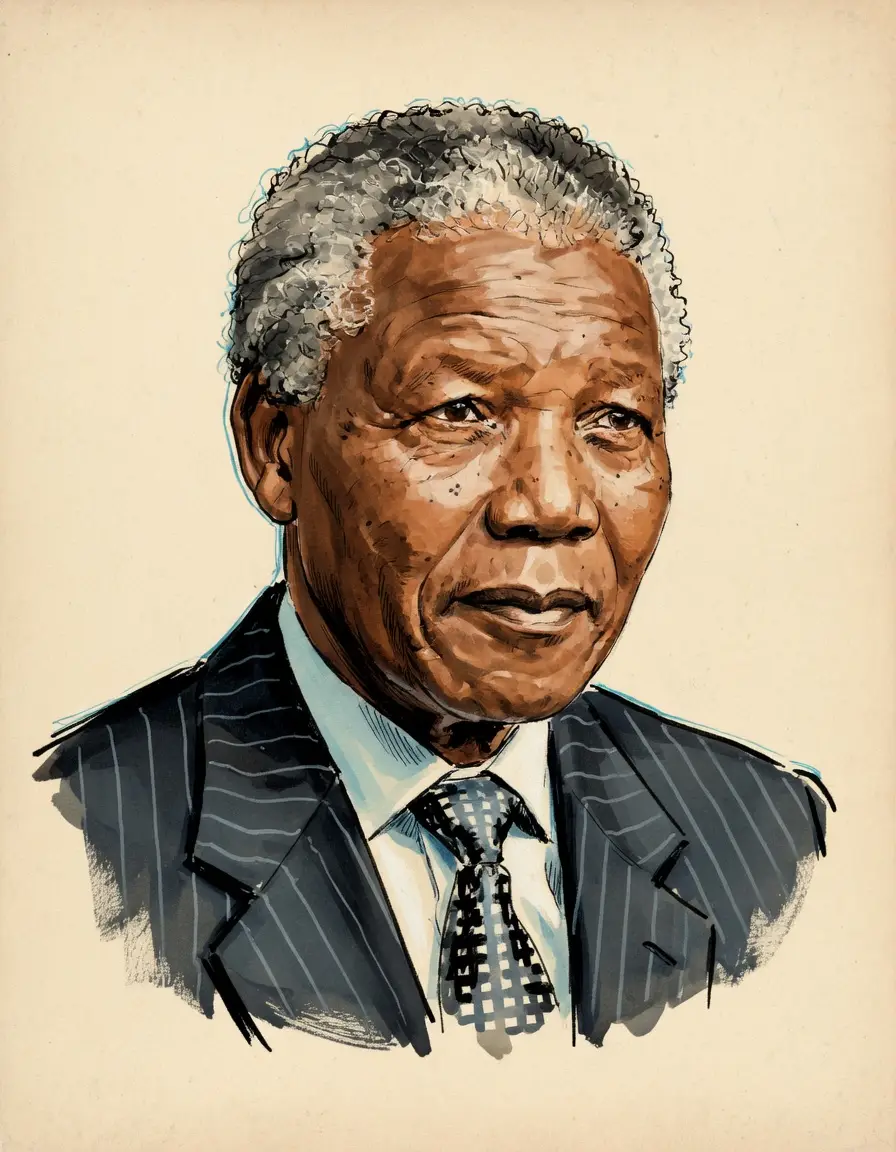
Nelson Mandela
- Known for
- Anti-apartheid statesman, First black president, Racial reconciliation
- Born in
- Mvezo, South Africa
- Education
- LLB, University of London International Programmes
Nelson Mandela stands as the paramount figure in the dismantling of apartheid and South Africa's transition to democracy. An African nationalist and socialist, his worldview was defined by a lifelong commitment to justice and racial reconciliation. He is revered globally as an icon of moral leadership, achieving the country's first fully representative presidency.
Signature Positions
Mandela's leadership was characterized by strategic shifts in tactics and unwavering core goals:
- Reconciliation: Prioritized national healing, notably through the Truth and Reconciliation Commission and supporting the previously hated Springboks rugby team.
- Democracy: A devout believer in majority rule, despite occasionally presenting an autocratic style, advocating for inclusivity, accountability, and freedom of speech.
- Violence/Non-Violence: Evolved from commitment to non-violent resistance to co-founding the armed wing Umkhonto we Sizwe (MK), later prioritizing negotiation over armed struggle.
- Socialism: Advocated for a classless society and supported the nationalisation called for in the Freedom Charter, though his administration adopted a market-friendly GEAR policy.
- Human Rights: Insisted that human rights be the core of international relations, exemplified by his mediation efforts in the Pan Am Flight 103 trial.
How Views Have Evolved
Mandela's revolutionary path involved significant ideological adjustments.
Initially, he favored Africanist self-determination before embracing a multi-racial front against apartheid, influenced by allies and global liberation movements.
His stance on violence also shifted dramatically; moving from non-violent protest to accepting sabotage as necessary, before returning to a non-violent negotiating stance for the final transition.
Notable Tensions
Mandela's legacy is complicated by several notable contradictions and external criticisms:
- Communism: Secretly joined the SACP late in the struggle, yet publicly denied being a communist, a position maintained for pragmatic Western support.
- Economic Policy: As a self-professed socialist, his presidency adopted a neo-liberal economic framework (GEAR) instead of nationalization, drawing socialist criticism.
- Criticism from the Left: Some, like Wilderson III, accused him of 'selling out' by negotiating with the regime and failing to fully implement the Freedom Charter.
- Domestic Issues: Faced severe criticism for neglecting the HIV/AIDS pandemic and failing to curb high levels of crime during his term.
Internationally, Mandela became a global icon and 'secular saint,' often cited alongside Gandhi and Martin Luther King Jr. for his moral authority.
Domestically, he is revered as the 'Father of the Nation,' successfully guiding the country away from predicted civil war.
His status attracted controversy, with Western powers in the 1980s labelling him and the ANC a 'terrorist organisation'.