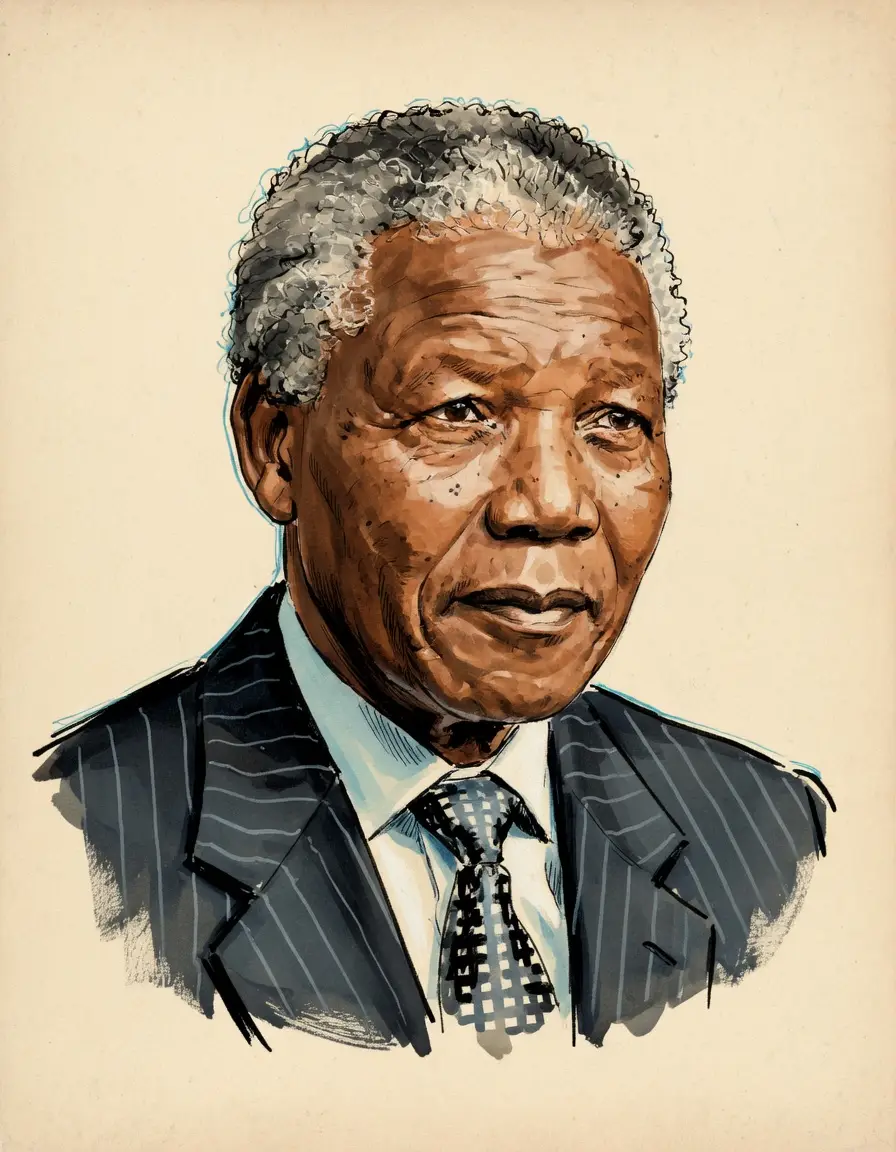
Nelson Mandela on Corruption (OCCRP allegations)
TL;DR
Nelson Mandela held a strong, lifelong stance against corruption, viewing it as a major threat to South Africa's democracy.
Key Points
He consistently positioned corruption as a fundamental threat to the moral legitimacy of the new democratic government.
Mandela pledged to ensure the new government operated with full accountability, referencing the need to protect public funds.
His administration established the Truth and Reconciliation Commission, setting a precedent for accountability in the post-apartheid era.
Summary
Nelson Mandela consistently and vehemently condemned corruption throughout his political career, framing it as a cancer that undermines the democratic gains made after apartheid. His core position emphasized that good governance and the rule of law were essential to building a non-racial, non-sexist state, and corruption represented a direct betrayal of the people who supported the struggle. This stance was often articulated in his public addresses where he warned that the misuse of public funds would derail the nation's development, despite the OCCRP investigating various allegations related to post-Mandela governance.
His commitment to ethical leadership established a high moral benchmark for the new South African government, though the enduring presence of issues like state capture suggests the challenges he anticipated continued beyond his tenure. While the specific allegations investigated by the OCCRP primarily concern events after his presidency, Mandela's principled foundation was set when he established post-apartheid policies aimed at accountability and transparency. His efforts included establishing the Truth and Reconciliation Commission, though that body focused more on past political crimes than contemporary financial malfeasance.
Key Quotes
"The problem is you can't deal with corruption this way."
'He will take money from anybody so long as it's for the fund. To President Mandela it is all for a good cause,"
Frequently Asked Questions
Nelson Mandela was vehemently opposed to corruption, viewing it as a betrayal of the struggle for liberation and a threat to democracy. While the OCCRP investigates newer matters, his established principles strongly condemn any financial misconduct in public office.
The provided sources do not detail personal corruption allegations against Nelson Mandela during his presidency or afterwards. His public stance remained a fierce opposition to corruption within the state apparatus.
Nelson Mandela frequently spoke out against corruption, warning it would erode the gains of the democratic transition. He stressed that leaders must serve the public interest, not their own wealth.
Sources9
Nelson Mandela - OCCRP
Corruption in South Africa - Wikipedia
Mandela gives farewell address
State Capture
Nelson Mandela’s African National Congress Has Violated Everything He Stood For
South Africa election: How Mandela's once-revered ANC lost its way with infighting and scandals
Truth and Reconciliation Commission Day 2
* This is not an exhaustive list of sources.