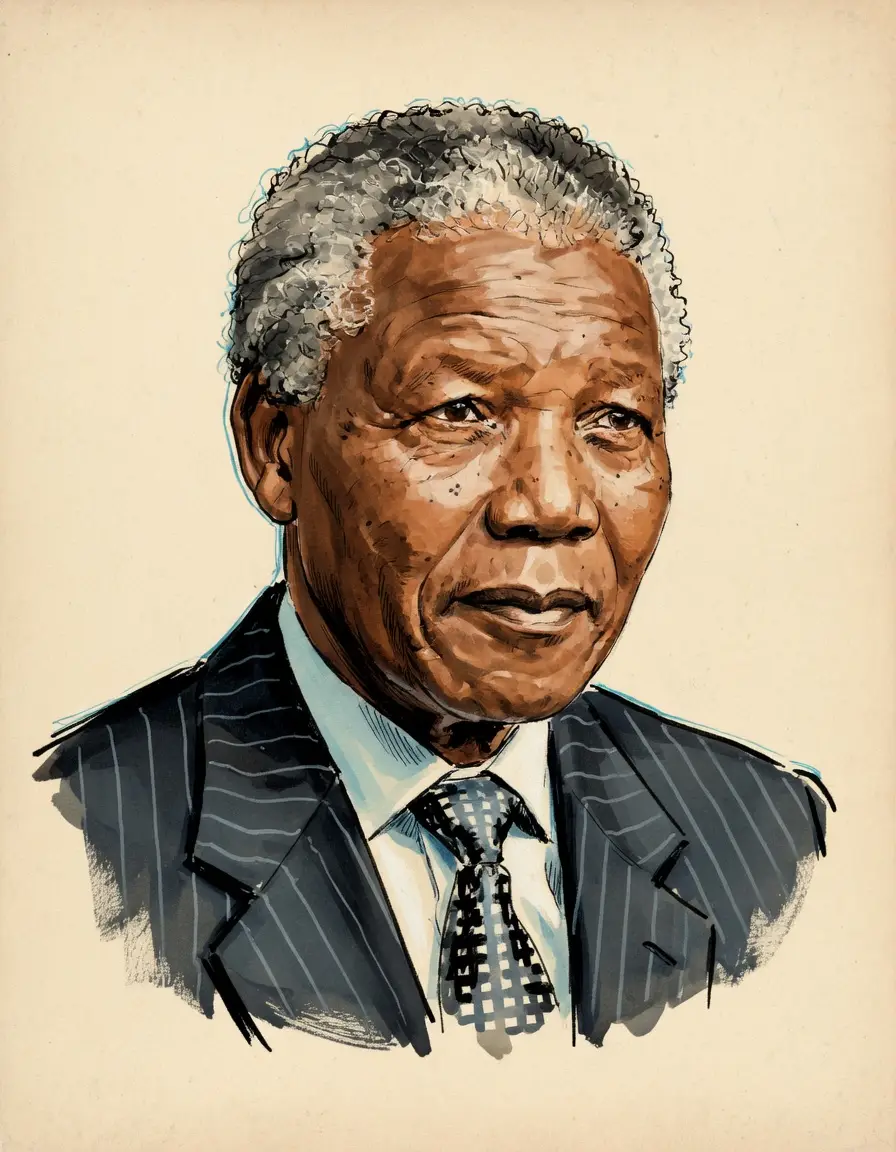
Nelson Mandela on Courage
TL;DR
Nelson Mandela defined true courage as the mastery and triumph over fear, not its complete absence.
Key Points
He articulated that the brave man conquers fear rather than lacking it entirely.
The quote concerning courage being the triumph over fear is found in his autobiography, Long Walk to Freedom.
As we are liberated from our own fear, his presence automatically liberates others.
Summary
Nelson Mandela's core position on courage is that it is not the lack of fear, but the active triumph over it. This defining statement, which he made, posits that the genuinely brave person is one who feels fear but successfully conquers it. This perspective suggests an ongoing struggle and mastery rather than an inherent state of being fearless, which he admitted to experiencing by hiding his own fear behind a mask of boldness.
This understanding of courage was forged through his experiences fighting against apartheid, which involved immense personal risk and decades of incarceration. The implications of this view are that courage is a practiced virtue, revealed and developed only when facing danger or risk. Furthermore, he suggested that as individuals are liberated from their own fear, their presence can automatically liberate others.
Frequently Asked Questions
Nelson Mandela's position is that courage is fundamentally about overcoming fear, not the absence of it. He felt that the truly brave individual is one who experiences fear but proceeds to conquer that feeling. This is a key lesson he stated he learned during his life.
The available evidence suggests a consistent philosophical stance on courage, emphasizing its active triumph over fear. His writings and quotes present this definition as a fundamental realization from his experiences, rather than a position that appears to have evolved significantly.
Nelson Mandela famously said, "I learned that courage was not the absence of fear, but the triumph over it." He also noted that the brave person is not one who does not feel afraid, but rather the one who conquers that fear. This concept comes from his autobiography.
Sources5
15 Nelson Mandela Quotes | Britannica
Nelson Mandela – I learned that courage was not the absence of fear but the triumph over it.
Nelson Mandela Quotes About Courage | A-Z Quotes
Help Me Confirm a Nelson Mandela Quote : r/AfricanHistory
Courage – You've got this! - CUInsight
* This is not an exhaustive list of sources.