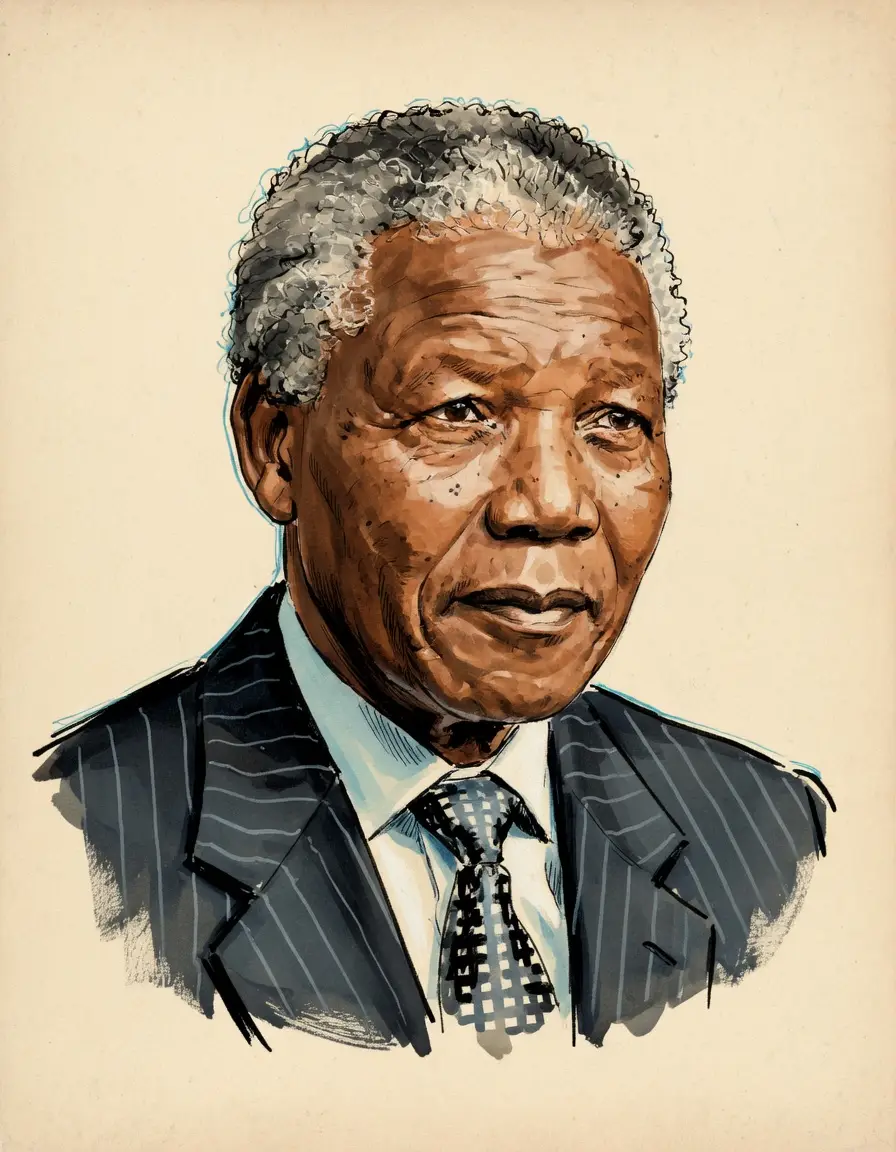
Nelson Mandela on Democracy
TL;DR
Nelson Mandela cherished the ideal of a democratic and free society where all people live together in harmony and with equal opportunities.
Key Points
He cherished the ideal of a democratic and free society where all persons live together in harmony and with equal opportunities, an ideal for which he was prepared to die.
Mandela requested the UN to send observers to South Africa in July 1992 as political violence escalated and the negotiation process toward democratic elections was at risk.
He was inaugurated as South Africa's first democratically elected president on May 10, 1994, following the country's first nonracial parliamentary elections held in April 1994.
Summary
Nelson Mandela unequivocally championed the establishment and sustenance of a democratic, non-racial, and non-sexist South Africa, viewing it as the culmination of his life's struggle. Core to his stance was the concept of universal suffrage on a common voters' roll, which he saw as the essential prerequisite for achieving peace and racial harmony, a demand that made the white minority fear democracy due to the impending shift in majority rule. He frequently emphasized that after achieving political emancipation, the work must continue to eradicate poverty and discrimination for all citizens, asserting that freedom is incomplete until the basic needs of the people are met.
His understanding of democracy was influenced by traditional African consensus-building models, which he adapted to a modern context, valuing the hearing of all viewpoints until consensus is reached over simple majority rule. Following his release from prison and during his presidency, he actively worked to build institutions that would safeguard democratic values, such as establishing the Truth and Reconciliation Commission. Furthermore, he viewed a critical, independent, and investigative press as the lifeblood of any democracy, essential for tempering any government's appetite for accumulating power at the expense of the citizen.
Key Quotes
A critical, independent and investigative press is the lifeblood of any democracy.
Since we have achieved our freedom, there can only be one division amongst us: between those who cherish democracy and those who do not.
Frequently Asked Questions
Nelson Mandela's core position was the unwavering pursuit and establishment of a genuinely democratic, non-racial, and non-sexist society in South Africa. He believed this was the only path to racial harmony and that freedom could not be complete until poverty and discrimination were eradicated for all.
He stated that a critical, independent, and investigative press is the lifeblood of any democracy. He argued that the media must be free from state interference and possess the strength to question power fearlessly.
While his views on economic policy evolved as he engaged with business realities, his fundamental commitment to the principle of a non-racial, inclusive democracy remained constant. His political struggle was consistently framed around achieving these democratic rights.
Sources8
Documents on Democracy | Journal of Democracy
A selection of quotes from the late Nelson Mandela – Nelson Mandela Foundation
Mandela's Democracy - Monthly Review
Nelson Mandela's Life & His Statements Speaking Out For Justice: Nelson Mandela's Life & His Statements Speaking Out For Justice
Let FREEDOM reign! Understanding freedom through 10 Nelson Mandela quotes — Institute of Race Relations
Mandela's South Africa: Why Democracy Won
Address by Nelson Mandela to the International Press Institute Congress
Nelson Mandela - Global Governance Forum
* This is not an exhaustive list of sources.