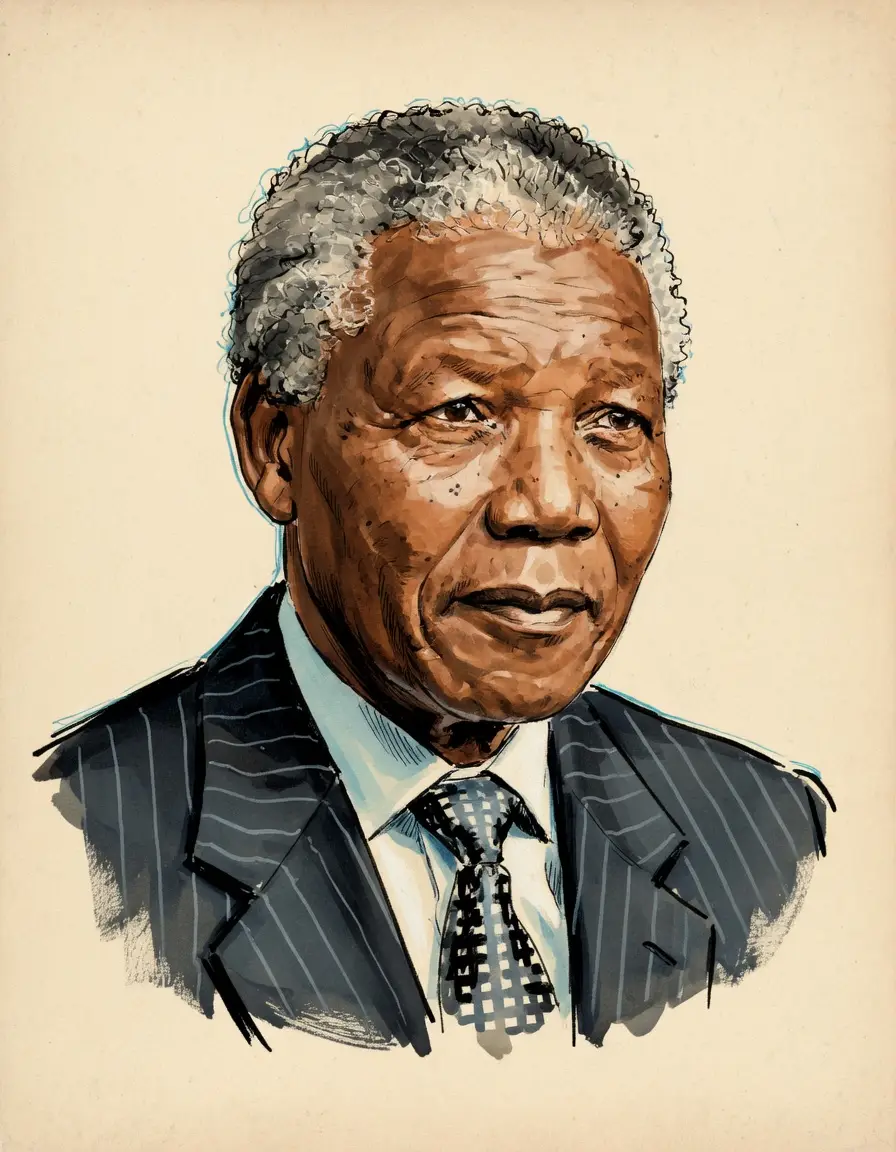
Nelson Mandela on Gender Equality
TL;DR
Nelson Mandela strongly believed that true freedom and national progress are impossible as long as women remain oppressed and unequal.
Key Points
He famously stated on National Women's Day in 1996 that human rights lack substance as long as women are bound by poverty and looked down upon.
His administration established Women's Day on August 9th to honor the women who fought against the apartheid government.
He oversaw the ratification of the Convention on the Elimination of all forms of Discrimination Against Women in 1995, committing South Africa to specific gender equality guidelines.
Summary
Nelson Mandela viewed gender equality as intrinsically linked to the broader struggle for human rights and social justice, stating that freedom cannot be achieved while women are bound by oppression. He actively worked to dismantle legal and systemic barriers against women, both before and after becoming president. Evidence of this commitment includes establishing Women's Day and ensuring women played a key role in drafting the new democratic constitution, reflecting his belief that progress would be slow if the nation ignored more than half of its population.
His administration prioritized concrete action over mere words, implementing policies to improve women's status, such as ratifying the Convention on the Elimination of all forms of Discrimination Against Women in 1995. Furthermore, he appointed strong women to key decision-making roles within his office and government, setting a precedent for female leadership. He also championed measures to address poverty, which he saw as a primary constraint on women's rights, and publicly denounced violence against women.
Key Quotes
Freedom cannot be achieved unless the women have been emancipated from all forms of oppression.
Frequently Asked Questions
Nelson Mandela was a strong advocate for gender equality, viewing it as inseparable from overall human liberation. He asserted that national progress would be stunted as long as women were oppressed or prevented from contributing fully to society.
As president, he established Women's Day, ensured women's rights were enshrined in the 1996 constitution, and ratified the CEDAW convention. He also appointed women to high-level advisory and governmental roles.
Yes, he actively denounced violence against women, referring to it as a serious and escalating evil in society. He urged society to unite against abusers and supported campaigns like the White Ribbon initiative.
Sources5
4 Ways Nelson Mandela Championed Women's Rights
Address by President Nelson Mandela on National Women's Day
Reflections on Nelson Mandela and Women's Leadership
New book features a Nelson Mandela quote for every SDG
Mandela Day's long walk to social and gender equality | UNGEI
* This is not an exhaustive list of sources.