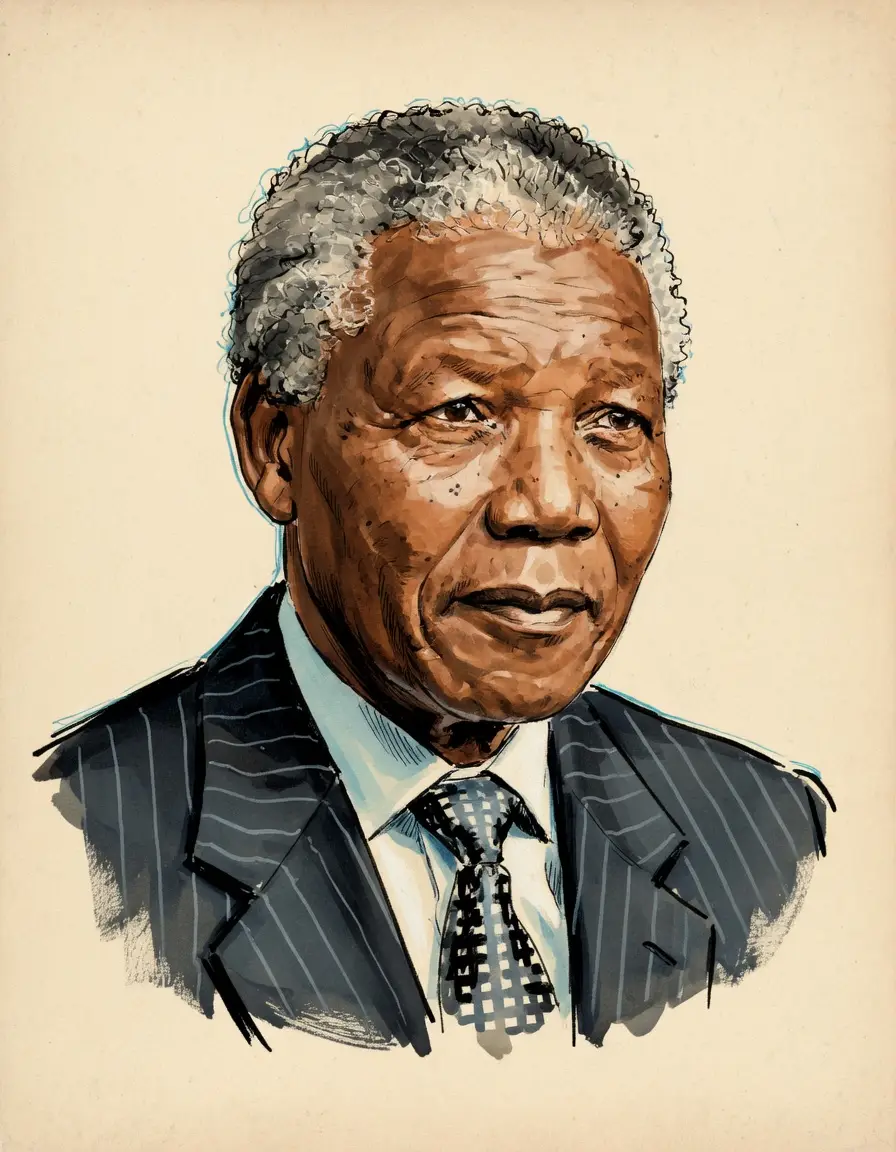
Nelson Mandela on HIV
TL;DR
Nelson Mandela championed the fight against the HIV/AIDS pandemic, especially after his presidency, focusing on treatment access and reducing stigma.
Key Points
He described HIV/AIDS in 2003 as a 'new war of global dimensions' claiming more lives in Africa than all wars and other deadly diseases combined.
In July 2002, he publicly donned a T-shirt emblazoned with 'HIV Positive' to combat the stigma surrounding the disease.
Following his 2000 speech at the International AIDS Conference, mother-to-child transmission prevention and access to antiretrovirals became immediate priorities in the region.
Summary
Nelson Mandela's position on HIV/AIDS evolved significantly, becoming a major post-presidency focus where he took a vocal and compassionate stance against the pandemic that he largely did not address during his time as president. While in office, his priorities centered on national reconciliation and political stability, leading to initial silence on the growing health crisis. Activists urged him to use his moral authority to combat the epidemic, which was devastating communities and undermining economic growth across Africa.
After stepping down, his engagement became decisive and deeply personal, characterized by confronting denialism and stigma. He publicly announced his son died of AIDS and wore an HIV-Positive T-shirt to foster acceptance and encourage testing and treatment, urging people to treat it like any other illness. His advocacy helped influence global priorities, specifically regarding mother-to-child transmission prevention and access to antiretroviral treatment.
Key Quotes
Let us not equivocate: a tragedy of unprecedented proportions is unfolding in Africa. AIDS in Africa today is claiming more lives than the sum total of all wars, famines, floods, and the ravages of deadly diseases such as malaria.
Frequently Asked Questions
Nelson Mandela's main focus on HIV/AIDS, especially after leaving office, was to fight stigma and discrimination associated with the disease. He used his stature to urge acceptance, encourage testing, and advocate for access to life-saving antiretroviral treatments for those suffering.
Yes, his stance demonstrably changed; he was criticized for being silent on the escalating epidemic during his presidency (1994-1999). However, after retirement, he became an active and outspoken champion, making personal disclosures to combat the taboo surrounding HIV.
Nelson Mandela repeatedly stressed the catastrophic scale of the HIV/AIDS pandemic, calling it a tragedy of unprecedented proportions unfolding in Africa. He stated that it was undermining social fabrics, depleting healthcare services, and erasing decades of developmental gains.
Sources7
Nelson Mandela's Mixed Legacy on HIV/AIDS | FRONTLINE
AIDS will affect us all eventually, Mandela tells London audience
Saluting Nelson Mandela, a Champion of AIDS Awareness
Nelson Mandela's Public Health Legacy
Nelson Mandela speaks out against AIDS
Mandela Champions S. Africa's AIDS Fight
* This is not an exhaustive list of sources.