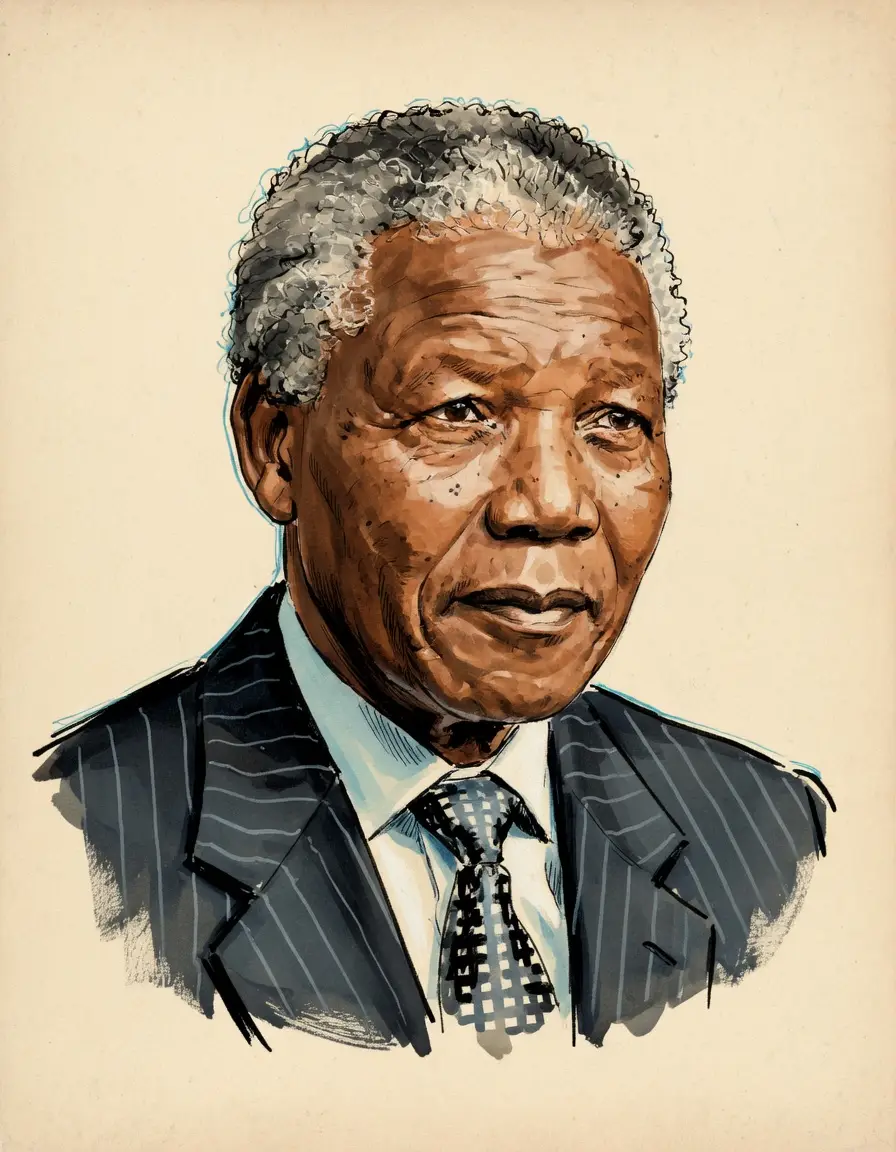
Nelson Mandela on Leadership
TL;DR
Authentic leadership demands a pragmatic, humble servant-style approach focused on uniting people toward a common, long-term goal.
Key Points
He advocated for forgiveness over bitterness, stating that leaving hatred behind was necessary to avoid remaining spiritually imprisoned.
Mandela believed true courage was the triumph over fear, not its absence, requiring leaders to project confidence to inspire others.
He practiced servant leadership by referring to himself as the people's servant and focusing on building unity after overcoming racial division.
Summary
Nelson Mandela viewed leadership not as a position of power, but as a profound responsibility rooted in service and tactical pragmatism. His approach was characterized by a willingness to listen, persuade his base, and maintain a long-term vision, often prioritizing consensus-building over dominating debates. This servant leadership style was exemplified by his belief that a leader should stay behind the flock, subtly directing while allowing others to believe they are in front, a concept he often related to his boyhood experiences herding cattle.
His leadership evolved significantly through his decades of imprisonment, leading him to become a master tactician who distinguished between immutable principles, such as overthrowing apartheid, and mutable tactics, such as when to begin negotiations. He actively sought to understand his opponents, learning their language and sport, to better formulate strategy, demonstrating that understanding one's enemy is crucial for success. Furthermore, he established the precedent that a true leader knows when to quit office, voluntarily stepping down in 1999 to set a democratic standard for the continent rather than holding onto power indefinitely.
Frequently Asked Questions
Nelson Mandela's core philosophy centered on servant leadership, emphasizing humility, forgiveness, and the ability to inspire and empower others. He believed that a leader’s significance is determined by the positive difference made in the lives of others rather than personal gain. He modeled this by working with former oppressors to build a united nation.
He managed differing opinions by listening to all sides first, then subtly unfurling his own thoughts to steer the decision in his desired direction without imposing it. He understood the wisdom of persuading people to adopt an idea, making them believe it was their own initial thought.
No, he actively worked against seeking absolute control, choosing instead to set a democratic precedent by willingly stepping down from the presidency in 1999. He believed his job was to set the course for his country, not to steer the ship indefinitely.
Sources7
Mandela: His 8 Lessons of Leadership | TIME
Four leadership lessons from Nelson Mandela | Impact Hub
Leadership Lessons I learned from Mandela - John Maxwell
Quote by Nelson Mandela: “A leader. . .is like a shepherd. He stays behin...”
10 Nelson Mandela Quotes on Leadership - The Borgen Project
Nelson Mandela's Servant Leadership: What We Can Learn from Him
11 Leadership Qualities of Nelson Mandela - Skip Prichard
* This is not an exhaustive list of sources.