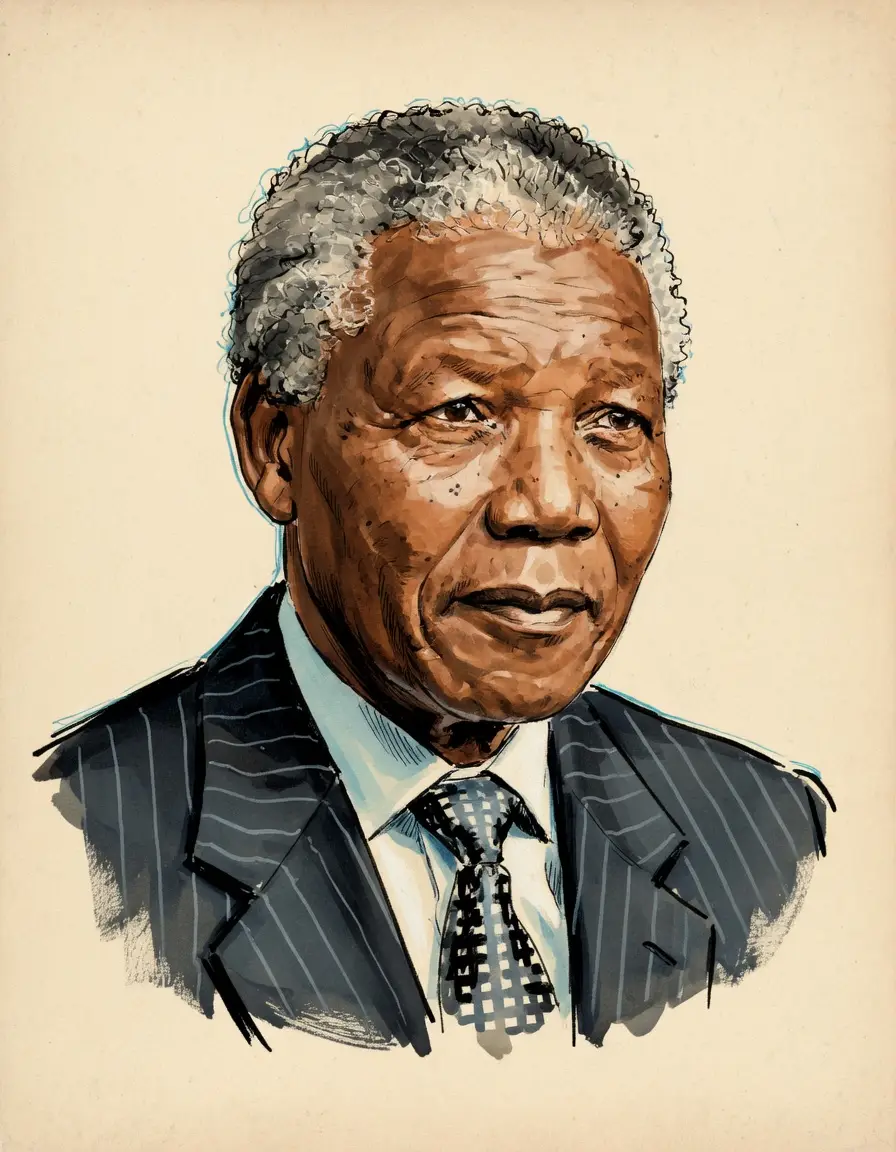
Nelson Mandela on Reconciliation
TL;DR
Nelson Mandela viewed reconciliation as an essential, active process requiring mutual acknowledgement and tangible redress for past injustices.
Key Points
He stated in 1995 that reconciliation means working together to correct the legacy of past injustice, not forgetting or burying the pain of conflict.
His inaugural speech in 1994 declared that the time for healing wounds and bridging chasms that divide the nation had arrived.
The creation of the Truth and Reconciliation Commission was an important institution he supported to help manage the nation's healing process.
Summary
Nelson Mandela positioned reconciliation not as simple forgetting or burying past pain, but as a long, demanding task of healing the wounds of enforced division and oppression in South Africa. As the first democratically elected president, he immediately called for the healing of chasms and the building of a peaceful, harmonious nation of equals, using National Reconciliation Day to reaffirm this commitment. This process required acknowledging inter-dependence between citizens and re-affirming a solemn constitutional compact based on equality and mutual respect.
His perspective understood that true reconciliation must proceed alongside tangible redress and reparation, cautioning against an interpretation that merely asks for forgiveness without addressing systemic inequality. The establishment of the Truth and Reconciliation Commission was an important institutional mechanism to help manage the difficult aspects of national healing by managing the legacy of past injustice. The partnership he founded years later demonstrated that this approach required the beneficiaries of past systems to actively contribute to fixing the damage to create a more just future.
Frequently Asked Questions
Nelson Mandela viewed reconciliation as an active, essential process for nation-building in South Africa following apartheid. He believed it required a forward-looking commitment to justice, non-racialism, and democracy, rather than simply forgetting past hurts.
Yes, the former president explicitly stated that reconciliation did not mean forgetting the pain of the conflict. He argued it required working together to correct the legacy of past injustice, linking it inextricably with redress and reparation.
Having endured 27 years of imprisonment, Mandela was uniquely positioned to exemplify love and forgiveness, choosing a path of peaceful settlement over revenge. He asserted that leaving hatred behind was necessary to achieve true freedom, both personally and nationally.
Sources8
Message by President Nelson Mandela on National Reconciliation Day
Love and Forgiveness in Governance: Exemplars: Nelson Mandela
Lessons from Nelson Mandela on reconciliation, reparation, and the path to prosperity
9 Inspiring Nelson Mandela Quotes on Forgiveness
A selection of quotes from the late Nelson Mandela
Nelson Mandela and the Transformative Power of Tolerance and Reconciliation
Review of Nelson Mandela: Peace Through Reconciliation
The Power of Forgiveness: A Lesson from Nelson Mandela
* This is not an exhaustive list of sources.