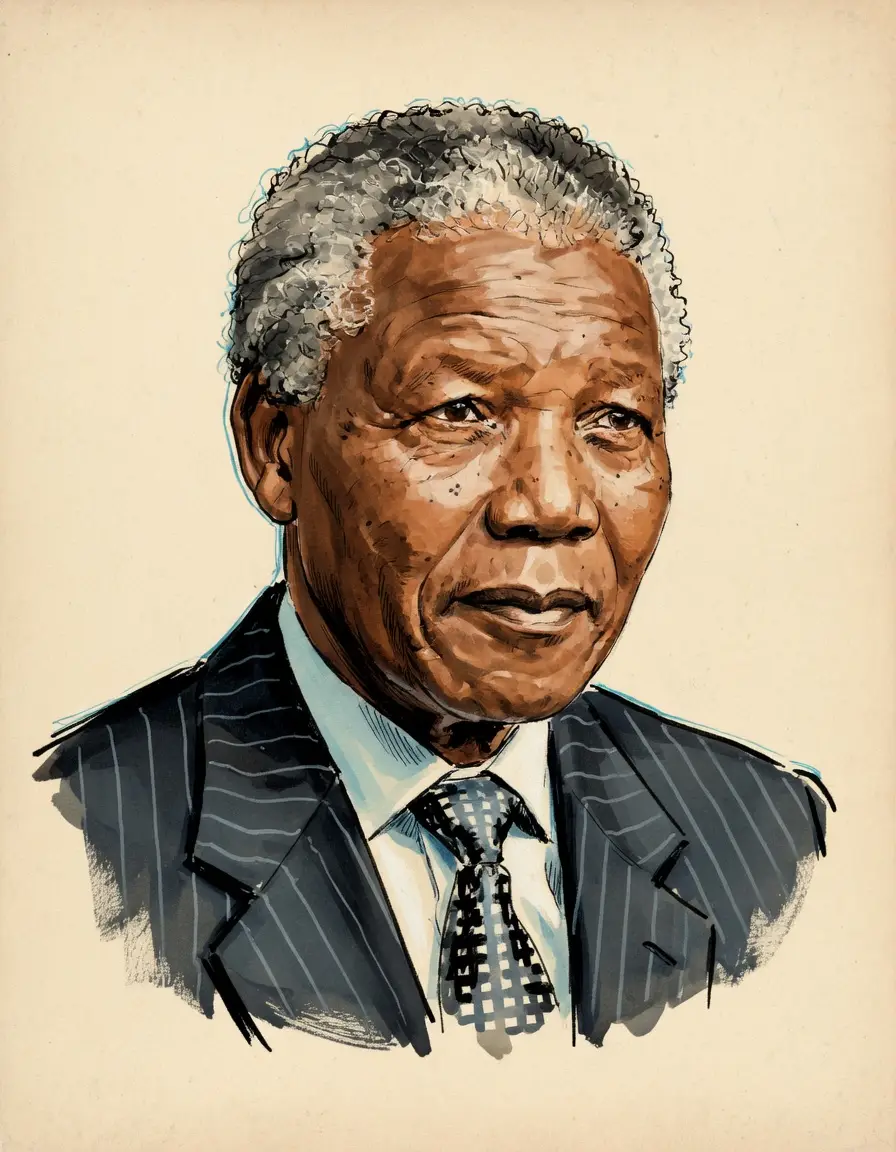
Nelson Mandela on Robben Island
TL;DR
Nelson Mandela viewed Robben Island as a crucible for resistance where he organized prisoners while enduring harsh conditions imposed by apartheid.
Key Points
He spent 18 of his 27 years of imprisonment on Robben Island, arriving there in June 1964 after the Rivonia Trial.
Mandela and fellow prisoners resisted segregation by challenging rules, eventually securing the right for black prisoners to wear long pants instead of shorts.
He cultivated a garden as a way to find satisfaction, control, and a taste of freedom, viewing the tending of seeds as a metaphor for leadership.
Summary
Nelson Mandela spent 18 of his 27 years of imprisonment on Robben Island after being sentenced in 1964, facing severe conditions meant to crush his political will. Prisoners there were subjected to hard labor, such as breaking rocks in a lime quarry, and faced racial discrimination regarding rights and rations, with black prisoners being forced to wear shorts even in winter. Despite the isolation and censorship, he refused special treatment, insisting that any improvements must apply to all fellow political prisoners, thus using his incarceration as a microcosm of the wider struggle for equality.
During this time, he and his comrades resisted the apartheid regime through continuous political education and advocating for improved rights, eventually securing small victories like the right to wear long pants. Mandela fostered a sense of dignity and equality among the inmates, turning the prison experience into a sustained fight on different terms. His presence on the island, and his eventual release in 1990, symbolized the failure of the oppressive system and paved the way for South Africa's transition to democracy.
Frequently Asked Questions
Nelson Mandela was imprisoned on Robben Island for 18 of the 27 years he served in total. He arrived on the island in 1964 after his conviction at the Rivonia Trial.
While on Robben Island, Nelson Mandela mobilized his fellow political prisoners, fostered a spirit of equality, and engaged in resistance against the apartheid system. He also found personal solace by cultivating a garden.
No, Nelson Mandela actively refused special treatment that was offered to him over other prisoners. He insisted that any concessions or improvements to prison conditions must apply equally to all inmates.
Sources6
The story of Nelson Mandela | CMHR
Nelson Mandela: 'On Robben Island he never asked for special treatment' | Nelson Mandela | The Guardian
27 May 1963: Mandela arrives on Robben Island – Nelson Mandela Foundation
The Prisoner | The Long Walk Of Nelson Mandela | FRONTLINE | PBS
Remembering Nelson Mandela - Wisdom of the Elders, Inc.
Robben Island - Wikipedia
* This is not an exhaustive list of sources.