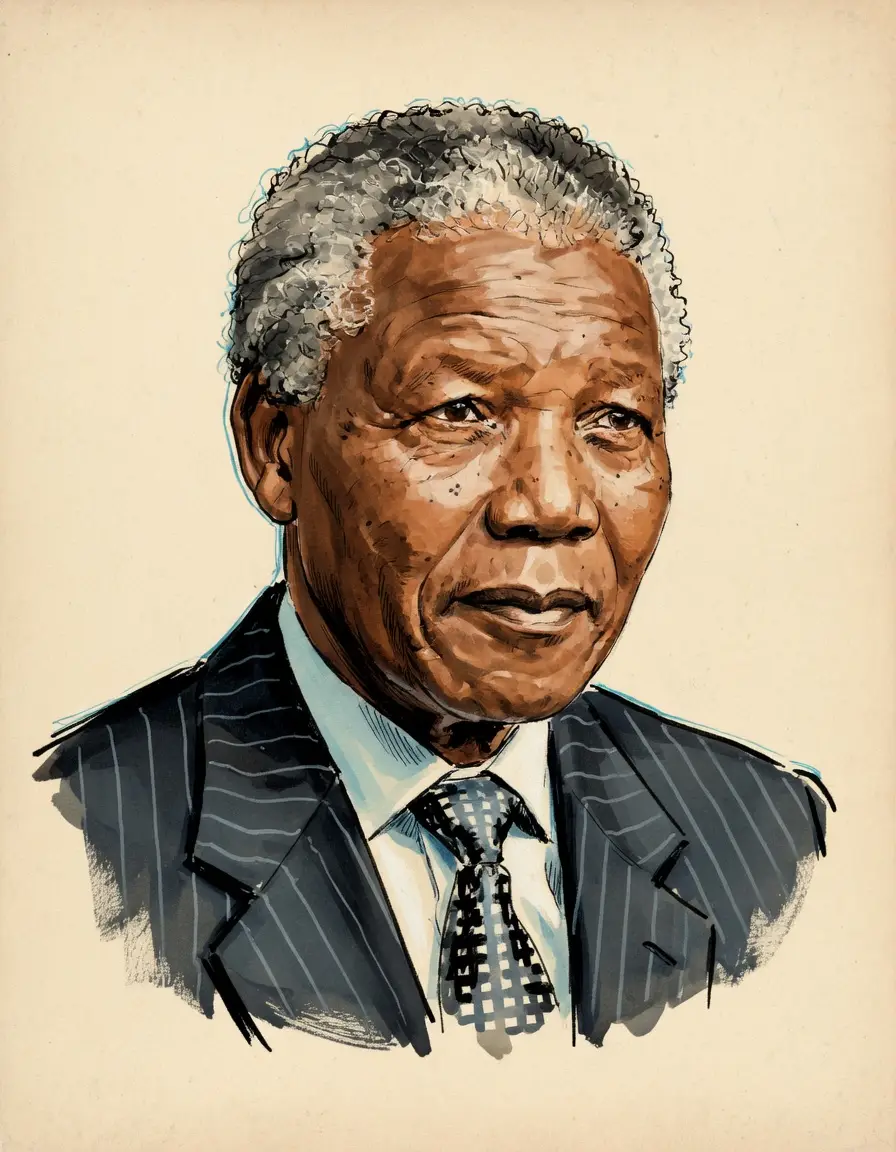
Nelson Mandela on Violence
TL;DR
Nelson Mandela embraced calculated sabotage only after exhausting peaceful means against systematic state oppression.
Key Points
He co-founded Umkhonto we Sizwe (MK) in 1961 to begin a campaign of planned sabotage against state targets.
The initial policy of MK strictly forbade any action that would injure or kill people, choosing sabotage over terrorism or open revolution.
After achieving democracy, his position affirmed that 'no form of violence can ever be excused' in a just society.
Summary
Nelson Mandela's stance on violence evolved out of necessity, transitioning from a strict adherence to non-violence, characteristic of the African National Congress (ANC) tradition, to the calculated use of armed struggle. He explicitly stated in his 1964 defense that the decision to pursue violence, specifically through the formation of Umkhonto we Sizwe (MK), was a 'calm and sober assessment' following years of 'tyranny, exploitation, and oppression' by the White government, after all lawful modes of opposition were blocked. He viewed this turn as inevitable and morally obligatory to avoid a more dangerous, uncontrolled outbreak of terrorism among his followers, choosing sabotage as the preferred method because it offered the best hope for future race relations by avoiding loss of life.
This strategic shift involved rejecting terrorism and open revolution in favor of targeted sabotage against state economic infrastructure and symbols of apartheid, emphasizing that strict instructions were given to never injure or kill people. Following his imprisonment, and after the dismantling of apartheid, his public position evolved to strongly advocate for reconciliation and non-violence, famously stating that no form of violence can ever be excused in a society wishing to call itself just. This later stance underscores that the earlier adoption of violence was instrumental and context-specific to overthrowing an unjust regime, not a permanent ideological commitment.
Frequently Asked Questions
Nelson Mandela justified the initial resort to violence as a necessary and moral response because all peaceful means of opposing the apartheid system had been exhausted and blocked by the government. He felt it was the only way to continue the struggle against white supremacy without surrendering to a permanent state of inferiority. He chose calculated sabotage to force the government to negotiate.
Yes, Nelson Mandela's stance clearly evolved. He began as a proponent of strict non-violence within the ANC, later sanctioned limited, non-lethal violence (sabotage) as a necessary response to state violence, and finally, after achieving political power, advocated reconciliation and condemned violence in a democratic society.
The violence he planned through Umkhonto we Sizwe was explicitly directed as sabotage, focusing on destroying economic infrastructure like power plants and communications, rather than targeting human life. He wanted to avoid civil war and keep bitterness to a minimum to ensure future race relations could be salvaged.
Sources6
I Am Prepared to Die" (Nelson Mandela's Statement at the Rivonia ...
No form of violence can ever be excused in a society that wishes to call itself/...
Nelson Mandela & Hannah Arendt on Violence
In Honor of Nelson Mandela: When, if ever, is violence justifiable in struggles for political or social change? (video)
Nelson Mandela's Statement from the Dock at the Opening of the Defence Case in the Rivonia Trial - 1964
Nelson Mandela (April 20, 1964): I have cherished the ideal of a ...
* This is not an exhaustive list of sources.