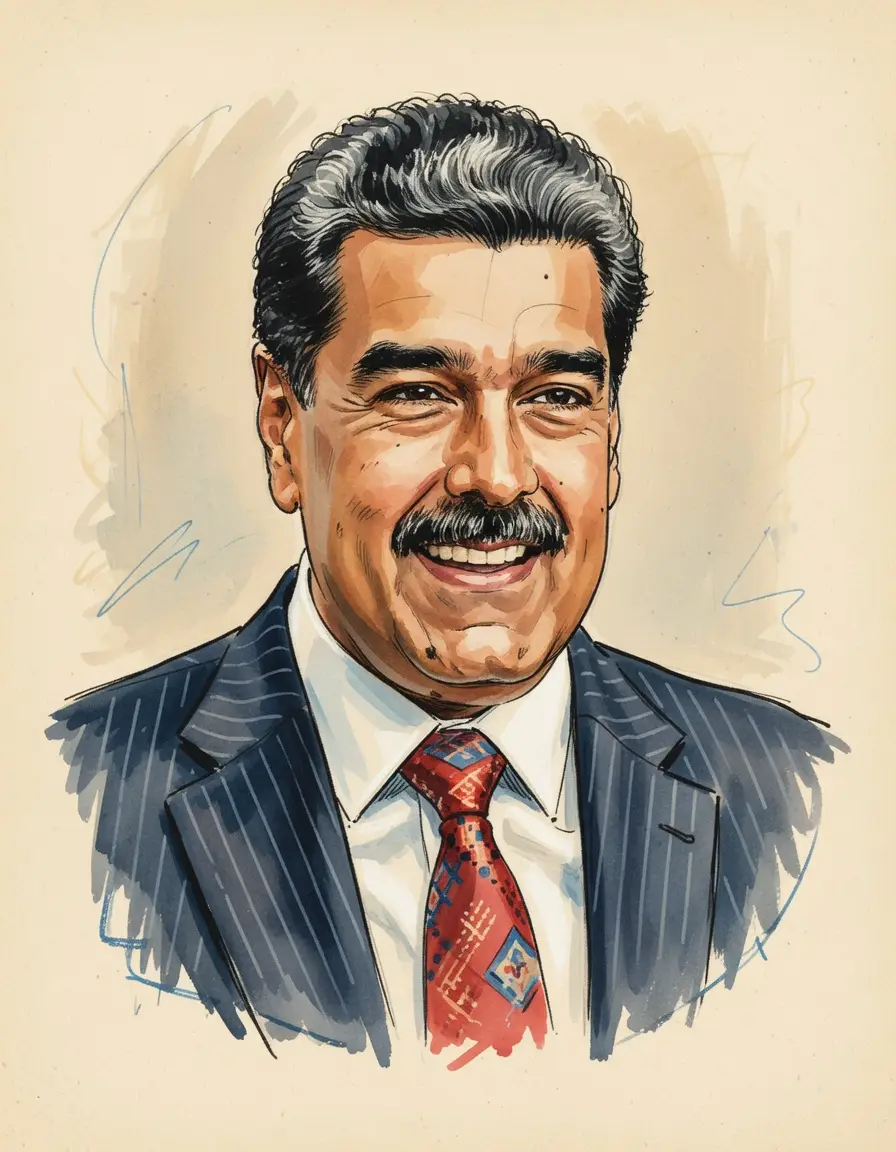
Nicolás Maduro on Dictatorship
TL;DR
Nicolás Maduro rejects the label of dictator, though international observers widely view his rule as authoritarian.
Key Points
He ruled Venezuela by decree following 2015 through powers granted by the ruling party legislature.
In July 2017, the United States Treasury sanctioned him after the controversial Constituent Assembly election, labeling him a dictator.
Following his capture in January 2026, the official government position maintained that he remained the de jure president.
Summary
Nicolás Maduro has been widely characterized by international bodies and foreign governments as leading an authoritarian government, often explicitly labeling his rule a dictatorship, particularly following the 2017 election for the Constituent Assembly and his contested 2018 re-election. Those leveling these accusations point to the manipulation of electoral processes, the stripping of power from the opposition-led National Assembly by the Supreme Tribunal, and widespread reports of human rights abuses, censorship, and political repression. The president, however, consistently denies these allegations, instead blaming external forces, such as the United States, for conspiring to instigate a crisis to engineer regime change.
In situations where external pressure has led to his de facto removal, as occurred in January 2026, the official government stance maintains that he remains the de jure president, indicating a refusal to cede constitutional legitimacy. His actions, such as ruling by decree, maintaining power through control of key institutions like the military and judiciary, and overseeing severe economic decline, are cited as key evidence supporting the characterization of his tenure as moving from electoral authoritarianism toward a more closed, hegemonic system. He has actively sought alliances with countries that do not recognize the opposition’s claims, thereby attempting to normalize his continued, centralized control over the state apparatus.
Frequently Asked Questions
Nicolás Maduro strongly denies that he is a dictator and rejects the legitimacy of those who label him as such. He frequently argues that accusations of authoritarianism are part of a larger conspiracy, often involving the United States, aimed at regime change and seizing control of Venezuela's resources.
Nicolás Maduro has not publicly altered his official stance, which is to reject the term 'dictator' applied to his governance. However, external analysis suggests his regime has evolved from 'electoral authoritarianism' to a 'closed, hegemonic authoritarian regime' following the disputed 2024 election.
The labeling of Nicolás Maduro as a dictator accelerated after the Supreme Tribunal stripped power from the opposition-controlled National Assembly in 2016 and following the widely condemned 2018 presidential election. The consolidation of power through loyalist institutions like the military and judiciary further solidified this view internationally.
Sources4
Nicolás Maduro
Venezuela tumbles deeper into dictatorship with Nicolás ...
Venezuela: A Democratic Crisis - State Department
How Maduro's Dictatorship Plans to Survive
* This is not an exhaustive list of sources.