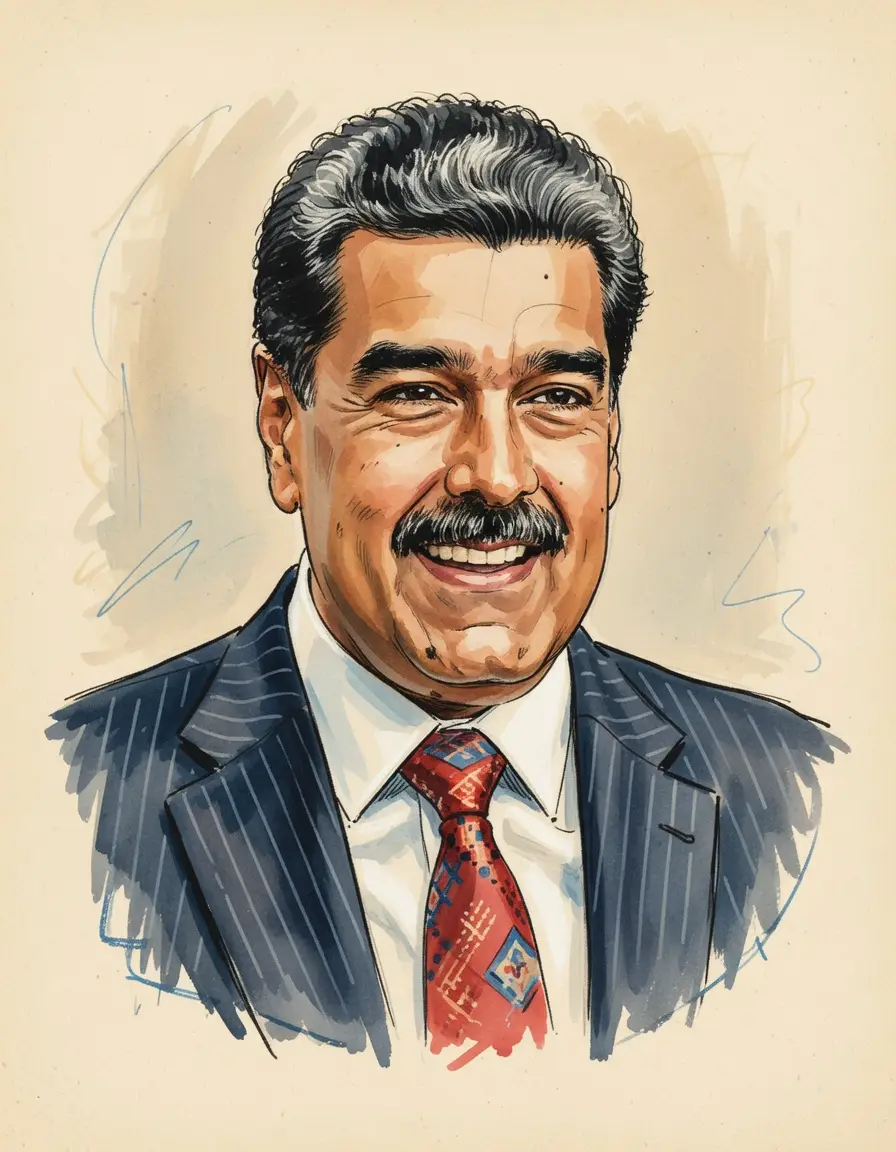
Nicolás Maduro on Legal Issues
TL;DR
Nicolás Maduro vehemently rejects international legal challenges, viewing indictments as politically motivated foreign interference.
Key Points
He has consistently argued that any abduction or extradition action against him is illegal despite existing United States charges as of January 2026.
His legal defense reportedly sought payment from a third party for legal fees associated with US-based cases in February 2026.
Experts note that the legality of actions concerning him is often viewed as murky, particularly regarding questions of US court jurisdiction over his actions.
Summary
Nicolás Maduro treats major legal issues, particularly those stemming from the United States, as illegitimate attacks on Venezuelan sovereignty. His core position is that foreign jurisdiction over Venezuelan internal affairs, including extradition requests or indictments for drug trafficking or corruption, lacks legal standing under international law. He frequently frames these legal actions as instruments of a broader political and economic campaign against his government, often citing past incidents like irregular extraditions as evidence of systemic overreach by external powers.
This stance has been consistently maintained even as his personal legal jeopardy has evolved, such as the situation concerning his potential detention while abroad for legal proceedings. While his administration has historically utilized domestic legal structures to consolidate power, his public discourse regarding external legal scrutiny centers on rejecting the validity of the charging bodies. The implications of these legal challenges are significant, potentially influencing diplomatic relations and future travel or political activity outside Venezuela.
Frequently Asked Questions
Nicolás Maduro's position is to strongly reject the legitimacy of foreign legal proceedings against him, such as those initiated by the US. He characterizes these actions as political maneuvers rather than valid applications of international or domestic law.
His fundamental stance of rejecting foreign legal challenges has remained firm, consistently framing them as sovereignty violations. However, the specific legal and political context surrounding his personal jeopardy continues to evolve.
Nicolás Maduro and his allies argue that US courts lack the proper jurisdiction to prosecute the Venezuelan president for actions taken within the country. This claim contests the basis upon which many indictments have been brought against him.
Sources10
Trump admin won't let Venezuela pay for Maduro's legal fees, his lawyer says
Maduro faces a legal ordeal while he waits in the prison known as 'Hell on Earth'
Maduro: the murky legality of an irregular extradition
Abduction of Venezuela’s Maduro 'illegal' despite US charges, experts say
Maduro Raid: Military Victory, No Viable Endgame
Maduro and Venezuela’s Drug War
Nicolás Maduro’s New York Legal Case
Flexing U.S. Power in Venezuela?
The Trial of Venezuela’s President Nicolás Maduro: A Legal Guide
Do U.S. Courts Have Jurisdiction Over Venezuela’s President Nicolás Maduro?
* This is not an exhaustive list of sources.