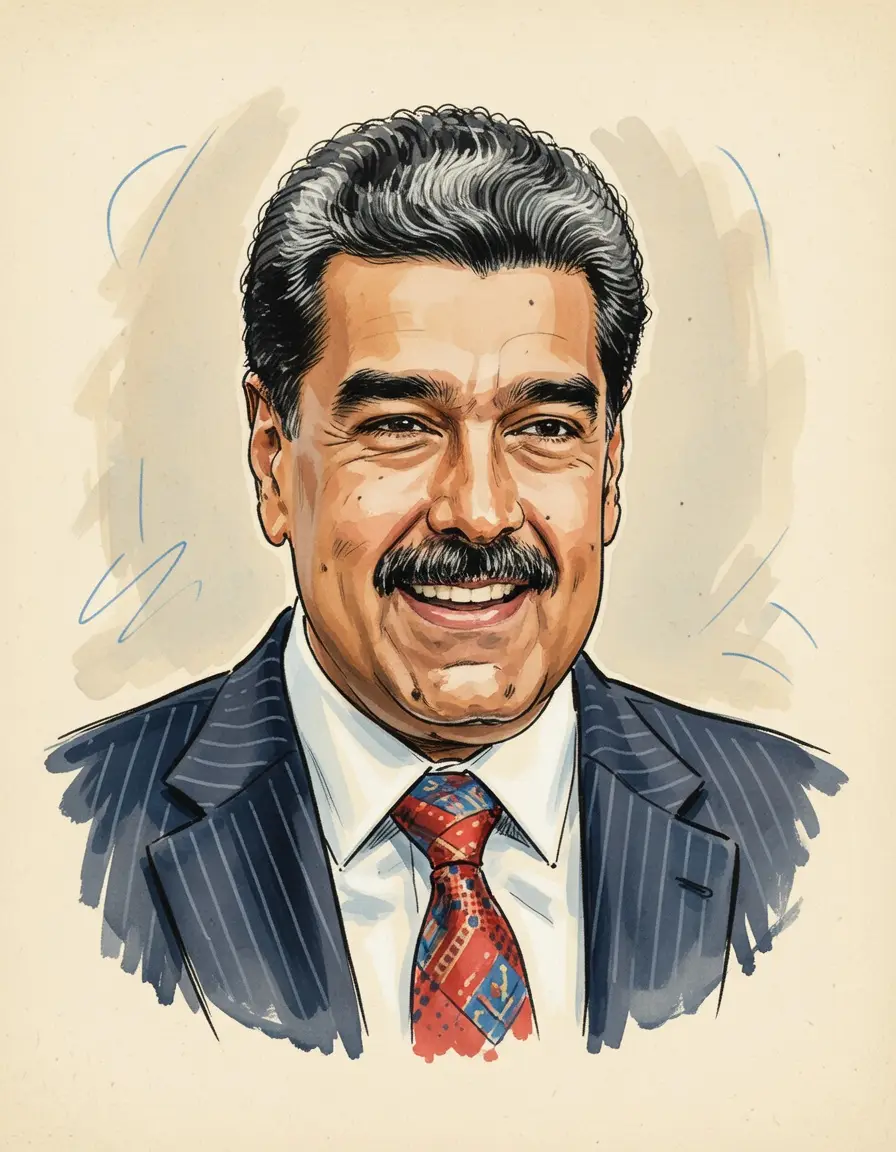
Nicolas Maduro on Judges
TL;DR
Nicolas Maduro's administration exerts strong control over the judiciary, using judicial decisions to consolidate political power.
Key Points
He has threatened to imprison Supreme Court judges who do not halt the resumption of an International Criminal Court probe in 2023.
The government's legal actions against opponents have often been interpreted as following the playbook of court packing seen in other authoritarian systems.
The administration has urged judges to stop the resumption of the ICC investigation into alleged human rights violations, prioritizing state defense.
Summary
Nicolas Maduro and his government have consistently demonstrated a pattern of asserting executive control over the judicial branch, particularly the Supreme Tribunal of Justice. This control has been essential for insulating the administration from legal challenges and prosecuting political opponents. Evidence of this includes issuing decrees and taking actions that effectively bypass or neutralize decisions from other branches or international bodies, ensuring the judiciary aligns with the executive's political objectives. His actions often follow accusations of judicial capture by the ruling party.
This relationship between the executive and the judiciary has evolved to one where the courts primarily function as a tool for state policy enforcement rather than an independent check on power. The implication is a significant weakening of the separation of powers within the state structure. Furthermore, threats have been made against judges who might consider actions contrary to the administration's interests, solidifying the loyalty of the remaining judicial figures.
Frequently Asked Questions
Nicolas Maduro's position is characterized by asserting firm executive control over the judiciary, ensuring the Supreme Tribunal of Justice aligns with government policy. He views the courts as a necessary component for maintaining political stability and defending the administration against legal challenges. The sentiment is positive toward judges who support his government and negative toward any perceived judicial independence that opposes him.
His fundamental stance, one of ensuring judicial subservience to the executive, has remained consistent throughout his presidency. The application has tightened over time, with increasing reliance on the high court to legitimize controversial actions. This has resulted in a continuous consolidation of power rather than an ideological shift in their view of the judiciary's role.
Nicolas Maduro has actively pressured Venezuelan judges to halt any resumption of the International Criminal Court probe into alleged crimes. He threatened imprisonment for judges who move against the government's wishes regarding the international investigation. This highlights the administration's immediate response to any judicial action that might challenge the executive's authority.
Sources10
Venezuela president threatens to imprison Supreme Court judges
Venezuela opposition turns ire on Supreme Court judges
The Dramatic Arraignment of Nicolas Maduro
Venezuela urges judges to stop resumption of ICC probe
Venezuela's Supreme Court judges under fire for pro-Maduro rulings
Court-Packing Legislation Is Straight Out of Maduro’s Playbook
Maduro, Judge Alvin Hellerstein, and Jewish Venezuela
Inside the chaotic downfall of a Venezuelan judge
A look at the challenges facing Venezuela’s opposition and Maduro’s grip on power
Fleeing Venezuela’s chaos, a judge seeks asylum in the US
* This is not an exhaustive list of sources.