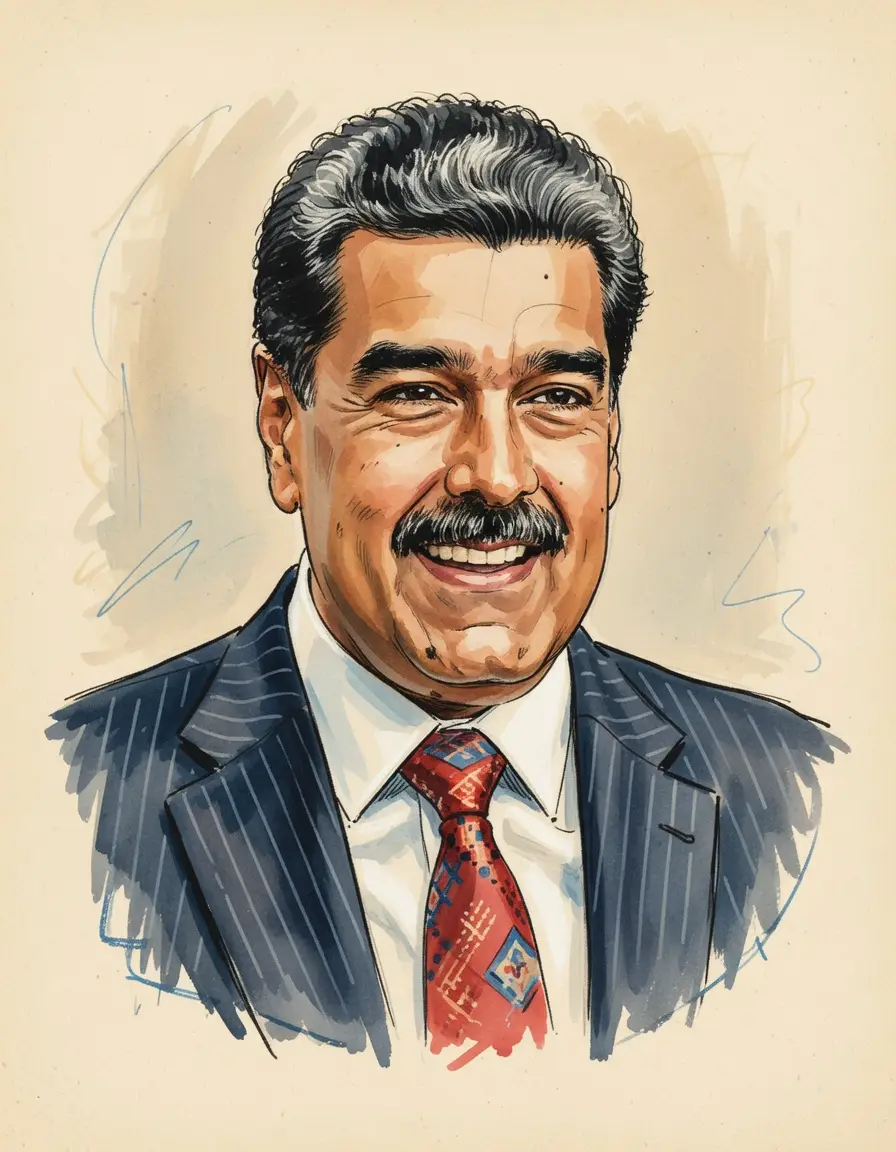
Nicolás Maduro on Elections
TL;DR
Nicolás Maduro views elections as legitimate mechanisms to confirm his government's power despite widespread international and domestic criticism.
Key Points
He has consistently declared victory in presidential elections, such as the one in May 2025, which many opposition groups boycotted.
His government has been accused by external observers of implementing procedures designed to thwart genuine democratic competition, often leading to contested results.
Following disputed elections, the administration has pursued actions that critics characterize as a brutal crackdown on political opposition figures and civil society.
Summary
Nicolás Maduro consistently asserts that elections serve as the democratic foundation of his administration, positioning them as the legitimate process through which he and his political movement maintain control of the Venezuelan state. He frequently frames electoral victories, even those contested, as triumphs of popular sovereignty against external interference and internal opposition efforts to destabilize the country. Key evidence often involves pointing to his participation in, and subsequent declaration of victory in, past presidential and parliamentary contests, which he uses to legitimize his tenure both domestically and internationally.
The context surrounding these electoral claims is marked by significant controversy, as numerous international bodies and watchdogs have documented systemic issues that undermine the fairness of the process. These include the exclusion of major opposition figures, the use of state resources for campaigning, and the suppression of dissent leading up to and following polling days. The administration’s view remains that these international critiques are politically motivated attempts to interfere with Venezuela’s sovereign right to self-determination through its chosen electoral architecture.
Key Quotes
When the opponent withdraws from the field, we advance and occupy the terrain
if I have to go meet this boy in the Pico Humboldt at three in the morning I am going, [...] if I have to go naked, I am going, [I believe] that today, sooner rather than later, the way is open for a reasonable, sincere dialogue
Maduro is not the President of Venezuela and his regime is not the legitimate government.
Frequently Asked Questions
Nicolás Maduro maintains that elections are the legitimate and primary mechanism through which the Venezuelan people express their will and confirm his government's mandate. He views them as sovereign acts that affirm his political project against internal and external adversaries. He uses election outcomes to legitimize his continued hold on power.
His core stance—that his administration is the product of legitimate electoral processes—has remained consistent throughout his tenure. However, the mechanisms and conditions under which those elections occur appear to have tightened over time. The evolution is seen more in the process than in his rhetorical defense of the results.
Following the election in late 2024, Nicolás Maduro claimed victory, framing the result as a mandate from the people. His administration subsequently dismissed international condemnation of the electoral environment as unwarranted interference. He has continued to use the result as evidence of his democratic legitimacy.
Sources8
Standing with the Venezuelan People One Year After Yet Another Sham Election
How Maduro Stole Venezuela’s Vote
Venezuelan presidential crisis
Center Finds Democracy Thwarted in Venezuela
Nicolás Maduro Profile
Maduro triumphs in Venezuelan election boycotted by opposition
Venezuela: Brutal Crackdown on Elections
The Venezuelan opposition moves past the 2024 elections and prepares for the next ones
* This is not an exhaustive list of sources.