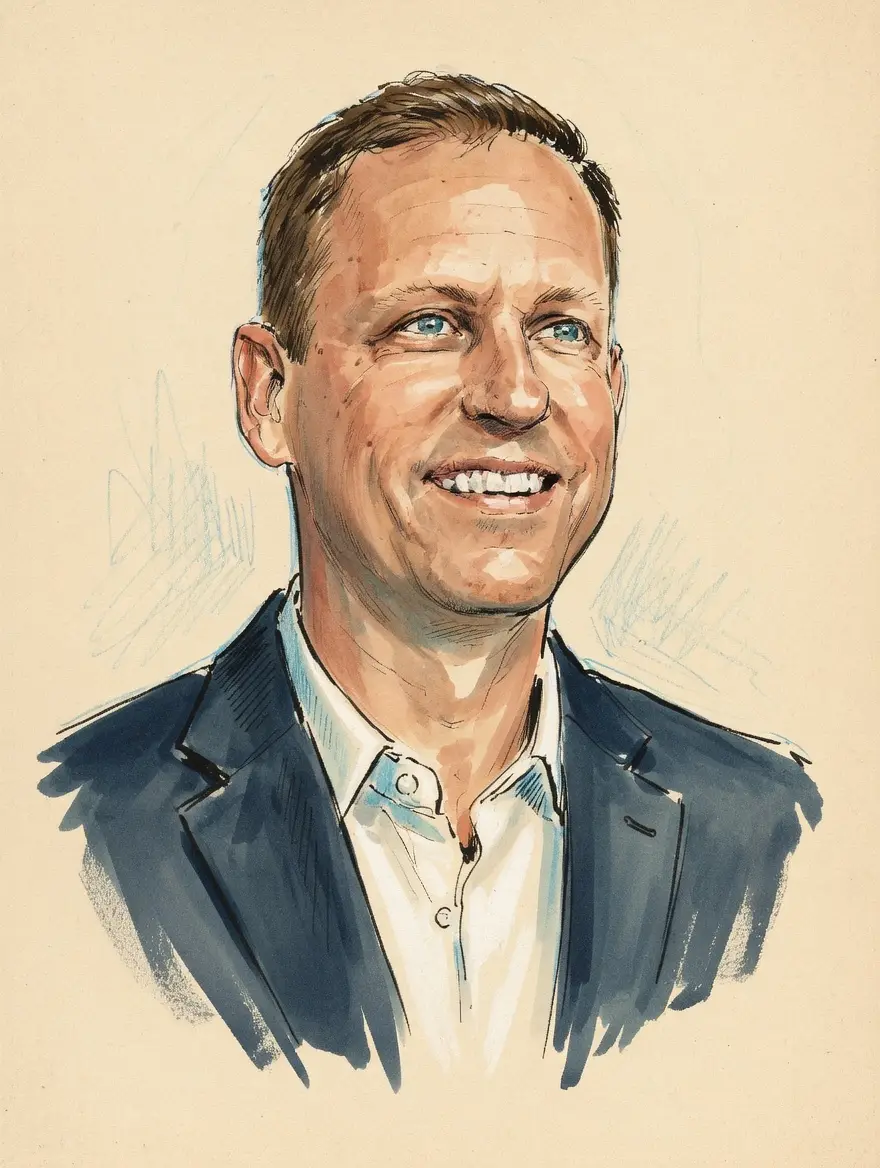
Peter Thiel on Democracy
TL;DR
Peter Thiel believes that genuine freedom and democracy are fundamentally incompatible, viewing mass democratic systems as flawed and inefficient.
Key Points
He explicitly declared in 2009 that he believes freedom and democracy are no longer compatible.
He has been described by media outlets as democracy-skeptic and partly antidemocratic.
He advocates that the focus for libertarians should be to escape politics via technology rather than trying to improve the system through voting.
Summary
Peter Thiel has stated clearly that he no longer believes freedom and democracy are compatible, viewing mass democracy as having devolved into an "unthinking demos" and a "mob" that hinders the creation of real progress. He contrasts the perceived irrationality and envy of the crowd with the clear vision of an elite founder, suggesting that political means are largely futile for achieving libertarian goals. His philosophy posits a "deadly race" between politics and technology, advocating for escaping the constraints of politics through technological creation and building new, unaccountable systems outside the existing democratic order.
This view is reflected in his professional and political activities, which critics describe as building the "soft architecture of an authoritarian future" through privately governed systems like Palantir and Meta. He often wraps his anti-accountability stance in philosophical seriousness, drawing on thinkers like Strauss and Girard to legitimize elite rule. While identifying as a libertarian, his actions suggest a preference for techno-authoritarian control executed by successful individuals over the messy, collective decision-making inherent in a pluralistic democratic system.
Key Quotes
Competition is for losers
We're close to a Toto moment, a little dog pulling aside the curtain on the holy of holies only to find there's nobody there,” he told the crowd. “We always think of democracy as a good thing. But … where do you shift from the wisdom of crowds to the madness of crowds? When does it become a mob, a racket, a totalitarian lie?”
Frequently Asked Questions
Peter Thiel is strongly skeptical of democracy, famously stating that he no longer believes freedom and democracy are compatible. He views mass democracy as an inefficient system driven by the "madness of crowds" which undermines the progress he values.
Yes, his position has evolved; in a 2009 essay, he detailed his shift from early political activism to concluding that political means are largely futile for achieving his goals. He now prioritizes technological innovation as a means of escape from what he sees as the confines of democratic politics.
Thiel has expressed little hope that voting will improve the political situation, describing politics itself as too intense and polarizing. He suggests that individuals should focus their energy on peaceful projects outside of the political sphere to create new spaces for freedom.
Sources4
The Education of a Libertarian
Peter Thiel, Would-Be Philosopher King, Takes on Democracy
Peter Thiel's midterm bet: the billionaire seeking to disrupt America's democracy
Peter Thiel - Wikipedia
* This is not an exhaustive list of sources.