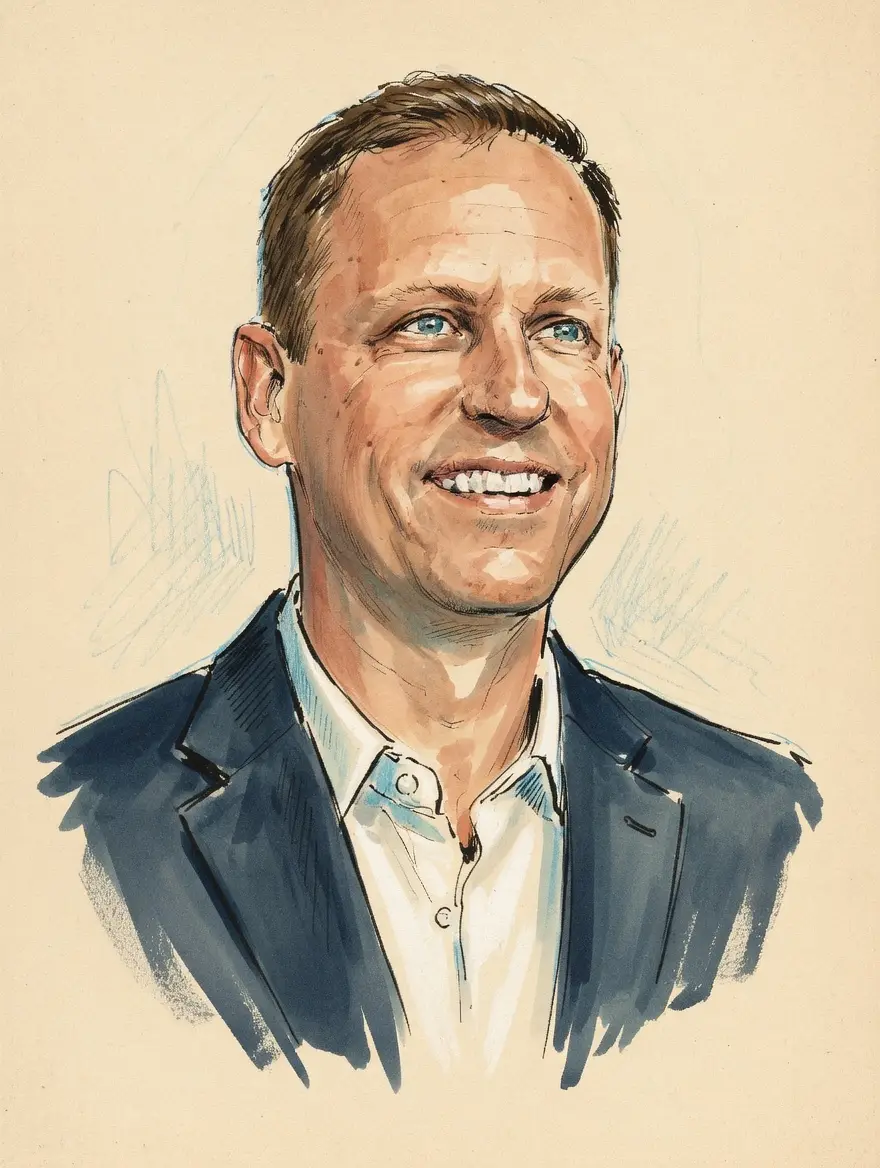
Peter Thiel on Free Speech
TL;DR
Peter Thiel supports maximal free speech, viewing enforced silence and collectivist conformity as dangers to truth and progress.
Key Points
He asserted that if something is forbidden to be spoken about, it is likely true in a speech context, circa 2021.
He funded legal action against Gawker Media after they revealed his sexual orientation, stating later he respects journalism but not massive privacy violations.
He referenced a German law cracking down on online hate speech as an example of restrictive measures, stating his concrete test is whether he can talk about the antichrist.
Summary
Peter Thiel presents himself as a strong proponent of classical liberal and libertarian values, which centrally include freedom of speech, arguing that the West is moving toward a collectivist, conformist state that stifles heterodox thought. He posits that societies become insane when there is near-unanimity, often citing the Judeo-Christian view that the crowd frequently gets moral judgments wrong, contrasting this with the Western philosophical tradition that often trusts the wisdom of crowds. Thiel suggests that if a concept is forbidden or censored, there is a high suspicion that it is actually true, even if he has not personally verified it.
This stance on speech is contextualized by his critique of modern institutional dogmatism, such as in COVID-19 politics or the Federal Reserve, where experts enforce narratives that he believes prevent critical course-correction. His concern extends to media and academia, where he notes instances where wealthy individuals have bankrolled efforts to bankrupt publications whose reporting they dislike, or where universities attempt to enforce speech codes that prohibit offending others. For Thiel, the danger lies in the suppression of nuanced or dissenting ideas, which he views as necessary for societal health and avoiding an Orwellian future.
Frequently Asked Questions
Peter Thiel generally advocates for maximal free speech, viewing enforced silence and politically correct limitations as dangerous to discovering truth and progress. He has expressed concern when individuals or institutions try to suppress ideas they find objectionable or non-conformist.
Thiel strongly frames his support for speech within a libertarian or classical liberal context, opposing what he sees as collectivist conformity. However, his funding of the lawsuit against Gawker Media, which outed him, has been cited by critics as a personal attack on free speech.
He suggests that when speech is suppressed, especially by powerful groups, it implies that the silenced idea might actually be true. He believes this suppression is symptomatic of a larger societal turn toward totalitarian conformity.
Sources7
Make Ticker Tape Parades Great Again: A Conversation with Peter Thiel
Archiving the Internet: A Free Speech Issue? | Yale Law School
Inside tech billionaire Peter Thiel's off-the-record lectures about the antichrist
Peter Thiel's Free Speech for Race Science Crusade at Cambridge University Revealed
Sympathy For The Devil: Billionaire Peter Thiel Versus Gawker, Versus The 1st Amendment
The Thiel Hypocrisy and Fake Liberty
Peter Thiel: The Billionaire Buying the End of Democracy
* This is not an exhaustive list of sources.