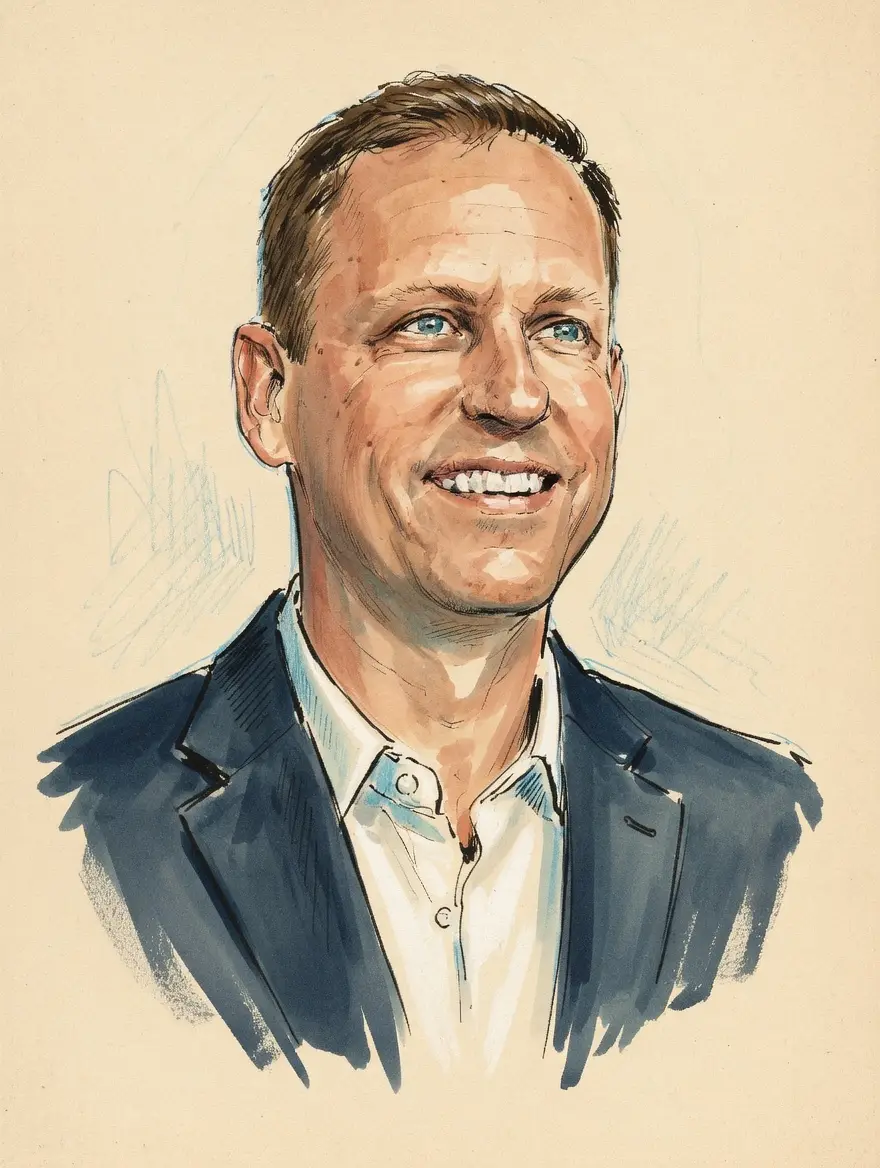
Peter Thiel on Politics
TL;DR
Peter Thiel champions radical libertarian ideals while strategically backing populist and anti-establishment political figures to disrupt the status quo.
Key Points
He has expressed philosophical leanings toward a controversial anti-modern world view, occasionally referencing the Antichrist in private writings.
Peter Thiel provided significant financial backing to the Senate campaign of a specific Republican candidate in 2022.
The billionaire has been characterized as waging war against government institutions and what he perceives as the overreach of the state.
Summary
Peter Thiel's political philosophy is deeply rooted in libertarianism, emphasizing skepticism toward government, regulation, and established institutions, which he views as obstacles to progress and innovation. This core belief has seen him advocate for minimal state intervention, particularly in areas like free speech and technology development. Over time, his political involvement has shifted from traditional libertarian circles toward engaging directly with contemporary American politics, often by funding candidates who challenge the consensus within both major parties, reflecting a desire to radically alter the established political order.
His strategic approach involves significant financial backing of specific, often controversial, political projects and figures, which serves as a practical application of his anti-establishment leanings. This has involved substantial investment in figures who can effect top-down change or who emerge from outsider movements, diverging from a purely ideological non-interventionist stance to an active, though selective, political partisanship. The evolution shows a pragmatism where disruptive political action is prioritized over strict adherence to any single party platform, manifesting as a complex mix of principled opposition and calculated engagement.
Frequently Asked Questions
Peter Thiel's political ideology is fundamentally libertarian, centering on a strong skepticism of government power and regulation. He advocates for limited state intervention and strongly supports principles of free speech. However, his practical political engagement often aligns him with populist and anti-establishment movements rather than traditional libertarian purists.
Yes, his political involvement has demonstrably evolved from supporting traditional libertarian causes to becoming a significant funder of specific, often non-traditional, political figures. While his core philosophy remains consistent, his method of engagement has shifted toward active intervention in partisan contests to disrupt the existing order.
Peter Thiel views excessive government intervention and regulation as major impediments to technological progress and individual liberty. He has been characterized as actively challenging and working to undermine what he considers the overreach of established governmental and bureaucratic systems in the United States.
Sources9
Peter Thiel, the libertarian billionaire waging war on government
Peter Thiel lectures on the Antichrist
Education & Libertarianism
Friday Essay: Libertarian tech titan Peter Thiel helped make JD Vance the Republican kingmaker—his influence is growing
Peter Thiel
The Real Stakes—And Real Story—Of Peter Thiel’s Antichrist Obsession
Peter Thiel, the Billionaire Buying the End of Democracy
The Peter Thiel of 2024 Is Not the Peter Thiel of 2016
Owned: How Silicon Valley Took Over Democracy
* This is not an exhaustive list of sources.