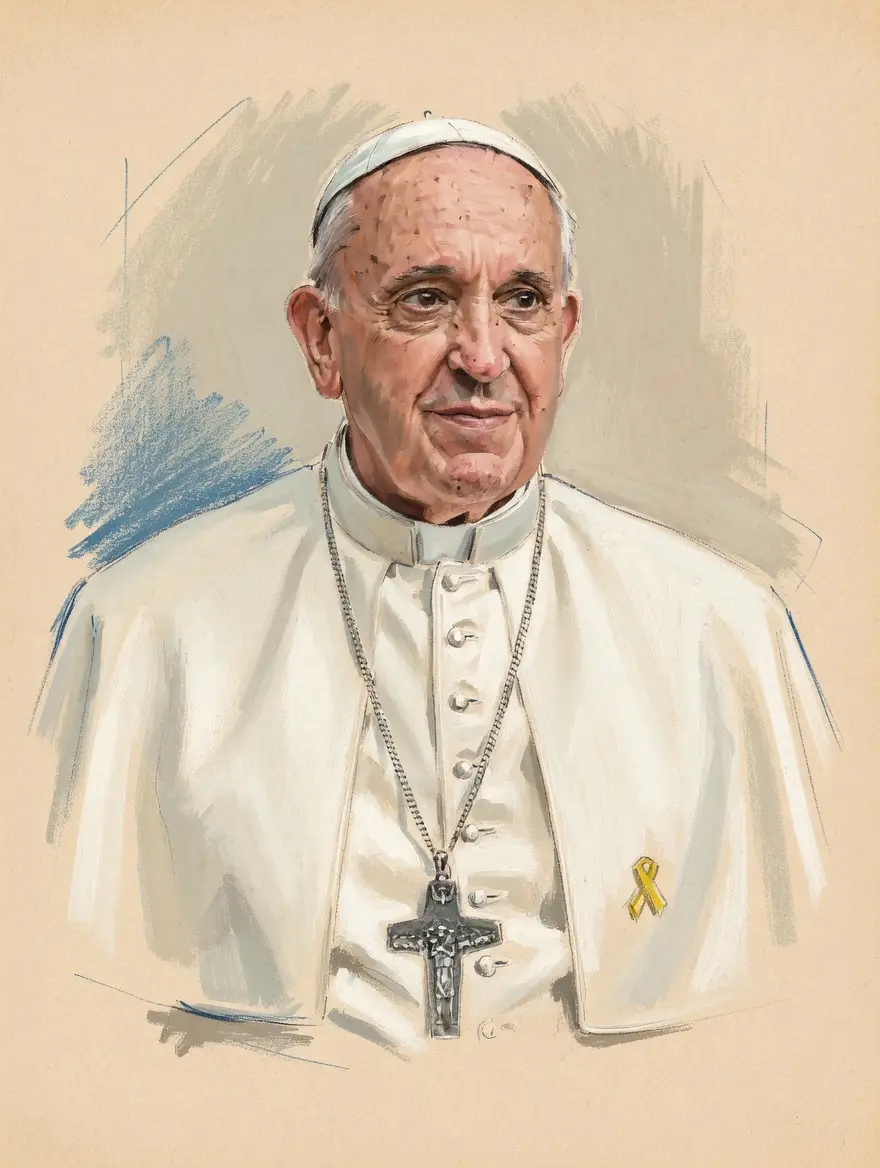
Pope Francis on Capitalism
TL;DR
Pope Francis strongly critiques unbridled capitalism, demanding an economy centered on human dignity over profit accumulation.
Key Points
He stated in 2013 that the current economic system is “unjust at its root” due to its exclusion and inequality.
In a 2015 speech in Bolivia, he condemned the unfettered pursuit of money, quoting an ancient bishop who called it “the dung of the devil.”
He clarified in 2023 that he does not condemn capitalism entirely but favors what his predecessor defined as a social economy of the market, requiring state regulation.
He frequently emphasizes that wealth accumulation cannot come at the cost of human well-being or environmental destruction.
Summary
Pope Francis has expressed strong opposition to what he terms "unbridled capitalism" or an economic system where the pursuit of profit dictates all actions, leading to exclusion and inequality. He repeatedly condemns the "dictatorship of an impersonal economy lacking a truly human purpose," where human beings are treated as mere consumer goods to be discarded, asserting that an economy which excludes people effectively "kills." His core position, deeply rooted in Catholic Social Teaching, is not a condemnation of business or a market economy itself, but a demand for its radical transformation to ensure it serves people, particularly the marginalized, rather than ruling them.
He advocates for a regulated economy, aligning with what his predecessor defined as a social economy of the market, where the state acts as a mediator between capital and labor to safeguard the common good. Francis directs particular criticism toward financial speculation and the idolatry of money, warning that this unchecked system fosters corruption and creates a "new colonialism" through measures like austerity programs that hurt the poor. Business, in his view, is a noble vocation only when it prioritizes the creation of jobs and the integral development of every person over the bottom line and the survival of the fittest mentality.
Frequently Asked Questions
No, Pope Francis states he does not condemn capitalism or the market economy outright, as attributed by some commentators. He clarified that he is in favor of what his predecessor, John Paul II, defined as a social economy of the market. This view accepts market mechanisms but insists they must be governed by ethical considerations and the common good.
His primary criticism targets the ideological defense of absolute market autonomy, which leads to an “economy of exclusion” and massive inequality. He argues that this system deifies money, treats people as disposable, and allows financial speculation to rule over human dignity and the needs of the poor.
He advocates for a regulatory authority, meaning the state, to mediate between capital and work to ensure justice and protect the common good. This structure forms a 'three-legged table' alongside the state and capital, ensuring the economy serves people rather than dominating them.
Sources9
Pope Francis Taught the World a Lesson About Capitalism | TIME
Pope Francis says he does not 'condemn capitalism' in new book - America Magazine
Pope Francis laments failures of market capitalism in blueprint for post-Covid world
Pope Francis on the Economy, Capitalism and the Noble Vocation of Business
Unbridled capitalism is the 'dung of the devil', says Pope Francis
Pope Francis against neoliberalism, finance capitalism, consumerism and inequality – Economic Sociology & Political Economy
Capitalism and the Pope - City Journal
Pope Francis Misses the Sizable Moral Dimensions to Capitalism | Mercatus Center
Pope Francis speaks out against the capitalist nature of society : r/Catholicism
* This is not an exhaustive list of sources.