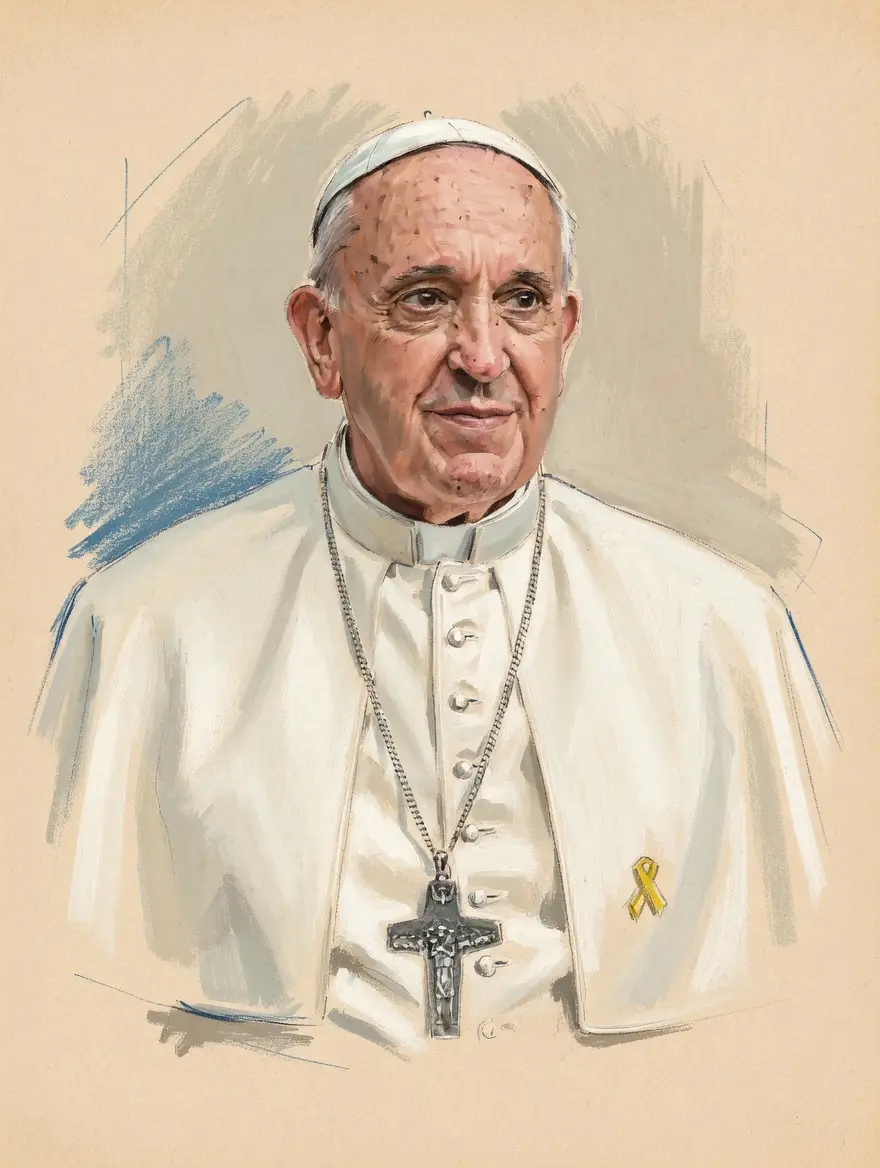
Pope Francis on Interreligious Dialogue
TL;DR
Pope Francis views interreligious dialogue as a vital way of life, seeking fraternity through sincere, respectful encounter rather than doctrinal compromise.
Key Points
Dialogue is born from an attitude of respect for the other person and a conviction that the other has something good to say, requiring a cordial reception without prior condemnation.
He considers interreligious dialogue a necessary condition for peace and a duty for all religious communities, urging Christians to avoid generalizations against other faiths, especially Islam, in the face of violent fundamentalism.
The Pope advocates for intensifying dialogue across all religions, including Judaism, recognizing the Jewish people as a sacred root of Christian identity, a belief reinforced since the Second Vatican Council’s Nostra Aetate.
Summary
Pope Francis views interreligious dialogue not as a tactic or tool, but as a necessary way of life and a journey of the heart that transforms all participants. His approach is rooted in the culture of encounter, which demands mutual respect, friendship, and collaboration across religious boundaries, exemplified by the historic 2019 signing of the Declaration on Human Fraternity in Abu Dhabi. He emphasizes that this dialogue must be based on standing firm in one's own convictions while remaining open to understanding and learning from the other, ensuring that genuine openness is never mistaken for facile syncretism or a diplomatic yielding of core beliefs.
The primary goal of this encounter is to build universal fraternity and social friendship, addressing the world’s need for peace by focusing on shared ethical commitments to justice, the poor, and the defense of human dignity. He frequently draws upon the parable of the Good Samaritan to illustrate that the moment of truth comes when distinctions fade in the act of caring for a neighbor in need, urging religious leaders to act as genuine mediators for peace rather than intermediaries seeking gain. This commitment to dialogue is also viewed as an urgent practical, ethical, and existential imperative for humanity at large.
Key Quotes
“The pluralism and the diversity of religions, colour, sex, race and language are willed by God in His wisdom, through which He created human beings.
Interreligious dialogue is 'way of life' for Catholic Church, pope says
Interreligious dialogue is a necessary condition for peace in the world, and so it is a duty for Christians as well as other religious communities.
Frequently Asked Questions
For Pope Francis, interreligious dialogue is fundamentally about building universal fraternity and social friendship in a divided world. He stresses that it is an ethical commitment toward justice and peace, requiring believers to look beyond doctrinal differences to find common ground in shared humanity and service to others. He sees it as a way to counteract global conflict and ideologies that reject the divine.
He explicitly states that authentic dialogue does not require abandoning one's faith or yielding to compromise on Christian morality. True openness, he teaches, involves remaining steadfast in one's deepest convictions while joyfully engaging with others. Dialogue and evangelization are mutually supportive, not opposed, as believers witness to their faith through sincere encounter.
His approach is significantly shaped by the Second Vatican Council's Declaration on the Relation of the Church to Non-Christian Religions, Nostra Aetate, which fostered an attitude of openness and respect. He has powerfully reinforced this stance through signing documents like the Declaration on Human Fraternity for World Peace and Living Together in 2019.
Sources8
Pope Francis and Interreligious Dialogue - Dicastery for Interreligious Dialogue
Pope Francis calls for deeper approach to interreligious dialogue
A COMPILATION OF QUOTES AND TEXTS OF POPE FRANCIS ON DIALOGUE, ENCOUNTER, AND INTERRELGIOUS AND ECUMENCIAL RELATIONS
Remembering Pope Francis: A legacy of interreligious dialogue and hope
Pope Francis - Interreligious dialogue - leaders Congress Religions
Interreligious dialogue is 'way of life' for Catholic Church, pope says
Pope Francis and Interreligious Encounter: To Build Universal Fraternity and Social Friendship
Interreligious Dialogue | LA Catholics: Interreligious Dialogue | LA Catholics
* This is not an exhaustive list of sources.