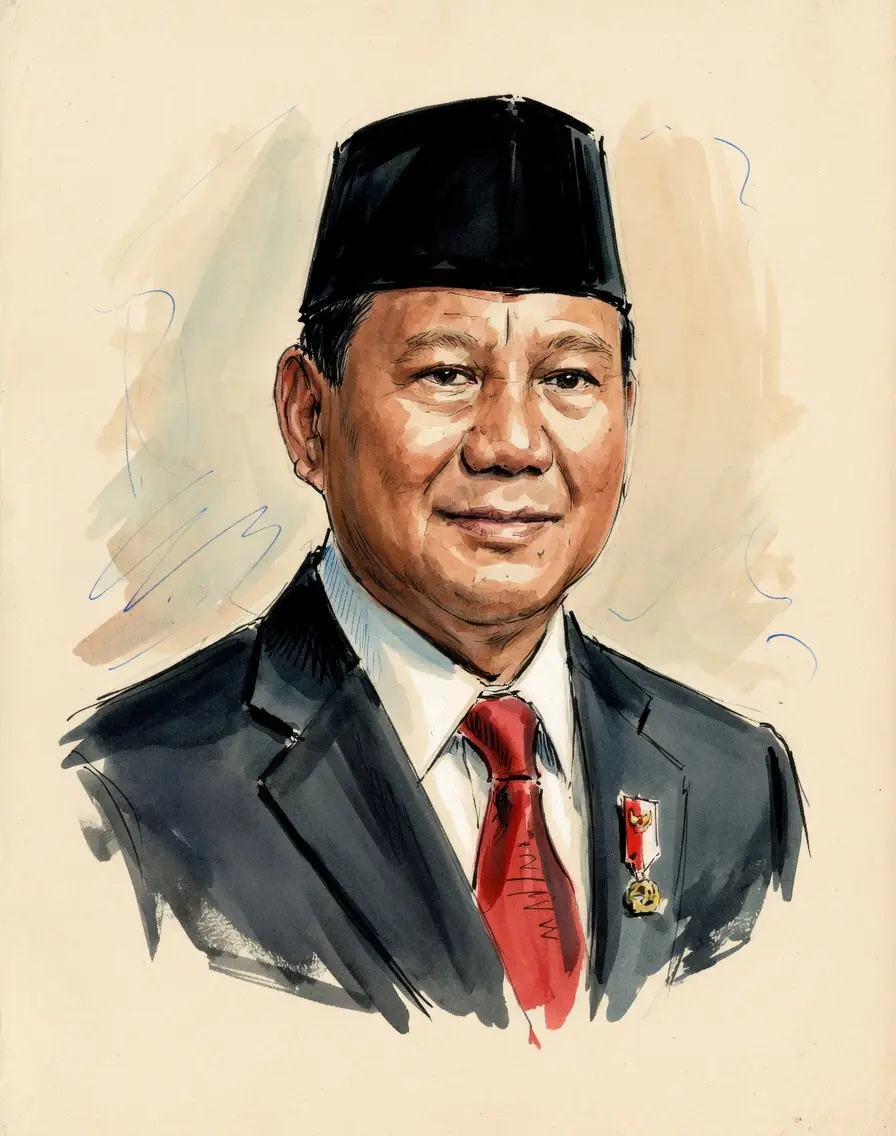
Prabowo Subianto on Economy
TL;DR
Prabowo Subianto champions a state-led economic strategy prioritizing rapid growth, national industrial downstreaming, and expansive social welfare programs.
Key Points
He advocates for a state-led economic orientation focused on rapid development and overcoming past structural deficiencies.
The president explicitly highlights the strategy of resource nationalism and the full downstreaming of domestic commodities.
The administration is committed to the expansion of the free school lunch program as a method of stimulating the economy and improving nutrition.
Summary
Prabowo Subianto's core economic vision centers on achieving high growth rates, specifically targeting an 8 percent expansion, through strong state intervention and industrial policy. He advocates for resource nationalism, emphasizing the downstreaming of domestic natural resources to increase national value-addition rather than exporting raw materials. This strategy is underpinned by significant social spending initiatives, most notably the highly publicized free school meal program, which he defends as a crucial driver of both human capital development and economic circulation.
This approach represents a significant departure from more orthodox, market-oriented policies favored by some global investors, who express concerns regarding fiscal sustainability and market reaction to potential debt increases. Despite these reservations from capital markets, the president views these populist measures and state-directed development as non-negotiable elements necessary to rapidly uplift the general population and secure national economic sovereignty. His administration is positioned on a belief that state activation is key to overcoming structural development hurdles.
Frequently Asked Questions
Prabowo Subianto's primary economic objective is to achieve a sustained high growth rate, specifically targeting 8 percent annually. He believes this aggressive expansion is necessary to rapidly advance the nation's economic standing and welfare.
The president strongly supports resource nationalism, which translates to a policy of prohibiting the export of raw materials. He intends for Indonesia to process and add value to its natural resources domestically before exporting them.
The fundamental pillars of Prabowo Subianto's economic thought, centered on state intervention and national development, have remained consistent. While specific implementation details may evolve, the core populist and growth-oriented vision appears unchanged.
Sources9
Indonesia's point of no return: Big Prabowo growth bet despite market carnage
Special Address: Prabowo Subianto | Davos 2026
Indonesia: Prabowo’s Populism Clashes with Economic Realities
Indonesia’s New Economic Orthodoxy
Prabowo Defends Free Meals as Growth Driver Amid Fiscal Concerns
Too close to Trump? How Indonesian President Prabowo gambles sovereignty, humanity for US approval
President Prabowo Subianto Highlights Indonesia’s Economic Strategy at Forbes Global CEO Conference 2025
Prabowo’s pursuit of 8 per cent growth won’t be without problems
Memahami Alam Pikir dan Konsep Ekonomi Prabowo
* This is not an exhaustive list of sources.