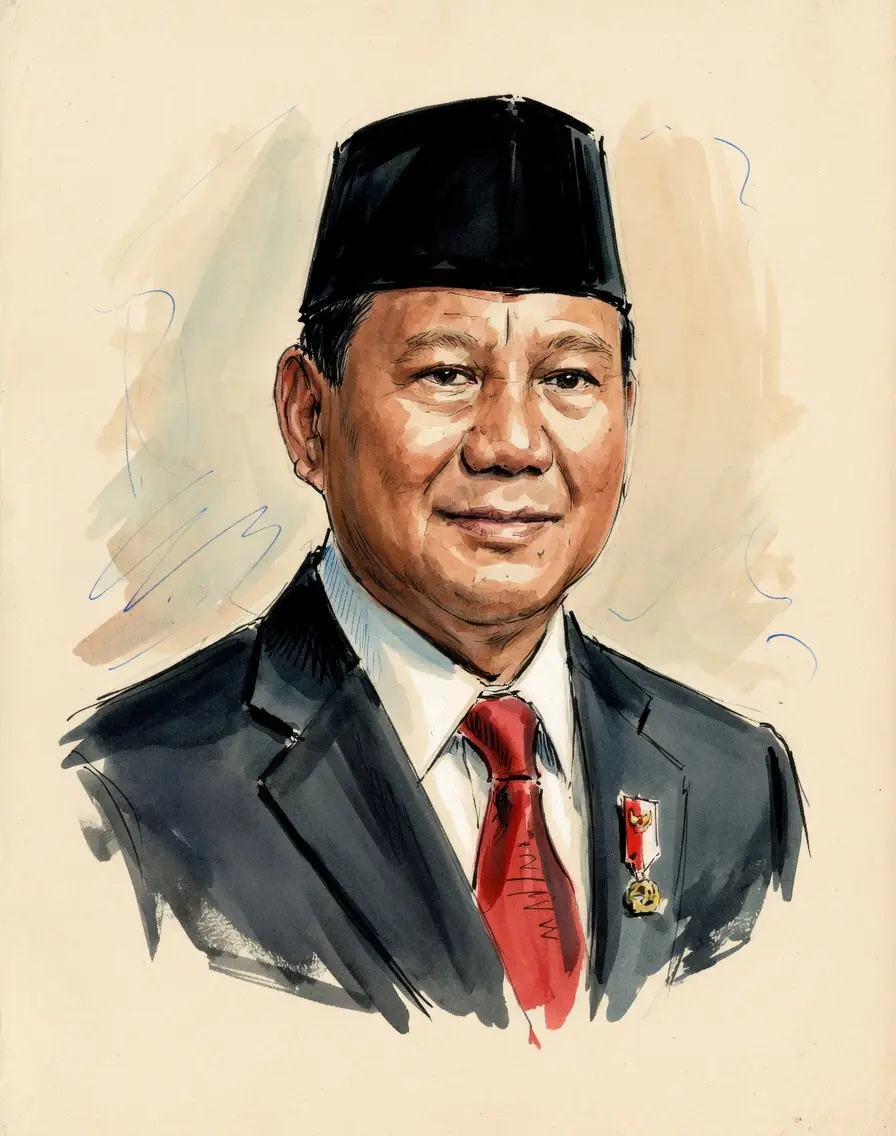
Prabowo Subianto on Free Meals Program
TL;DR
Prabowo Subianto strongly defends the Free Meals Program as a vital investment in human capital despite facing criticism over fiscal sustainability and isolated incidents.
Key Points
He defended the program in September 2025 after approximately 6,000 food poisoning cases, stating the error rate was only 0.00017 percent of meals served.
The president inaugurated 1,179 police-run Free Nutritious Meals program kitchens in February 2026, confirming its continuation despite criticism.
The program's financing strategy involves reallocating state funds from unproductive activities, such as less substantive meetings and official trips, to maintain the fiscal deficit limit.
Summary
Prabowo Subianto champions the Free Nutritious Meals (MBG) program as a cornerstone of his administration, primarily intended to combat childhood stunting and enhance the quality of human resources across the nation. He has touted its initial year of operation as a major success, citing statistical achievements that he argues surpass international benchmarks, such as Brazil's similar program. The president frames the initiative not merely as social aid but as a strategic, long-term national investment designed to break the cycle of poverty and deliver tangible public benefits.
Despite defending the program against claims of wastefulness and extravagant spending, the initiative has been marked by public outcry following thousands of food poisoning cases and concerns over governance failures. In response, the government has implemented measures like providing rapid testing equipment and ordering CCTVs for monitoring kitchens to prevent food quality issues. He maintains that the program is fiscally viable, funded through reallocating money from less productive government activities and events, thereby safeguarding state funds from corruption.
Key Quotes
“We will implement this program,”
Frequently Asked Questions
Prabowo Subianto views the Free Meals Program as a major success and a crucial strategic policy for improving national human capital development. He frequently defends it against criticism regarding its cost and implementation issues by highlighting its large-scale positive impact.
The president acknowledges isolated shortcomings, such as food poisoning, but consistently minimizes their scale by comparing the affected numbers against the total meals distributed. He argues that this results in a very high success rate, often cited as 99.99 percent.
He asserts that the program is fiscally sound because it is financed through budget efficiency measures. This involves reallocating funds previously allocated to trivial and unproductive activities and events, thus avoiding excessive deficit spending.
Sources6
President Prabowo defends free meals program after 6,000 suffer food poisoning
President Prabowo rejects claims free meals program is wasteful - ANTARA News
Prabowo Hails First Year of Free Nutritious Meals Program as Major Success
Indonesia to go ahead with free meals program despite 'extraordinary' campaign against it, president says
Indonesia's $28 Billion Experiment: Prabowo's Free Meals Program Tests the Limits of Ambition — IR Insider
The Free Nutritious Meal Program: More than just a meal
* This is not an exhaustive list of sources.