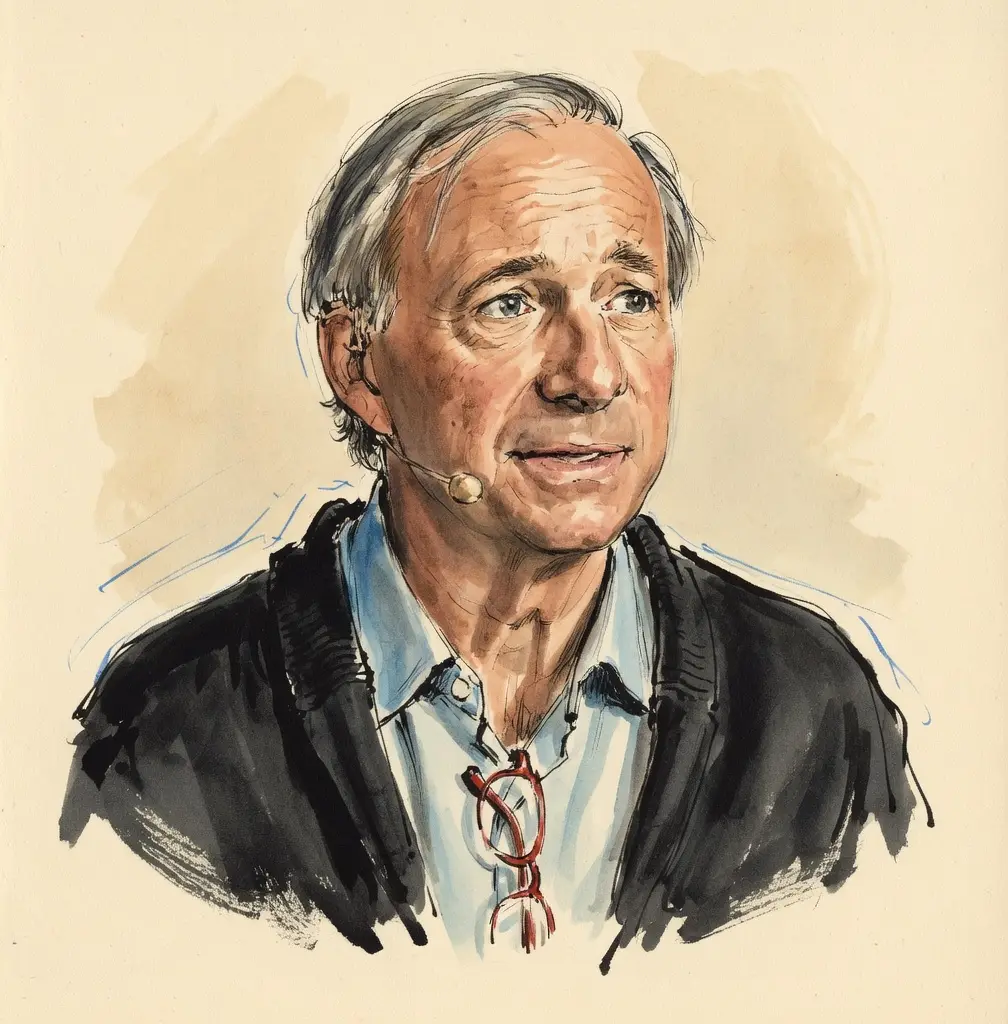
Ray Dalio on Warren Buffett
TL;DR
Ray Dalio contrasts his macro, all-weather asset allocation approach with Warren Buffett's bottom-up, value-focused stock picking.
Key Points
Dalio’s All-Weather Portfolio historically shows a lower maximum drawdown compared to a heavily stock-weighted portfolio representing Buffett's strategy over long periods (e.g., 30 years).
Buffett explicitly dislikes gold, calling it an unproductive asset that doesn't generate revenue, while Dalio recommends holding an allocation to gold as a hedge.
The difference in their investment styles is framed as macro-centric (Dalio) versus micro-centric, value-oriented stock picking (Buffett), leading to divergent opinions on current market conditions.
Summary
Ray Dalio, through his work at Bridgewater Associates, often finds his investment philosophy contrasted with that of Warren Buffett, representing two distinct titans in finance. Dalio’s approach centers on a macro-economic, systematic asset allocation model, exemplified by the All-Weather Portfolio, designed to perform across various economic conditions like inflation or deflation by diversifying across stocks, bonds, commodities, and gold. In contrast, Buffett is characterized as a disciple of value investing, focusing on micro-economic factors like picking individual businesses with strong fundamentals and intrinsic value, often avoiding assets like gold entirely because they are unproductive.
This divergence in strategy means the two investors often take opposite stances on specific assets; for instance, Dalio advocates for holding gold as a hedge against fiat currency debasement, while Buffett famously calls gold an unproductive asset. While their methods contrast—systematic allocation versus bottom-up stock picking—both are recognized for their success, suggesting that for retail investors, the choice often comes down to whether to adopt a global, macro-hedged strategy or a focused, long-term equity approach. In times of market stress, both men prepare for downturns, though Buffett hoards cash for opportunistic buying while Dalio relies on a pre-built, diversified structure.
Frequently Asked Questions
Ray Dalio primarily contrasts his systemic, macro-economic, all-weather approach with Warren Buffett’s bottom-up, value-investing philosophy. Dalio focuses on asset allocation to weather all economic cycles, whereas Buffett focuses on picking high-quality individual companies. This leads to different tactical views, such as on the utility of holding gold.
While their preparations differ, both titans reportedly agree on the need to manage risk when markets face stress. Buffett holds significant cash reserves to buy assets at discounted prices during a correction. Dalio, conversely, relies on his portfolio’s inherent diversification, which includes assets like gold, to protect capital when the stock market declines.
Ray Dalio’s All-Weather Portfolio is highly diversified, typically including stocks, long-term bonds, intermediate bonds, commodities, and gold. In contrast, Warren Buffett’s suggested portfolio for his heirs is heavily concentrated, allocating 90% to a low-cost S&P 500 index fund and 10% to short-term government bonds.
Sources8
Billionaires Warren Buffett and Ray Dalio Are Completely Split on Gold. Who's Right?
Worried About the Market? Here's How Warren Buffett, Ray Dalio, and Harvard University Protect Their Portfolios
Warren Buffett Portfolio vs Ray Dalio All Weather Portfolio Portfolio Comparison
Who is out of touch with reality? Buffett or Dalio? : r/investing
Warren Buffett, Ray Dalio And Ken Fisher Show There’s Utility In Humility
Warren Buffett and Ray Dalio agree on what to do when the stock market tanks
How to mirror the stock picks of Warren Buffett and Ray Dalio
The Stock Market Super Cycle: Warren Buffett versus Ray Dalio
* This is not an exhaustive list of sources.