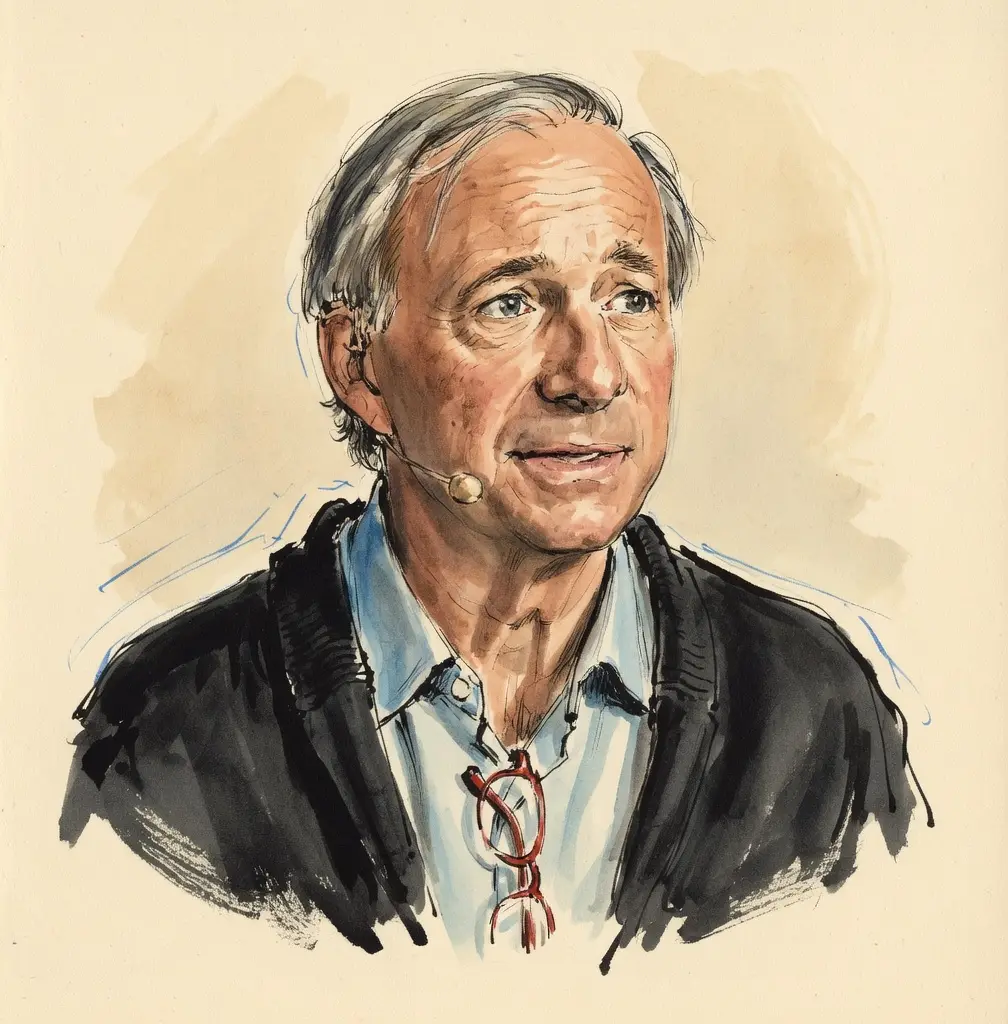
Ray Dalio on World Order
TL;DR
Ray Dalio asserts the current world order has decisively broken down, entering a new, dangerous, and inflationary period driven by financial cycles.
Key Points
He officially declared in 2022 that the current world order has terminally broken down and entered a revolutionary period.
The author analyzes the decline and replacement of past world orders over roughly 500 years using historical, financial, and conflict data.
Dalio suggests that the shift in world order is marked by a move from low inflation and low interest rates to higher inflation and higher interest rates.
Summary
Ray Dalio argues that the historical cycle of world orders, driven by factors like debt, money printing, internal conflict, and external war, has entered a terminal phase for the current US-led order. His core position, detailed in his book, is that a significant power shift is underway, characterized by high debt levels, aggressive money creation by central banks, and rising geopolitical conflict, particularly between the US and China. He identifies a historical pattern where empires rise, peak, decline, and are eventually replaced, and he sees the present as a critical inflection point in this long-term structural shift.
This transition phase is inherently volatile, marked by the depreciation of reserve currencies and increased internal and external conflict as the old hegemon resists decline and the rising power seeks its ascent. He suggests that these transitions often involve significant wealth redistribution and geopolitical instability, requiring careful navigation by nations and investors alike. The shift is not merely economic but profoundly political, as the foundational rules and norms governing international relations are being renegotiated or violently broken, leading to uncertainty across all aspects of global affairs.
Frequently Asked Questions
Ray Dalio's position is that the current US-led world order has decisively broken down due to unsustainable debt levels and rising internal and external conflicts. He views the present moment as a dangerous inflection point within a long-term historical cycle of empire decline and replacement.
He frequently discusses the significant geopolitical struggle between the United States and China as a central feature of the changing world order. The relative decline of the existing hegemon and the ascent of the challenger are key components of his historical framework.
He analyzes the changing world order through the lens of repeating, long-term economic and political cycles, similar to an individual's life cycle of birth, growth, maturity, and decline. This framework uses metrics like debt, money supply, and conflict indicators to map where the current system sits within the pattern.
Sources6
It's Official: The Current World Order Has Broken Down
The Changing World Order: Why Nations Succeed and Fail
Ray Dalio: 'The world order has broken down' and we are in the 'revolutionary period'
The Changing World Order
Ray Dalio: 'It’s official: The current world order has broken down'
Dalio charts the rise and fall of empires
* This is not an exhaustive list of sources.