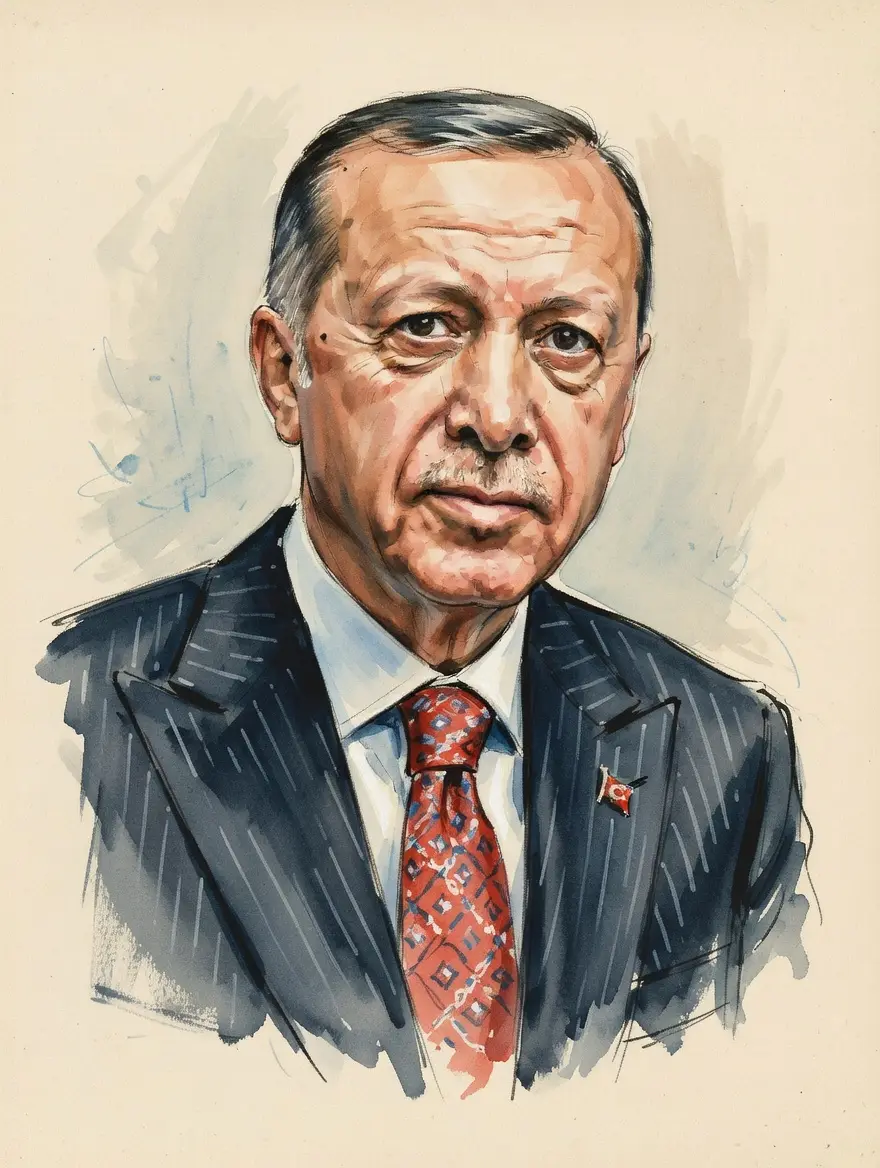
Recep Tayyip Erdogan
- Known for
- Turkish president, AKP co-founder, long tenure
- Born in
- Beyoğlu, Turkey
- Education
- Marmara University's Faculty of Economics and Administrative Sciences
Recep Tayyip Erdoğan has dominated Turkish politics since 2002, shifting the country from a parliamentary republic to a powerful presidential system. Rooted in an Islamist background, his rule has been characterized by ambitious infrastructure projects and significant economic volatility, alongside deepening authoritarianism and democratic backsliding.
Signature Positions
Erdoğan’s tenure is defined by both domestic consolidation and assertive foreign policy:
- Presidential System: Championed and enacted the 2017 constitutional referendum, centralizing executive power away from the parliament.
- Authoritarianism & Dissent: Overseen massive purges post-2016 coup attempt and maintained severe restrictions on media freedom, leading to numerous arrests of journalists and academics.
- Economic Policy: Pushed unorthodox monetary policies, notably lowering interest rates despite high inflation, contributing to a major Lira depreciation.
- Kurdish Issue: Initiated a peace process with the PKK, but later ended it, resuming intense military operations and leading to a resurgence of conflict.
- Foreign Policy: Pivoted from an 'zero problems' approach to assertive regional intervention, including operations in Syria and threats against Greece.
How Views Have Evolved
Erdoğan's political journey shows key ideological shifts, notably in his relationship with religious policy. Initially, upon founding the AKP in 2001 after being banned for reciting an Islamist poem, he explicitly abandoned openly Islamist platforms to operate as a broad democratic conservative party.
However, his presidency has seen a revival of nationalist and Ottoman imagery, exemplified by the controversial reconversion of the Hagia Sophia back into a mosque, signaling a move away from strict secularism towards a neo-Ottoman identity.
Notable Tensions
Erdoğan’s tenure is marked by several deep domestic and international tensions:
- Judiciary Conflict: Repeatedly clashed with the judiciary, particularly over high court appointments and decisions, leading to accusations of undermining the rule of law.
- Israel Relations: His relationship with Israel has swung wildly from diplomatic engagement (visiting Yad Vashem) to extreme condemnation, labeling Israel a "terrorist state" and accusing it of genocide during conflicts.
- International Allies: While maintaining a critical stance toward the US (especially over the S-400 purchase and pastor Brunson), he balanced relations by fostering deep energy and strategic ties with Russia.
- Economic Orthodoxy: His pursuit of unorthodox economic theory—that high interest rates cause inflation—is universally rejected by mainstream economists, leading to sustained high inflation.
Erdoğan has successfully harnessed nationalist sentiment, particularly around foreign threats and the 2016 coup attempt, to consolidate power and reshape Turkey’s constitutional structure. His assertive posture on the global stage, contrasting sharply with earlier moderate approaches, has redefined Turkey's role between East and West, making him a central, polarizing figure in contemporary geopolitics.