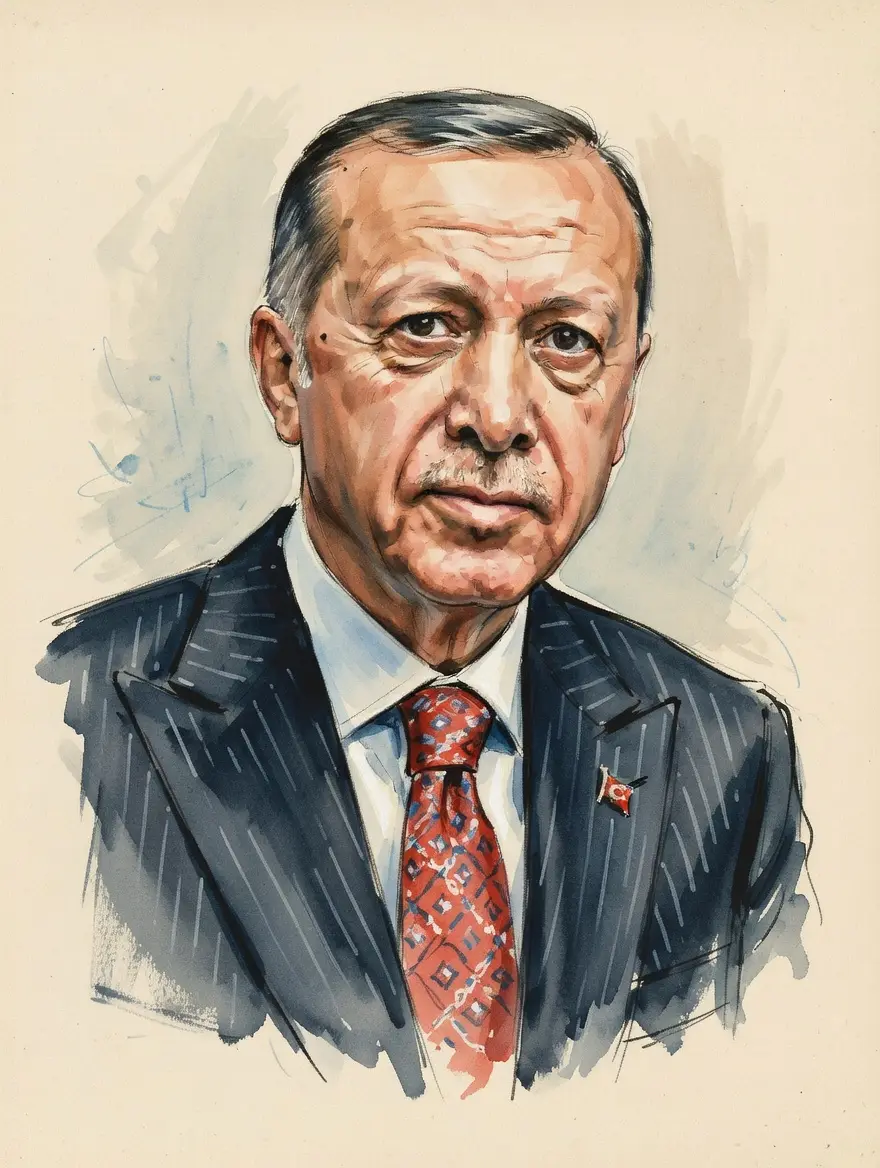
Recep Tayyip Erdogan on Political Controversies
TL;DR
Recep Tayyip Erdogan frequently centers his political actions on asserting Turkish sovereignty, often leading to domestic and international friction.
Key Points
The president's administration faced criticism concerning a perceived authoritarian turn around 2013 following widespread protests.
Internet freedom debates have historically marked a rivalry between the Turkish leadership and opposing political viewpoints concerning online access.
He expressed optimism regarding Türkiye-U.S. ties following a cordial phone call, indicating a focus on pragmatic state relations despite past friction.
Summary
Recep Tayyip Erdogan's position on domestic political controversies is characterized by a firm assertion of executive authority, often leading to friction with judicial and opposition figures. His administration has been criticized for moves that critics suggest centralize power, such as restrictions on public gatherings and actions against opposition-led municipalities, which are framed internally as necessary for national stability and legitimacy. This stance, which has evolved since he first came to power, often involves direct confrontation with domestic political rivals, sometimes resulting in high-profile legal actions against them.
Internationally, his approach to political controversies involves prioritizing Turkish national interests, which can lead to fluctuating alliances and diplomatic strain. While seeking partnership, such as with the United States, he has also been positioned by some observers as potentially following a path similar to other assertive international leaders, which impacts relations with bodies like NATO. His diplomacy is often described as active, using perceived diplomatic skills to pave the way for creative solutions in regions like the Balkans, even as internal political challenges create external perception issues.
Frequently Asked Questions
Recep Tayyip Erdogan generally approaches domestic political controversies by asserting the authority of the presidency and what his administration views as the democratic mandate. He often frames opposition challenges as threats to national stability that require a strong executive response to resolve.
Yes, his position has evolved, particularly concerning the balance between state power and civil liberties since his initial rise to prominence. Early on, his rhetoric focused on democratic reform, but later periods have seen a marked emphasis on consolidating executive authority.
The president expressed optimism regarding the state of Türkiye-U.S. relations after engaging in a cordial phone call with the American counterpart. This indicates a willingness to manage bilateral disagreements through high-level diplomatic engagement.
Sources10
Erdoğan optimistic on US-Türkiye ties after cordial phone call
Political tensions escalate in Turkey: Istanbul mayor arrested, gatherings restricted in Ankara and Izmir
Neo-Ottomanism and Erdoğan: Comparisons, facts
Erdoğan’s Turkey: Beyond Legitimacy and Legality
Turkey’s Authoritarian Turn
Commentary: Has Turkey's arrogant rise come to an end?
Internet freedom debate stokes rivalry between Turkey's top two
Opinion: NATO should not let Erdogan become second Putin
Turkey-China relations: Ankara must balance complications on many fronts
Turkish President’s diplomatic skills can pave way for creative solutions for Balkans
* This is not an exhaustive list of sources.