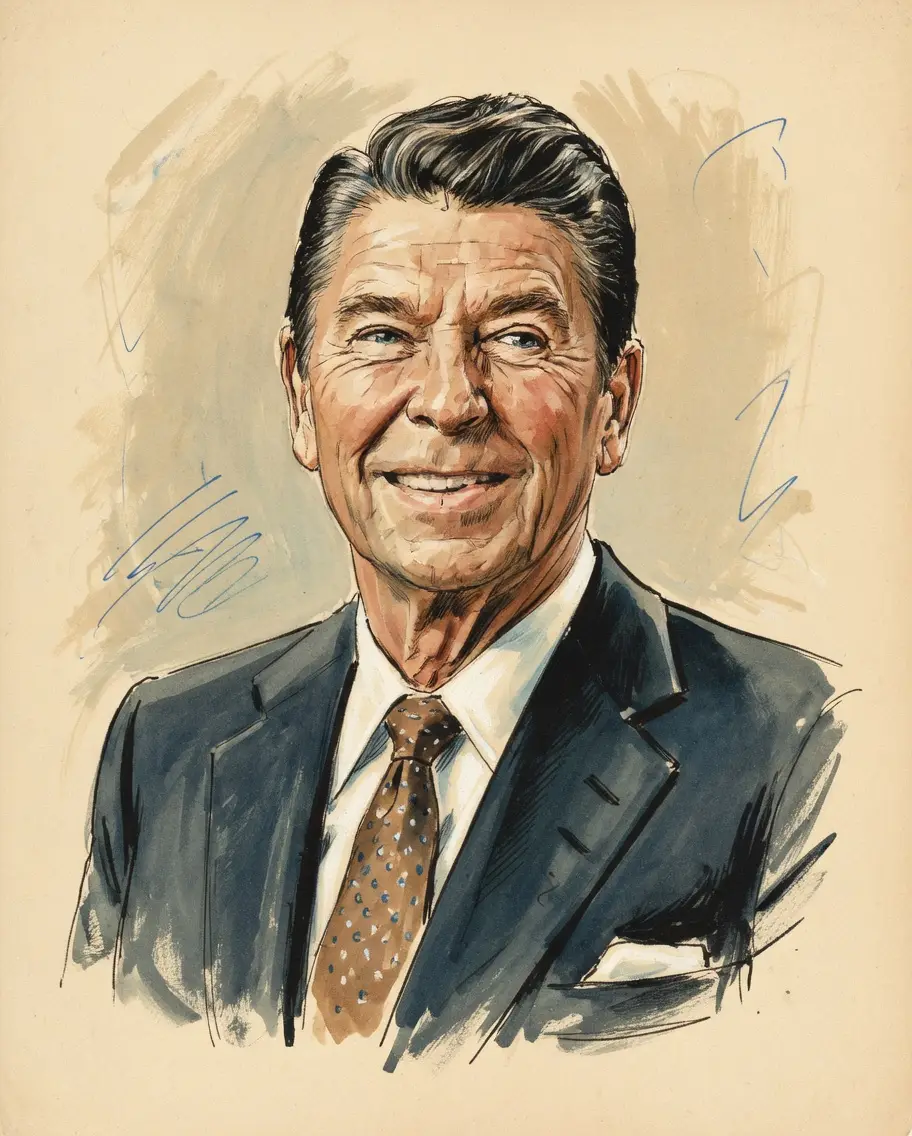
Ronald Reagan
- Known for
- 40th U.S. President, actor, conservative movement icon
- Born in
- Tampico, United States
- Education
- Bachelor of Arts, Eureka College
Ronald Reagan, the 40th U.S. President and an icon of modern American conservatism, defined an era through his actor's charisma and unwavering ideological conviction. From his film career and union leadership to his governorship of California, he championed individual freedom against large government structures. His presidency initiated a significant realignment in U.S. politics, cementing his legacy as the "Great Communicator".
Signature Positions
Reagan’s time in office was marked by sweeping economic and foreign policy shifts:
- Economy (Reaganomics): Advocated supply-side economics with massive federal tax cuts and deregulation, aiming to spur investment.
- Soviet Union/Cold War: Rejected détente, pursued a massive defense buildup (including SDI), and ultimately negotiated the INF Treaty with Gorbachev.
- Taxes: Signed the Economic Recovery Tax Act of 1981 to lower income tax rates, though he later approved tax increases to offset deficits.
- Labor Unions: Took a hard line against organized labor, famously breaking the PATCO strike in 1981, significantly impacting union power.
- Gun Control: Supported the Brady Bill and the Federal Assault Weapons Ban in his post-presidency, contrasting with his hardline stance on crime during his administration.
Notable Tensions
Reagan's legacy includes several areas of significant controversy and contradiction:
- Deficits: His administration oversaw a near tripling of the national debt due to deep tax cuts combined with increased defense spending.
- Civil Rights: Despite signing the MLK Jr. Day holiday into law, he opposed the Civil Rights Restoration Act and appointed officials who eroded civil rights enforcement.
- Iran-Contra Affair: Authorized the secret, illegal sale of arms to Iran to fund the Contras in Nicaragua, damaging his administration's credibility.
- HIV/AIDS Epidemic: Faced heavy criticism for his administration's slow initial response to the emerging AIDS crisis until later in his second term.
Reagan's victory in 1980 signaled a major shift, ending the post-New Deal consensus and ushering in the Reagan era. His dominance in conservative thought has shaped Republican platforms ever since. His high post-presidency approval ratings often place him as one of the most popular modern presidents, despite contentious domestic policies.