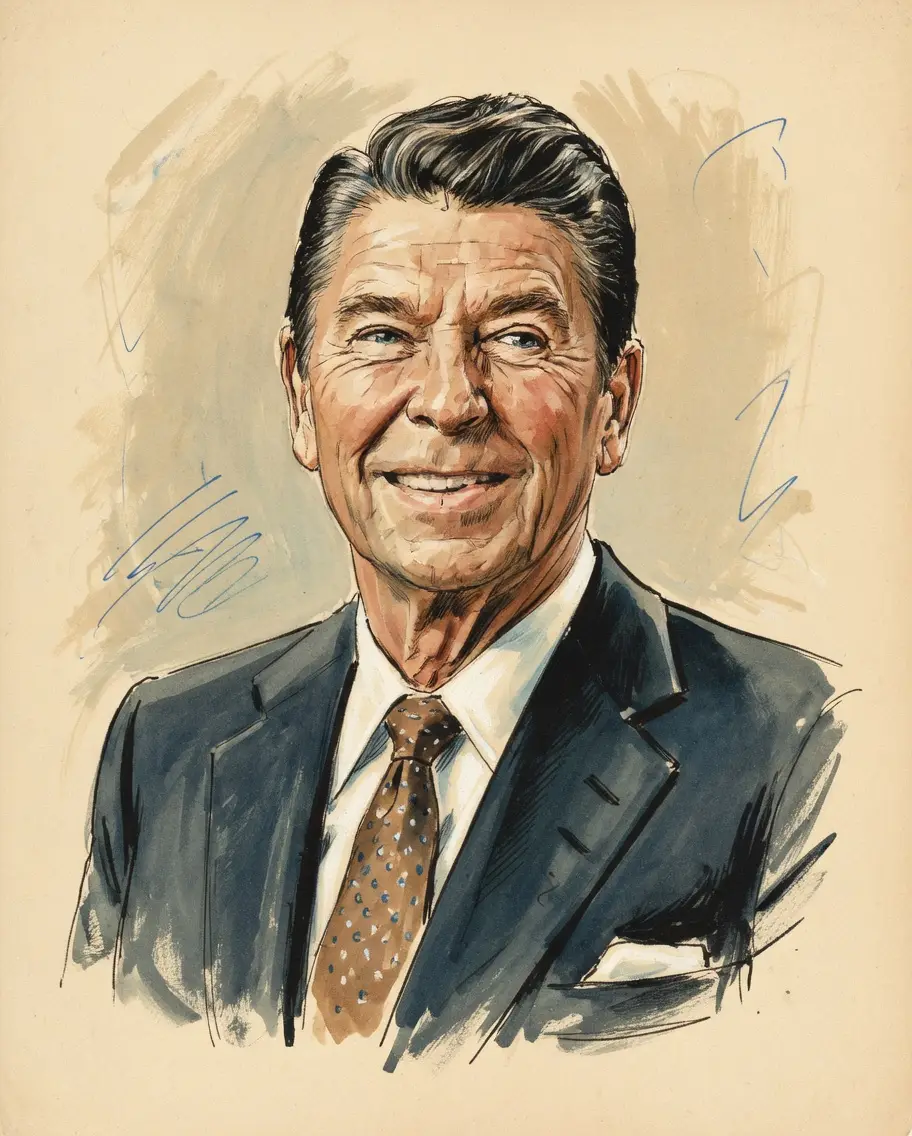
Ronald Reagan on Jimmy Carter
TL;DR
Ronald Reagan consistently criticized Jimmy Carter's domestic and foreign policies, ultimately defeating him in the 1980 election.
Key Points
During the 1980 presidential debate, Reagan questioned Carter’s claim of a defense budget increase, noting Carter reduced Gerald Ford's projected five-year military buildup by 38 percent.
Reagan frequently used humor against Carter, for example, stating, "Recession is when your neighbor loses his job... And recovery is when Jimmy Carter loses his."
In 1986, Reagan praised Carter for having recognized the need to modernize the U.S. armed forces, marking a shift from his 1980 election criticisms.
Reagan charged in their 1980 debate that Carter’s economic policies would lead to a tax increase taking $86 billion more out of people's pockets next year.
Summary
Ronald Reagan's position on Jimmy Carter was primarily defined by his role as his principal political opponent, culminating in his decisive victory in the 1980 presidential election. During the campaign, Reagan sharply contrasted his conservative vision with Carter’s performance, focusing heavily on the incumbent’s handling of the economy, citing high inflation and unemployment, and asserting that Carter’s leadership led to a perception of American military weakness abroad. Reagan contended that Carter sought overly complex governmental solutions and blamed the administration for economic woes, contrasting this with his own proposals for tax cuts and reduced government spending.
While Reagan’s 1980 campaign heavily criticized Carter’s defense policies, such as the cancellation of the B-1A bomber, later in his presidency Reagan acknowledged that his predecessor had recognized the need to rebuild the nation's armed forces. Despite this later, more conciliatory observation regarding defense foundations, the overriding narrative established during their political contest positioned Reagan as the assertive alternative to what he portrayed as Carter’s ineffectual management. Following their time in office, Reagan demonstrated a degree of personal respect, attending the dedication of the Carter Presidential Center in 1986 and offering him birthday wishes as one President to another.
Key Quotes
I believe with all my heart that our first priority must be world peace, and that use of force is always and only a last resort, when everything else has failed, and then only with regard to our national security.
Frequently Asked Questions
Ronald Reagan's main criticism centered on Jimmy Carter's handling of the economy, particularly the high rates of inflation and unemployment, which Reagan termed the "misery index" exceeding 20 percent. He also frequently attacked Carter's foreign policy, suggesting a paralysis in dealing with crises like the situation in Iran and an overall weakening of American resolve and military strength.
Yes, Ronald Reagan later offered praise for certain aspects of Jimmy Carter's record after leaving office. Most notably, in 1986 at the dedication of the Carter Presidential Center, Reagan acknowledged Carter's positive influence on the New South and praised his commitment to duty, intellect, and passion while in office.
During their 1980 debate, Reagan advocated for a significant military buildup, arguing strength was required to maintain peace, while criticizing Carter for unilateral concessions and cuts to proposed defense programs like the B-1 bomber. Carter defended his approach as a steady, methodical increase in commitment aimed at preserving peace through strength combined with diplomacy, not just military action.
Sources5
1980 Ronald Reagan and Jimmy Carter Presidential Debate
Reagan Buries Carter in a Landslide - CQ Almanac Online Edition
Ronald Reagan's belated change of heart towards Jimmy Carter's defense policy : r/Presidents
Jimmy Carter's Legacy | The Ronald Reagan Presidential Foundation & Institute
* This is not an exhaustive list of sources.