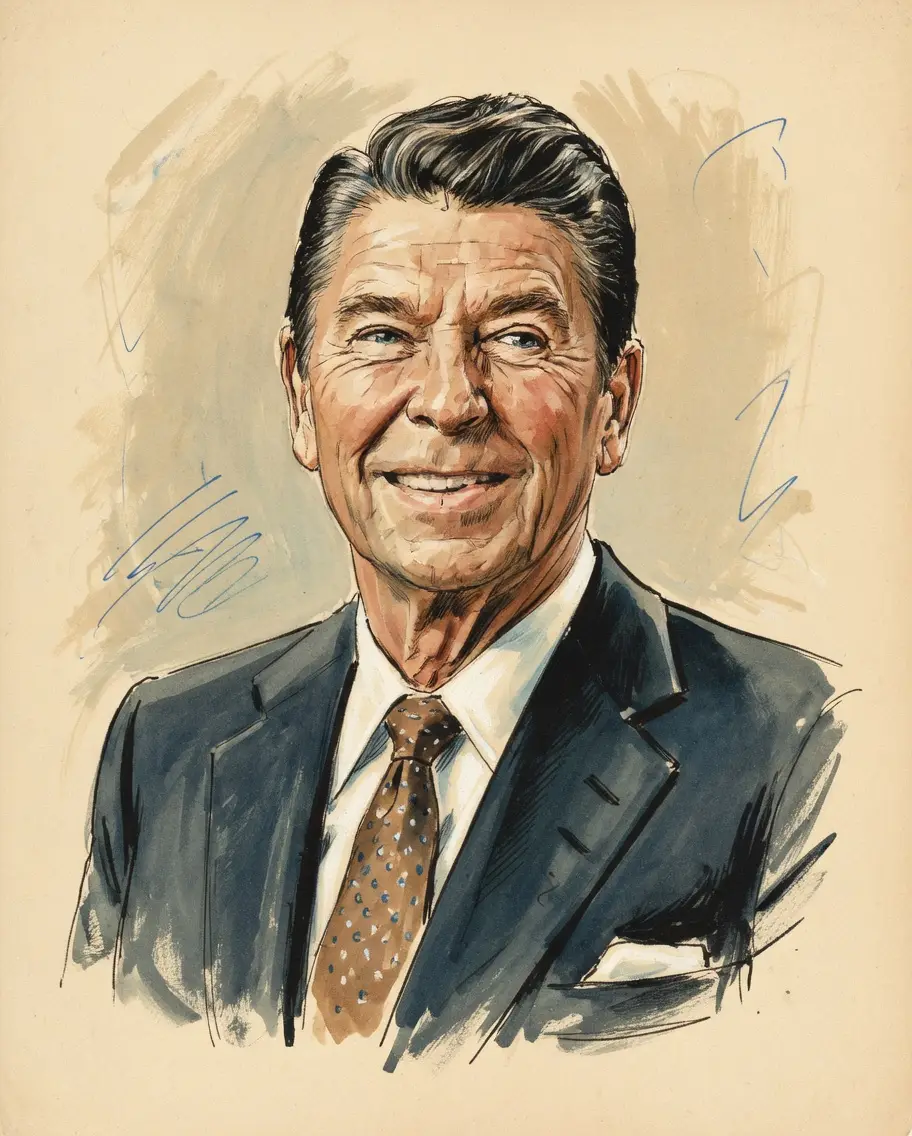
Ronald Reagan on Peace Through Strength
TL;DR
Ronald Reagan believed that peace could only be achieved and maintained by possessing overwhelming military strength and resolving to use it when necessary.
Key Points
He stated in 1980 that Peace Through Strength was not about being prepared for war, but about being prepared for peace by ensuring a margin of safety.
The policy involved restoring the margin of safety in defense capabilities, as outlined in a 1981 speech, to restore stability.
Reagan's strategy integrated defense and nuclear deterrence with diplomatic engagement, viewing strength as essential for successful negotiations.
Summary
Ronald Reagan's core position on Peace Through Strength was the conviction that a strong national defense was the most effective way to deter aggression and secure a lasting peace with adversaries, particularly the Soviet Union. He argued that a demonstrable margin of safety in military capability was essential to bring the other side to the negotiating table in good faith, referencing this strategy as a means to achieve real arms reduction agreements. The commitment involved a significant buildup and modernization of the United States military apparatus, a policy seen as necessary to counter the perceived military build-up by the Soviet bloc during the preceding decade.
This foreign policy doctrine was often articulated during his time as governor and solidified during his presidential campaigns, framing defense spending not as an aggressive posture but as a prerequisite for diplomacy. He maintained that without credible military power, any negotiations would be based on weakness, allowing opponents to dictate terms. The emphasis was consistently placed on achieving peace not through unilateral concession but through unwavering resolve backed by superior force, a strategy he claimed brought about the end of the Cold War.
Frequently Asked Questions
Ronald Reagan strongly believed that Peace Through Strength was the most reliable path to securing global stability and true peace. His position was that only by possessing overwhelming military might could the United States deter potential adversaries from aggression. He viewed this strong defense posture as a necessary foundation for engaging in meaningful diplomatic negotiations.
For Ronald Reagan, Peace Through Strength was defined as maintaining a robust and modern military capable of defending the nation and its interests worldwide. He explicitly stated that this was not a policy geared toward war, but rather a strategy to prevent conflict by making the cost of aggression too high for any opponent. This strength was intended to compel adversaries toward serious, good-faith negotiations.
As president, Ronald Reagan initiated significant investments in the United States military to reverse perceived declines in readiness and capability. This implementation included a commitment to developing strategic defense initiatives, such as missile defense, alongside conventional force modernization. He saw these actions as vital steps to restore the necessary margin of safety in American defense.
Sources7
Peace Through Strength
Peace Through Strength Works
Televised Address by Governor Ronald Reagan on Strategy for Peace in the '80s
Peace through strength - Wikipedia
President Ronald Reagan's Peace Through Strength Policy Wasn't Just About Military Spending
Reagan’s Peace Through Strength: Cold War Strategy Integrating Defense and Nuclear Deterrence
* This is not an exhaustive list of sources.