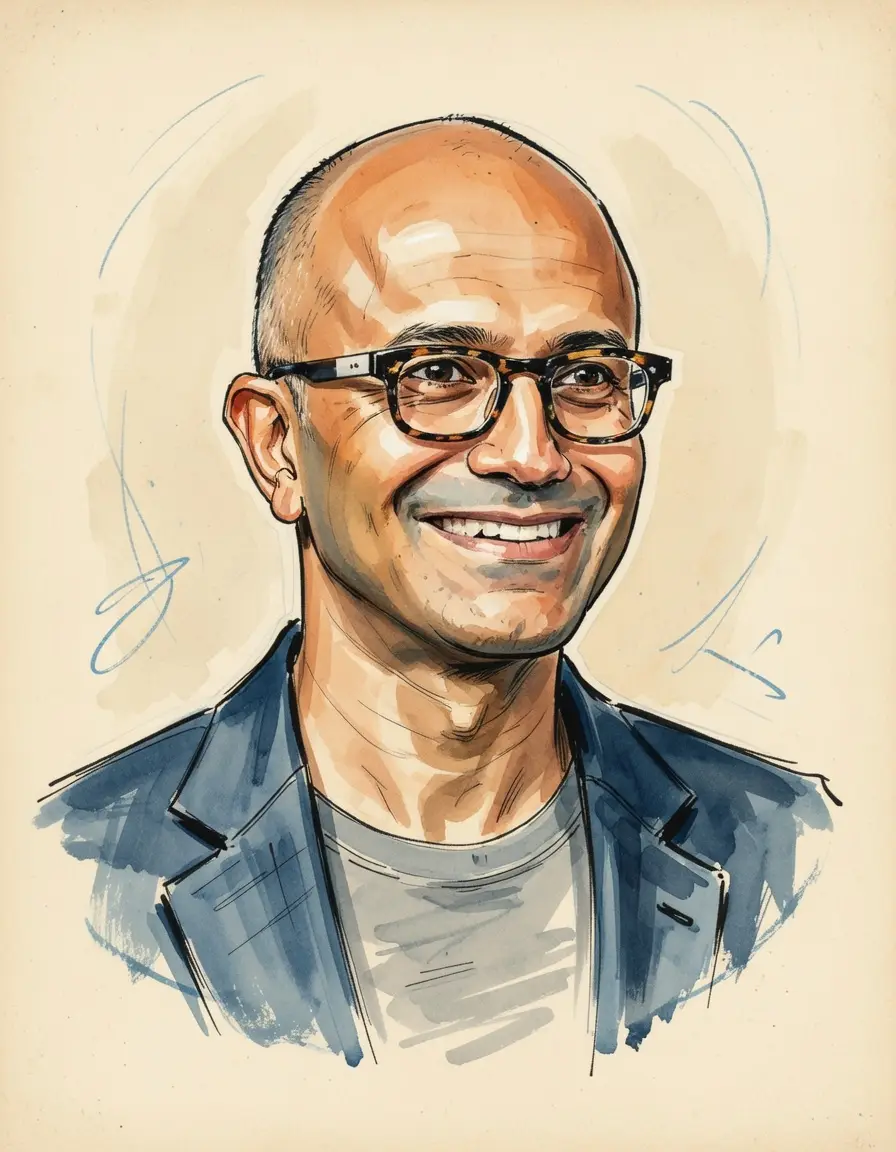
Satya Nadella on Diversity, Equity, and Inclusion
TL;DR
Satya Nadella champions diversity and inclusion as fundamental drivers of empathy, innovation, and business success at Microsoft.
Key Points
He believes that the culture Microsoft seeks to build internally should be a microcosm of the world he hopes to create, celebrating diversity of skin color, gender, and religion.
In October 2014, he caused controversy by suggesting women should rely on Karma rather than asking for a raise, a statement for which he later apologized.
He has made accessibility a core pillar of Microsoft's mission, driven partly by personal connection to disability, since he took the helm in 2014.
Summary
Satya Nadella views diversity, equity, and inclusion as critical cornerstones of Microsoft's cultural and business strategy, often linking them directly to innovation and empathy. He has championed an inclusive culture, emphasizing that diverse backgrounds and perspectives fuel better problem-solving and more comprehensive solutions. This commitment was institutionalized, requiring employees to set annual Diversity, Equity, and Inclusion (DEI) Core Priorities, covering areas like building inclusive products and practicing allyship, which were then tied to performance evaluations.
His perspective has seen recent shifts in practice, with Microsoft scaling back the mandatory nature of DEI goals in performance reviews and pausing its annual inclusion report, though the company maintains its public commitment to its values remains unchanged. However, his leadership philosophy consistently frames inclusivity as being essential for an organization to truly mirror the world it serves and to be an inclusive leader himself, which includes championing disability inclusion as a core pillar since 2014.
Key Quotes
Inclusion is not just a principle, it's a practice.
We must ensure not only that everyone receives equal pay for equal work, but that they have the opportunity to do equal work.
Frequently Asked Questions
Satya Nadella strongly advocates for diversity and inclusion, viewing them as foundational to developing empathy and driving innovation within Microsoft. He has stated that an inclusive culture is necessary for the company to create technology that serves the whole world. His philosophy has consistently positioned DEI as integral to achieving business success.
Microsoft recently removed diversity metrics from mandatory employee performance assessments and paused its annual public inclusion report. While the company maintains its cultural commitment to inclusion is unchanged, these mechanical changes mean diversity goals are now voluntary rather than tied to formal scoring. Observers question the impact on accountability following these shifts.
Satya Nadella has stated that he believes men and women should receive equal pay for equal work and that opportunities to do equal work must be ensured. However, he faced criticism in 2014 for an initial public comment suggesting women should not ask for raises, which he subsequently apologized for and corrected with a stronger pro-advocacy stance.
Sources8
How leaders can commit to disability inclusion in business
Why Microsoft Has Scaled Back DEI in its Performance Reviews
Microsoft Rethinks DEI Goals in Staff Reviews After Pushback
Leadership Strategies of Satya Nadella: A Review of Extant Literature
The Leadership Style of Microsoft CEO, Satya Nadella - CTO Magazine
How Microsoft's Cultural Transformation Inspires Modern Workplaces
Diversity In Leadership - Reinforcing Values - I by IMD
Satya Nadella Quotes on Culture, Innovation, and Leadership | JD Meier
* This is not an exhaustive list of sources.