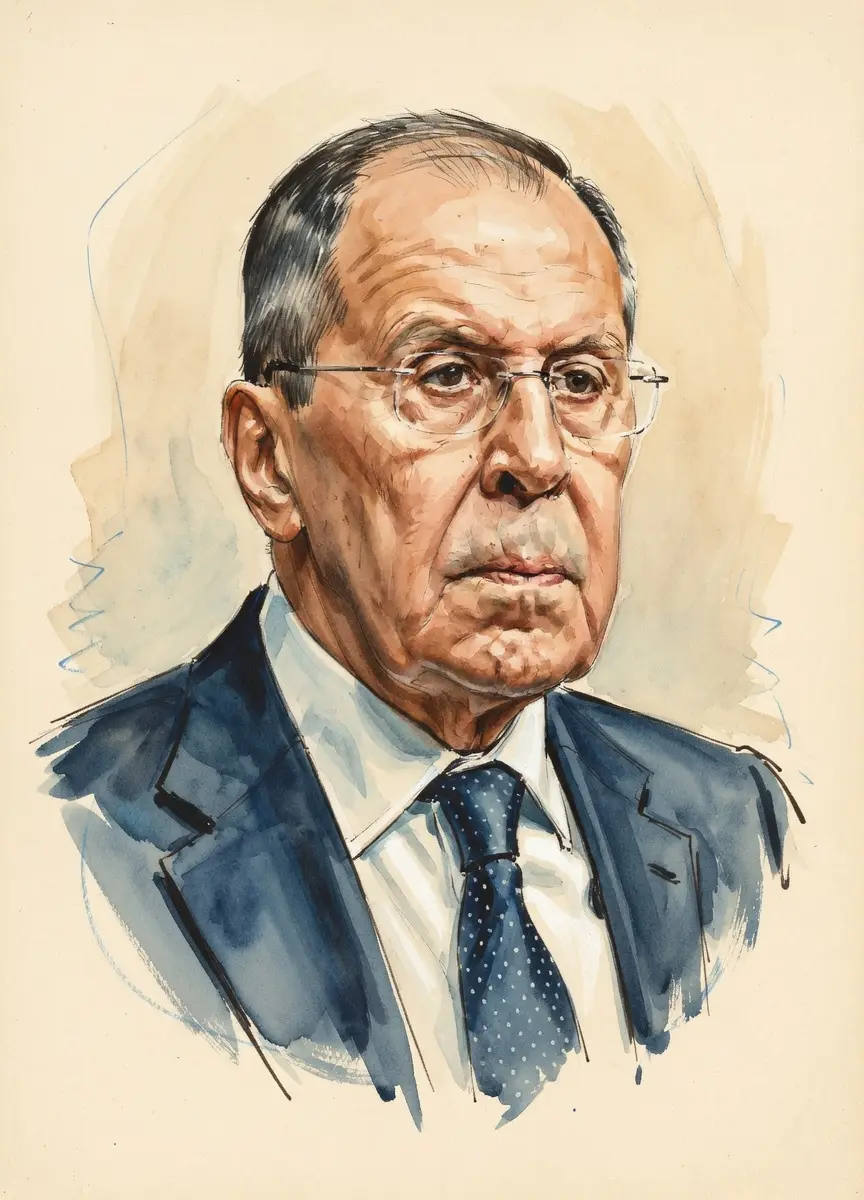
Sergey Lavrov
- Known for
- Russian Foreign Minister, Long-serving diplomat
- Born in
- Tbilisi, Georgia
- Education
- Moscow State Institute of International Relations (MGIMO)
Sergey Lavrov has served as Russia's Minister of Foreign Affairs since 2004, making him one of the longest-serving foreign ministers in modern history. A highly experienced diplomat, his career is defined by his unwavering defense of Russian interests on the global stage, often in direct opposition to the West. Lavrov is seen as the primary architect of Russia's current assertive foreign policy under President Vladimir Putin.
Signature Positions
Lavrov's diplomatic positions focus on challenging the Western-led international order and defending Russia's spheres of influence:
- Russian Invasion of Ukraine: Vehemently denies that Russia invaded, framing it as a "special military operation" necessary to "demilitarize and denazify" Ukraine and counter NATO expansion.
- NATO Expansion: Considers the eastward expansion of NATO a primary threat to Russian security and advocates for Ukraine to remain non-aligned.
- US Sanctions: Strongly criticizes US sanctions as illegitimate unilateral enforcement measures, predicting the undermining of the US dollar's global role.
- Syria: Defended the Bashar al-Assad regime, brokering key agreements, such as the 2013 chemical weapons deal, while condemning foreign interference.
- Global Order: Advocates for a "new world order" that rejects the "unipolar world" led by the United States, emphasizing the roles of the Global South and East.
Notable Tensions
Lavrov's tenure is marked by high-profile diplomatic friction and criticisms from Western counterparts:
- Western Criticism: US officials have described him as an "anti-diplomat" known for his "uncompromising, cruel, unlikeable" character, notably characterized by Hillary Clinton as treating her poorly.
- Language Controversies: Drew international condemnation for comments suggesting Adolf Hitler had Jewish heritage while defending the term "denazification" regarding Ukraine.
- Influence vs. Mouthpiece: While a skilled negotiator, some Western diplomats suggest he has little real influence on core foreign policy decisions, serving primarily as a propagandist for Putin's agenda.
- Diplomatic Isolation: Faced diplomatic setbacks, including the cancellation of a visit to Serbia due to denied airspace access by neighboring NATO countries.
Trained at MGIMO and fluent in multiple languages, Lavrov possesses deep institutional knowledge, having served as Russia's Permanent Representative to the UN before becoming Foreign Minister. His style is often described as a brilliant, tough negotiator, rooted in long Soviet and Russian diplomatic tradition. He prioritizes building alliances with non-Western powers like China, India, and BRICS nations to counter perceived Western isolation efforts.