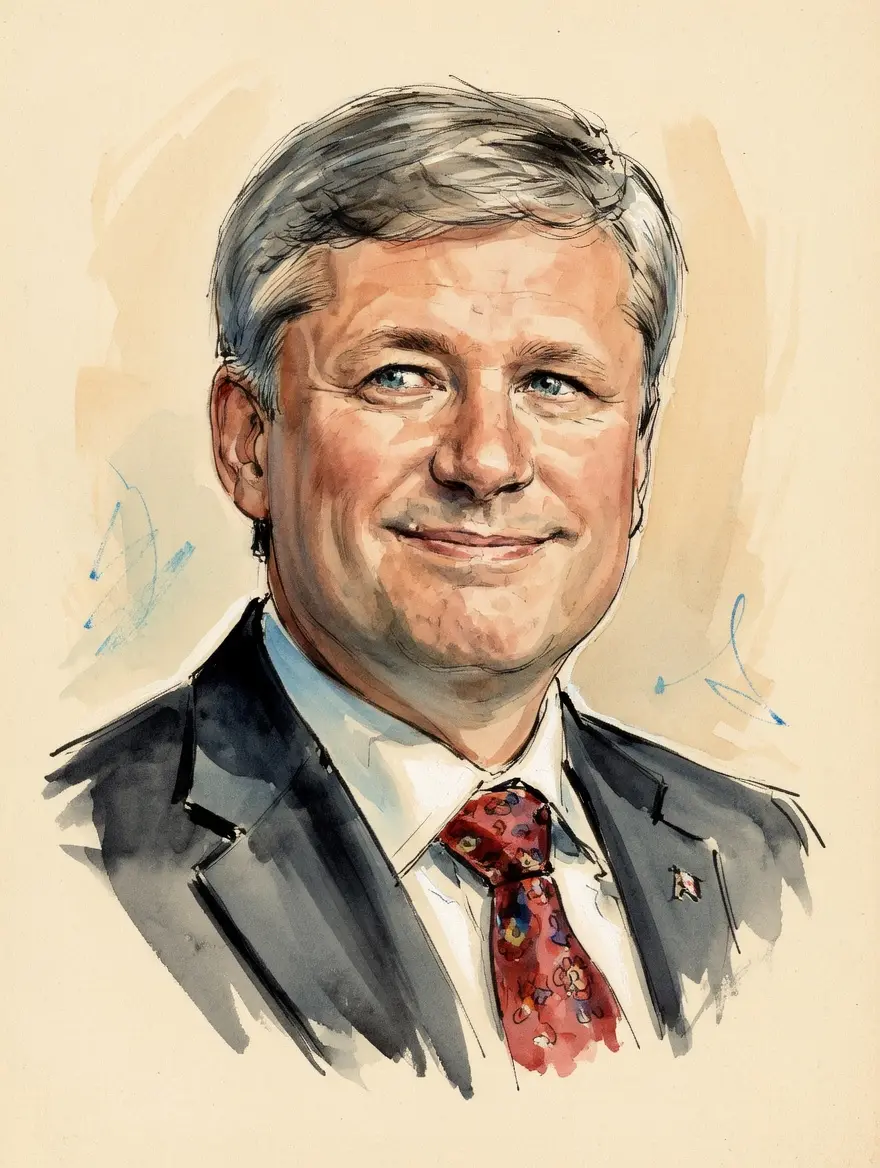
Stephen Harper on China
TL;DR
Stephen Harper views China as an aggressive, hegemonic rival in a new Cold War, balancing tough criticism with necessary economic engagement.
Key Points
He stated in March 2021 that the world order has returned to a kind of Cold War between the U.S. and China.
During his tenure, the government took steps to prevent state-owned Chinese companies from controlling Canadian resources, such as when a deal involving CNOOC and Nexen was reviewed.
He strongly encouraged accelerating trade and investment liberalization during the APEC Leaders' Meeting in November 2014, concluding his third official visit to China.
Summary
Stephen Harper, as former Prime Minister and an influential voice post-premiership, articulated a view of China evolving into an aggressive and hegemonic global rival, framing the current international order as a new Cold War between the United States and China. He maintained a hard line on human rights, exemplified by his early government's support for the Dalai Lama, which initially contributed to frosty bilateral relations, contrasting with the more pragmatic engagement that followed. This tough stance also informed his view that middle powers like Canada have limited ability to unilaterally shape the superpower rivalry, suggesting a need to align with the West's broader strategy.
His government's approach during his tenure involved periods of tension alongside significant economic efforts, such as granting China Approved Destination Status for tourists and signing the Foreign Investment Promotion and Protection Agreement (FIPA). Post-office, Harper has argued against technological alignment with Beijing, specifically advising against allowing firms like Huawei in 5G infrastructure due to differences in surveillance and data systems. While he pushed for trade and investment, his later commentary frequently critiques China's systemic differences and global ambitions, suggesting a persistent skepticism despite the need for economic ties.
Key Quotes
“China is an economic and global business powerhouse. During my visit, I was pleased to meet with Chinese leaders and strengthen the foundation for future commercial collaboration that will help Canadian companies access the incredible opportunities this crucial market has to offer. This will in turn generate jobs and economic growth in Canada.”
Frequently Asked Questions
Stephen Harper currently describes the global landscape as a new Cold War, with China as an aggressive and hegemonic rival to the United States. He suggests that middle-power countries like Canada have limited leverage to significantly alter this dynamic independently.
Yes, his government's approach appeared to evolve from an aloof, ideologically critical stance toward a more pragmatic engagement, especially after 2009. This involved significant trade and investment dialogues, even while he maintained a strong focus on human rights concerns.
He stated that Canada should not allow Chinese technology giants like Huawei to be involved in core data and tech services, including the development of 5G wireless networks. He believes a 'technological bifurcation' is inevitable due to starkly different societal approaches to technology and privacy.
Sources7
Former PM Stephen Harper says Canada caught in new Cold War between U.S. and China
PM wraps-up third official visit to China
My Interpretation of Prime Minister Harper's Third Visit to China
Stephen Harper makes thinly veiled critique of China in historic visit to Taiwan
Chapter 5. The Politics of Soft Power in Sino-Canadian Relations: Stephen Harper's Visit to China and the Neglected Hong Kong Factor
Chapter Item: Stephen Harper Visits China
63 Canadian Prime Minister Stephen Harper Visits China Images and Stock Photos
* This is not an exhaustive list of sources.