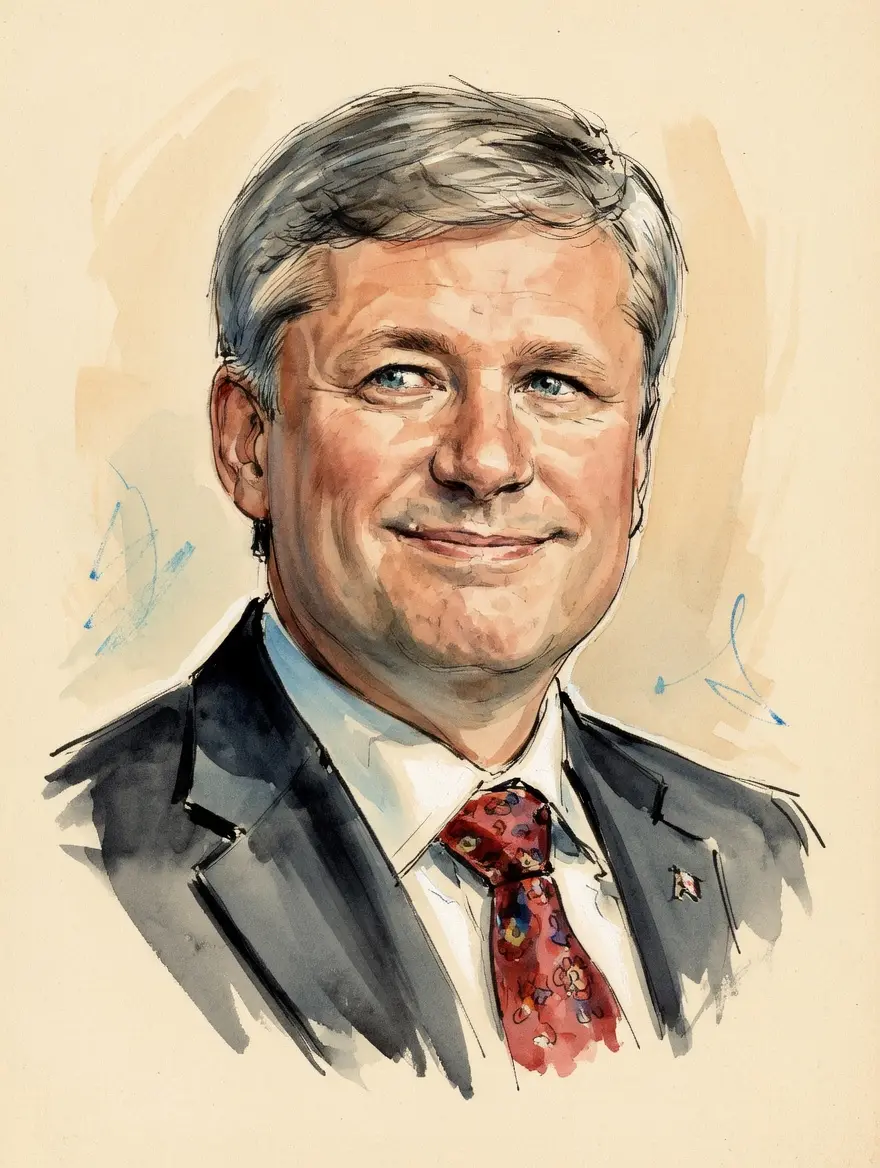
Stephen Harper on Climate Change
TL;DR
Stephen Harper views major international net-zero climate targets as practically unachievable without severe economic sacrifice.
Key Points
In 2002, he described the Kyoto Accord as a "socialist conspiracy" that would cripple the oil and gas industry.
His government withdrew Canada from the Kyoto Protocol in December 2011.
In 2014, he suggested aggressive climate action, like a carbon tax, would "screw everybody" and harm the economy.
Summary
Stephen Harper's core position on climate change has been characterized by skepticism toward binding international agreements and ambitious emission reduction targets, particularly those like the Kyoto Protocol, which he once labelled a "socialist scheme" that would cripple the Canadian economy. His government prioritized a "made-in-Canada" approach focusing on technological development and air pollutant reduction, often using intensity-based targets rather than absolute caps, which critics argued did not guarantee meaningful emission reductions and favoured the oil and gas sector. For example, in 2007, his government abandoned the Kyoto objectives in favour of joining the US-led Asia-Pacific Partnership on Clean Development.
During his tenure, the government also reduced funding for environmental research and assessment processes, leading to accusations of "muzzling" scientists and undermining climate science communication. While he acknowledged climate change as a serious threat, his policy focus remained on ensuring Canada's status as an "energy superpower" and protecting the oil industry from unilateral penalties. More recently, he maintained that the UN's 2050 net-zero goal is "unachievable" with current technology unless there is a significant global economic shutdown, a scenario he dismissed as unreasonable.
Key Quotes
“We've got more work to do, but our emissions are falling." "Other countries' emissions for the most part are going up. World emissions are going up. Canada's have not been going up."
“This is crazy economics. It's crazy environmental policy” that will “screw everybody.”
Frequently Asked Questions
Stephen Harper has consistently expressed skepticism regarding the feasibility of strict international climate targets, such as the 2050 net-zero goal. He often argued that achieving these targets with current technology would require an unacceptable, significant shutdown of global economic activity and a lowering of living standards.
Yes, the Stephen Harper government introduced the Clean Air Act and later the "Turning the Corner" plan, which focused on reducing emissions intensity for large industries. However, critics often argued these policies were insufficient compared to international commitments like Kyoto and favoured the economic interests of the oil and gas sector.
While his rhetoric evolved from outright denial of the need for action in the early 2000s to acknowledging climate change as a serious threat after becoming Prime Minister, his core resistance to binding, absolute emission reductions remained consistent. His policies during his tenure generally reflected a preference for technology over strict regulation.
Sources9
Environmental policy of the Stephen Harper government - Wikipedia
Stephen Harper's climate-change comments only half the story, critics say | CBC News
Harper in denial: Stephen Harper's refusal of climate reality | Grist
Canada's Harper: Net-zero by 2050 virtually “unachievable” at current pace of change | RPC
Edited by Teresa Healy - Canadian Centre for Policy Alternatives
Harper's Timeline: Canada on Climate Change from 2006-2014 | The Narwhal
International Climate Change Policy in the Harper Era - Sustainable ...
Climate Change not Climate Action is the Real Risk | Pembina Institute
Prime Minister Stephen Harper Calls for International Consensus on Climate Change - Canada.ca
* This is not an exhaustive list of sources.